In most OT environments, getting a file into a critical system follows a specific sequence of steps. It starts with a vendor arriving with firmware, a contractor bringing a patch, or a maintenance team carrying out configuration updates. The files get scanned, approved, and handed off. However, somewhere between these procedures and the moment the file reaches the PLC (Programmable Logic Controller) or HMI (Human-Machine Interface), security teams lose sight of it entirely.
Many approaches are used to address this challenge. Network-based solutions handle file movement between IT and OT systems, and kiosk-based workflows inspect removable media at the point of entry. But one part of the problem remains consistently unresolved. It is what happens to a file after it has been verified, while it is in transit to the critical system.
Scanning is not the Real Problem; File Integrity is
The question should now be shifting from "was this file clean when it was scanned?" to "can we confirm it is still the same file at the time it is deployed into the critical system?"
Confirming that a file has not changed from approval to deployment is essential in regulated industries. Once a file clears the inspection point, there must be a mechanism to confirm whether it has changed.
In OT environments, the problem remains unresolved, with the majority of current workflows lacking a mechanism to detect post-verification modifications. If a file is modified after verification due to an error or deliberate tampering, the OT target system cannot detect it. The scan record remains valid, and the approval is still logged. A file that was verified as safe three days ago and has since been altered looks identical to a file that was considered safe three days ago and has not. The operator distributing it has no reliable way to tell the difference.
Enforcing Trust Through the Entire Distribution Chain
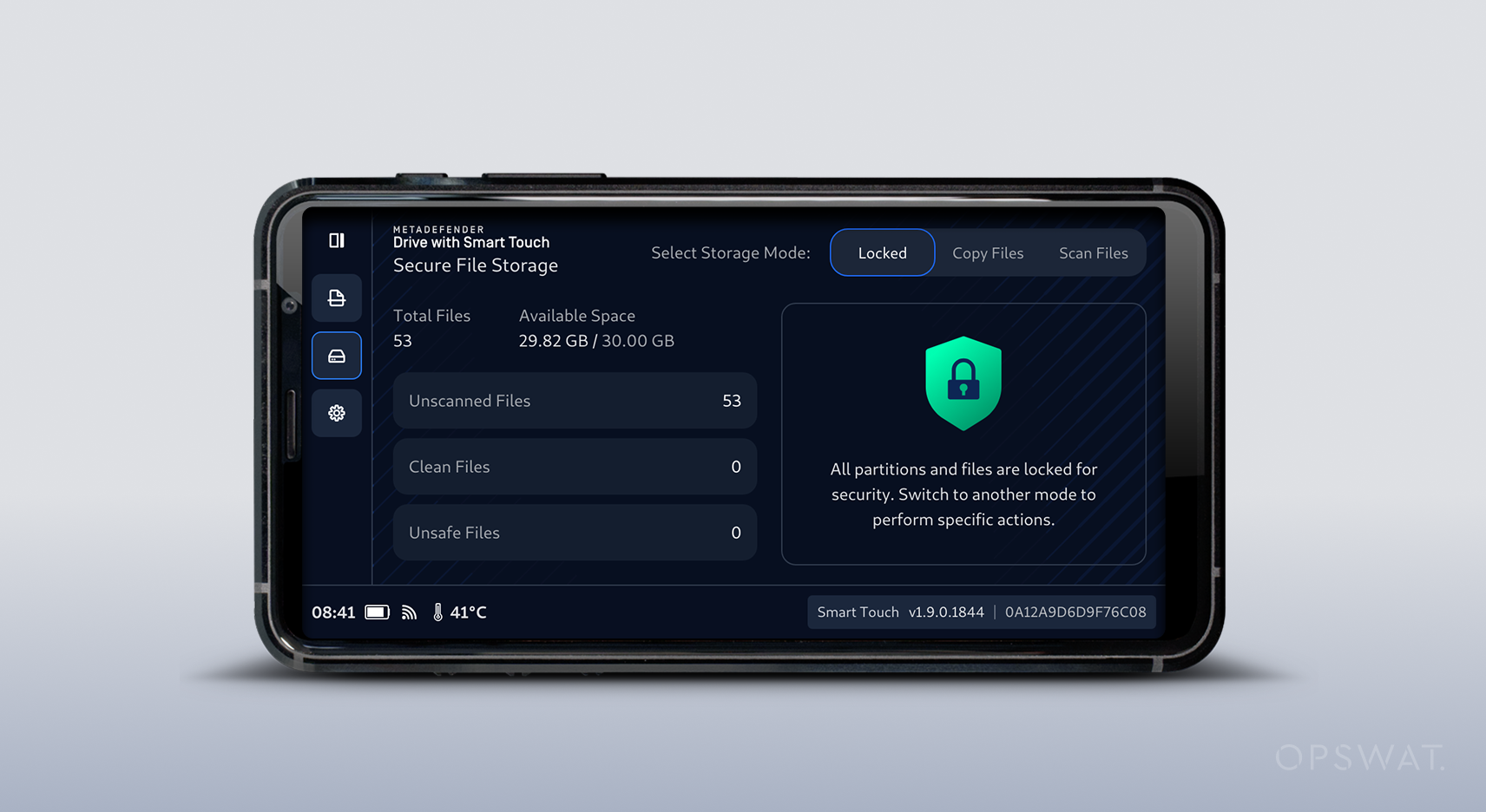
MetaDefender Drive™ with Smart Touch addresses this through Secure File Storage. It is a controlled solution that enforces end-to-end file trust from the vendor handoff through deployment into the OT system.
Files copied from a vendor or contractor device are stored inside Secure File Storage, where they remain isolated and unavailable for distribution until they pass verification through MetaDefender Kiosk™. Once verified, only clean files are made accessible for distribution into the critical environment.
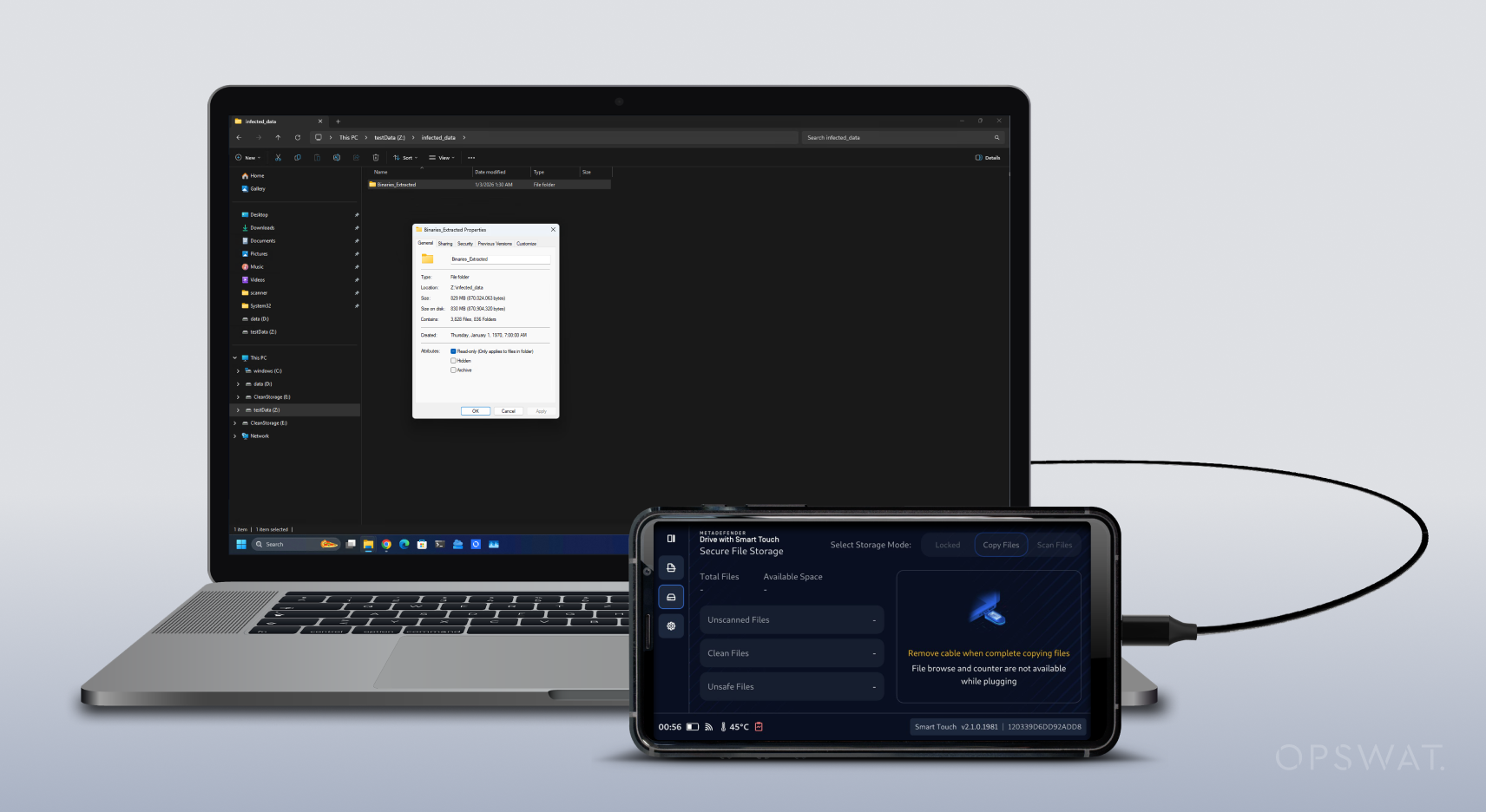
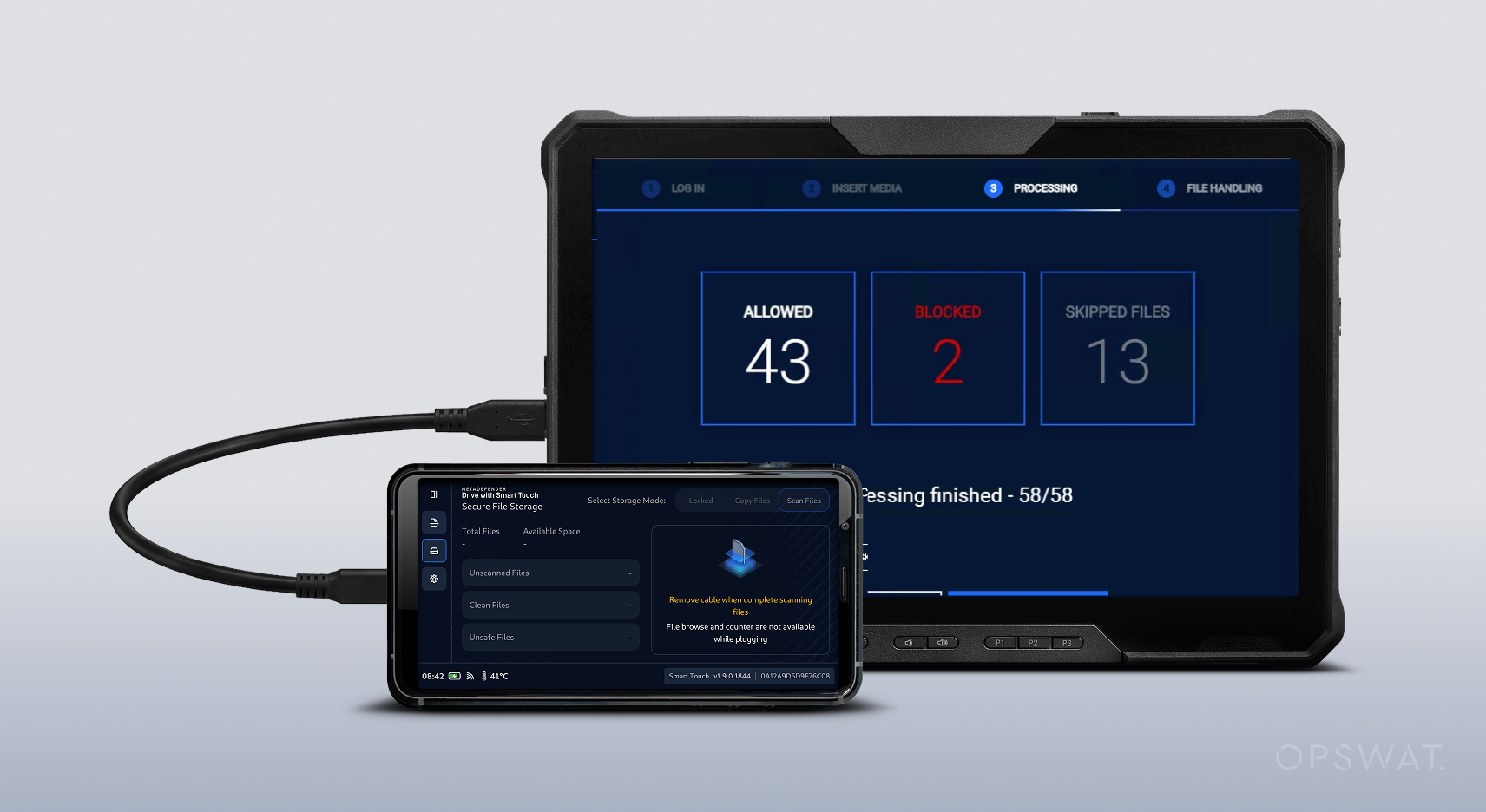
The verification does not end at the MetaDefender Kiosk. If a verified file is modified after the scan and before deployment, it is automatically blocked and hidden. In that case, this file must pass verification again before it can be made accessible.
This mechanism enforces file integrity, so the operator does not have to manually perform it. This shifts the security model from "scan once and distribute" to "verify continuously until deployment."
A Workflow Inside a Larger Device Security System
A secure file distribution workflow addresses a larger challenge that organizations face in critical environments. Security teams also need practical approaches for:
- Scanning and verifying incoming contractor and supply chain devices before they connect to OT systems
- Enforcing consistent inspection policies across distributed sites with centralized management
- Scanning and verifying transfers into critical systems that cannot be taken offline
- Managing secure firmware distribution workflows in air-gapped environments
- Maintaining centralized visibility and audit-ready records
Start Verifying Every Device in Your Environment
Learn how MetaDefender Drive™ with Smart Touch fits your critical infrastructure environment. Reach out to an OPSWAT expert today.