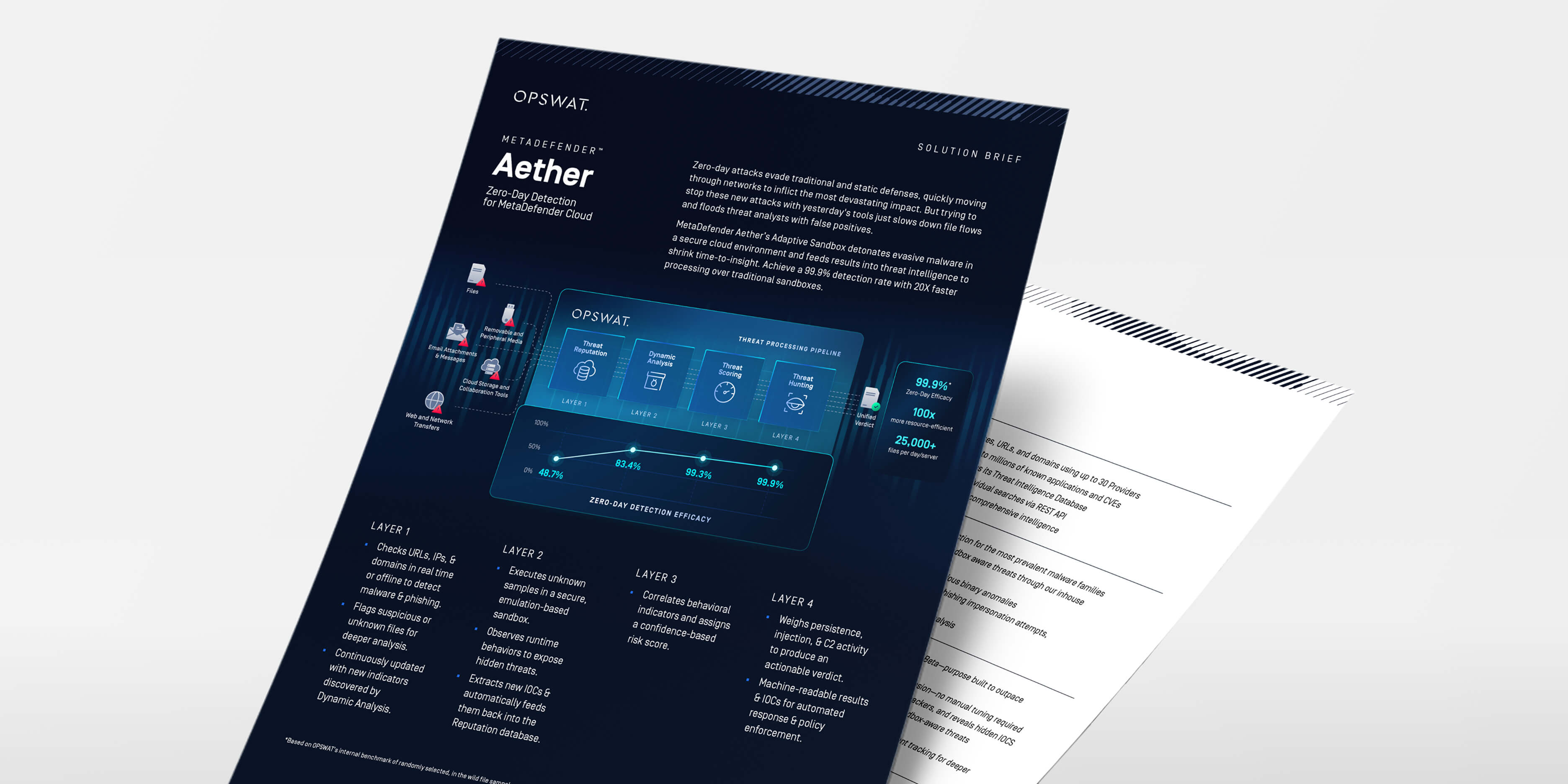
Zero-Day Detection
for MetaDefender Cloud
OPSWAT’s AI-driven, cloud-based zero-day detection solution combines an adaptive sandbox with built-in threat intelligence, detonating suspicious files at cloud scale. Extract behavioral IOCs, and enrich cloud workflows, CI/CD pipelines, and SIEM/SOAR systems with actionable malware intelligence.
- Unmatched Zero-Day Detection
- Real-Time Threat Analysis
- Set up instantly
Unified Zero-Day Detection
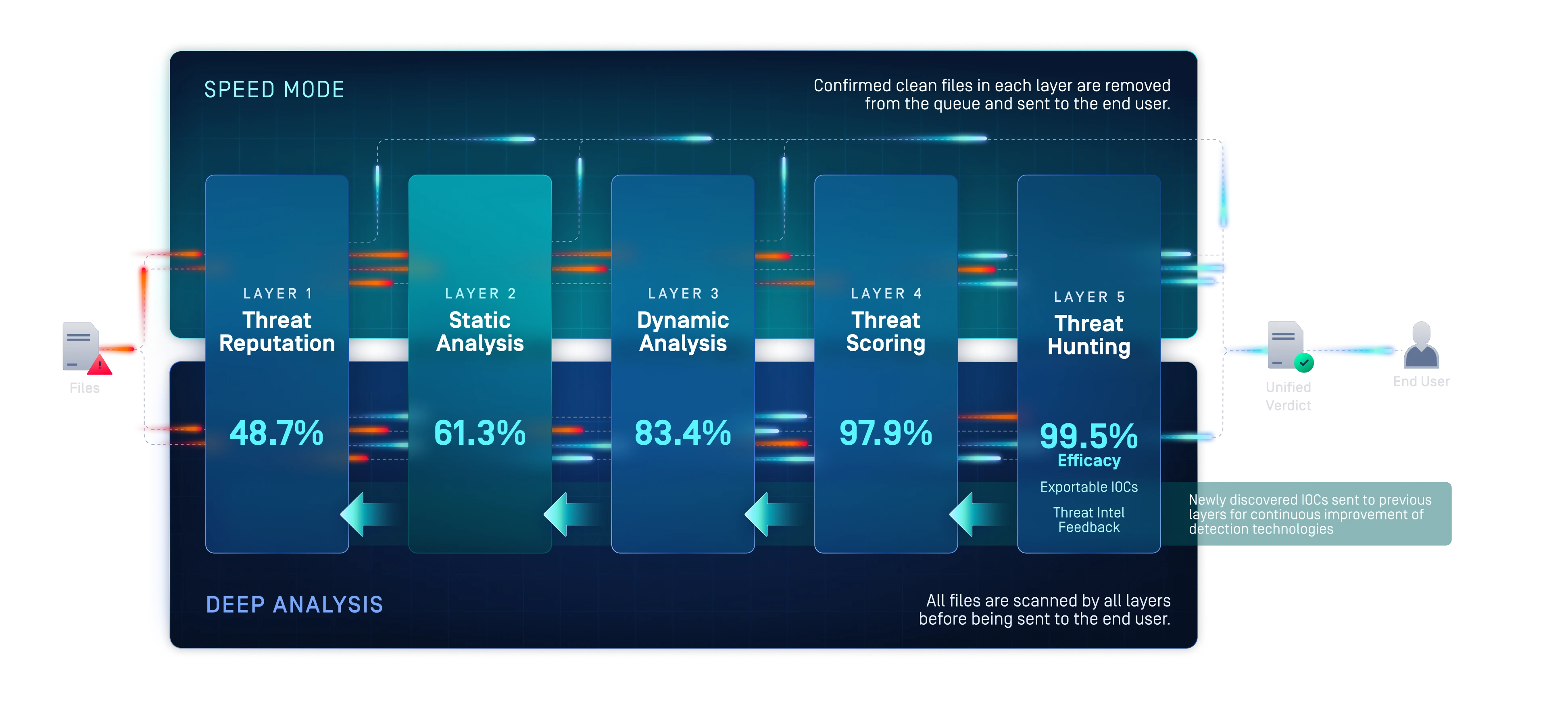
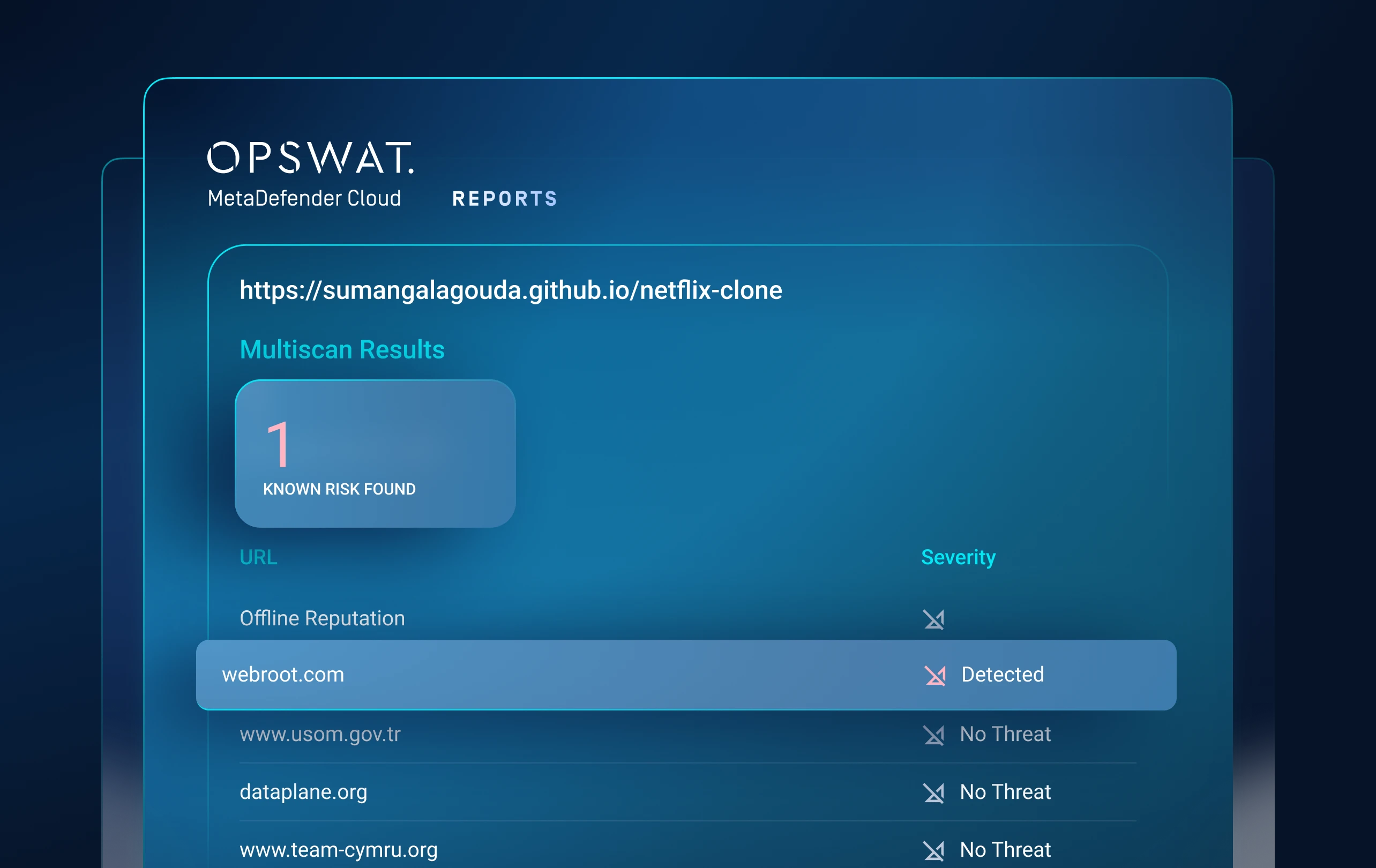
Layer 1: Threat Reputation
Expose Known
Threats Fast
Stop known threats before deeper analysis.
Checks files, URLs, IPs, and domains against continuously updated reputation intelligence, online or offline.
Blocks reused malware and attacker infrastructure, forcing adversaries to rotate indicators and rebuild delivery paths.
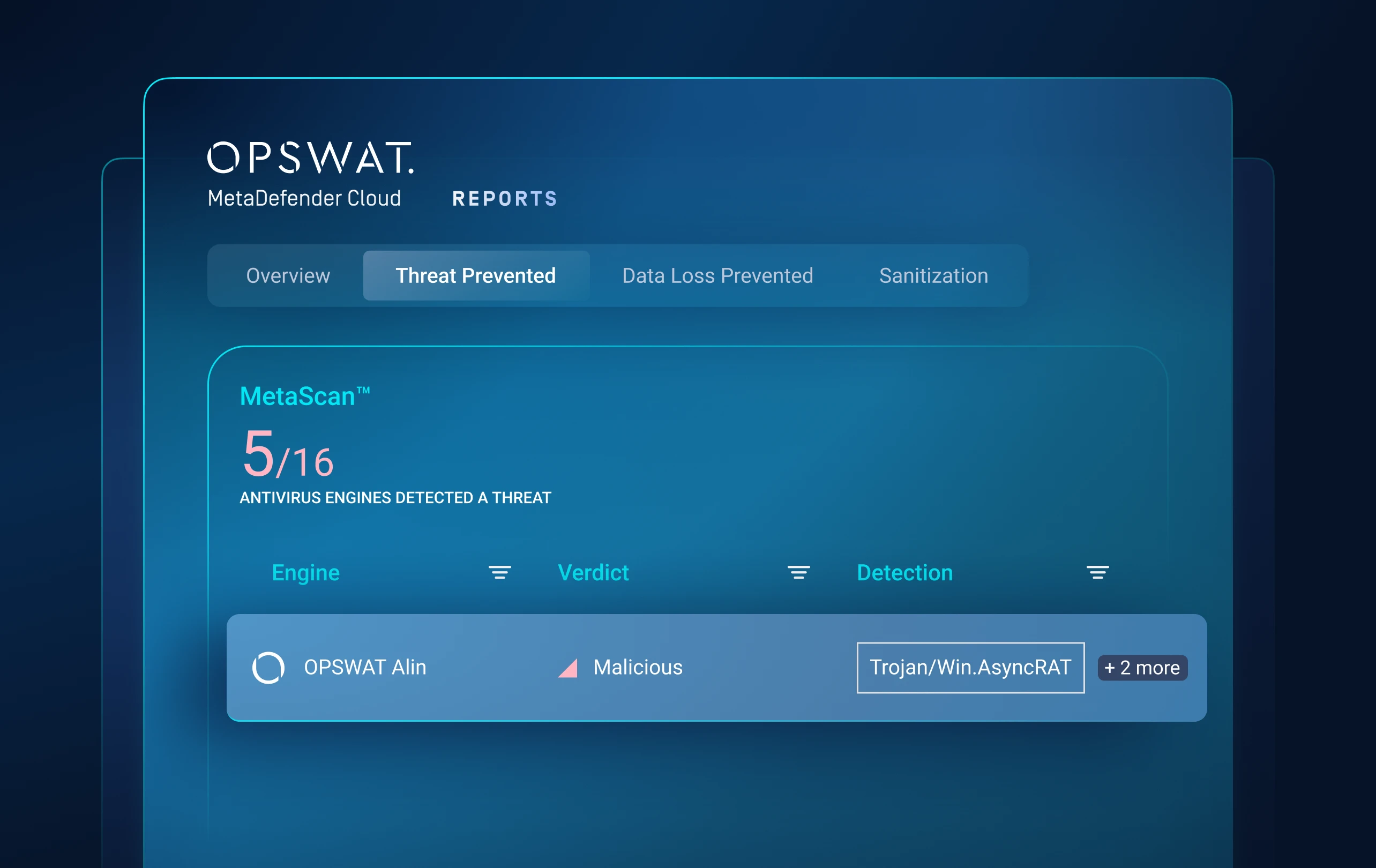
Layer 2: Static Analysis
Predict Unknown Threats Before Execution
Close the Pre-Execution detection gap.
Predictive Alin AI analyzes file structure and behavioral features to predict malicious intent in milliseconds, without signatures or detonation.
Detects never-before-seen and polymorphic malware before it runs, reducing downstream sandbox demand while keeping file flows fast.
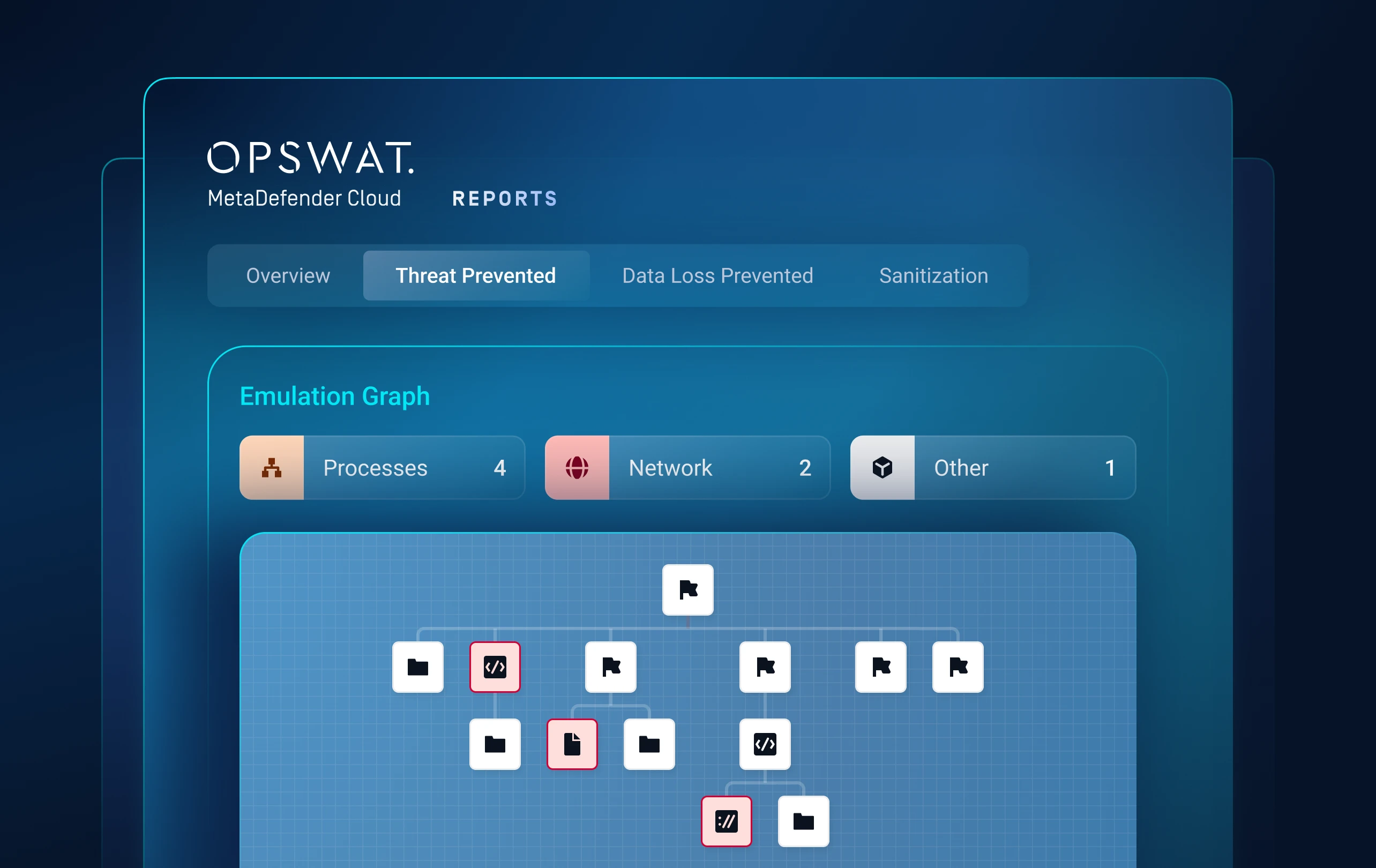
Layer 3: Dynamic Analysis
Force Hidden Threats to Reveal Themselves
Expose evasive malware that static and VM-based tools miss.
An emulation-based Adaptive Sandbox triggers malicious behavior and explores alternate execution paths without relying on a detectable virtual machine.
Reveals loader chains, runtime artifacts, obfuscated scripts, multi-stage payloads, and evasion techniques.
Layer 4: Threat Scoring
Prioritize What Matters Most
Turn complex threat behavior into an actionable verdict.
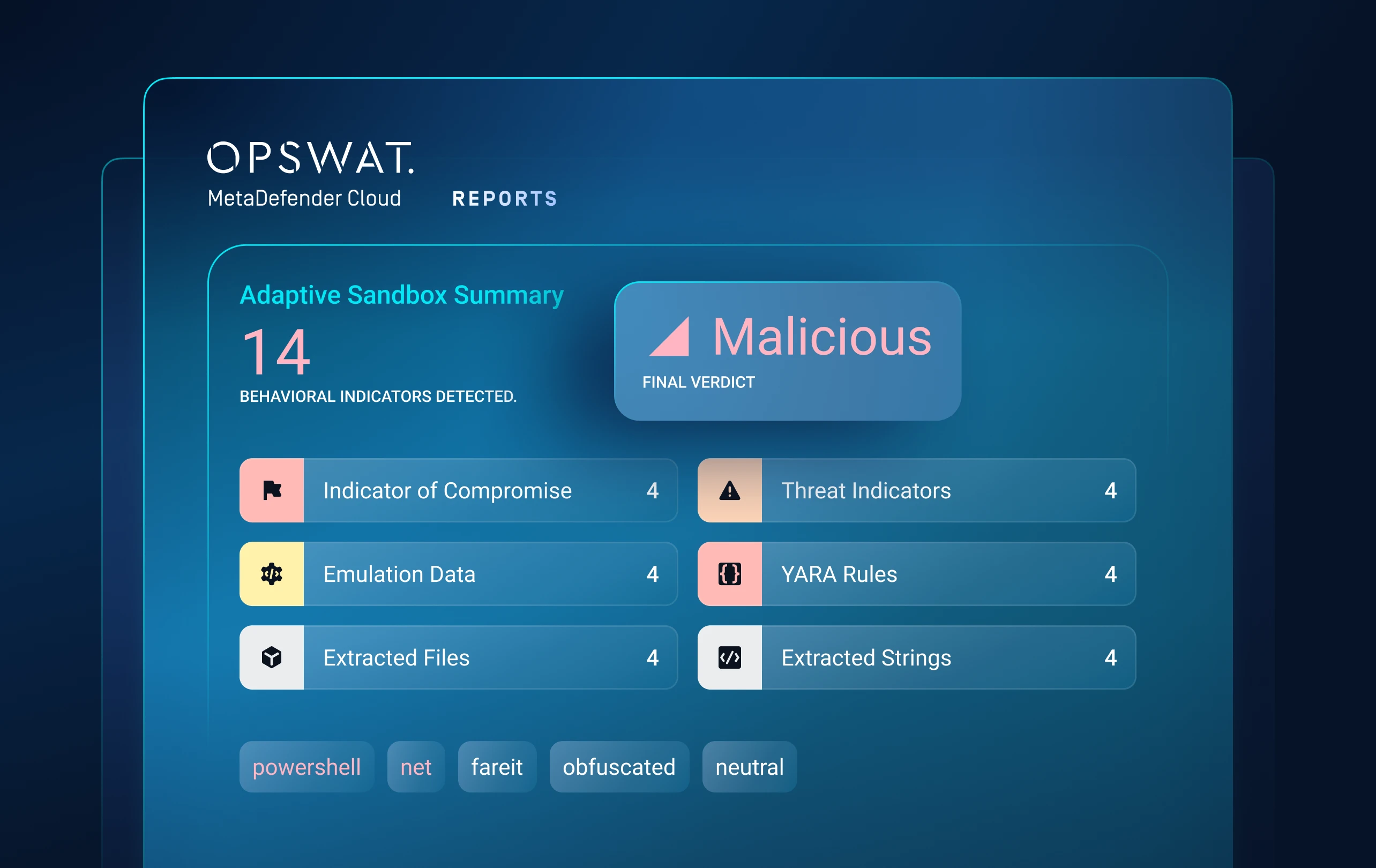
Correlates reputation, static, and dynamic analysis signals to assign a confidence-based risk score.
Highlights the highest-risk threats in real time, reducing false positives, alert noise, and analyst triage time.
Layer 5: Threat Hunting
Connect Threats to Campaigns
Move from isolated file detection to campaign-level intelligence.
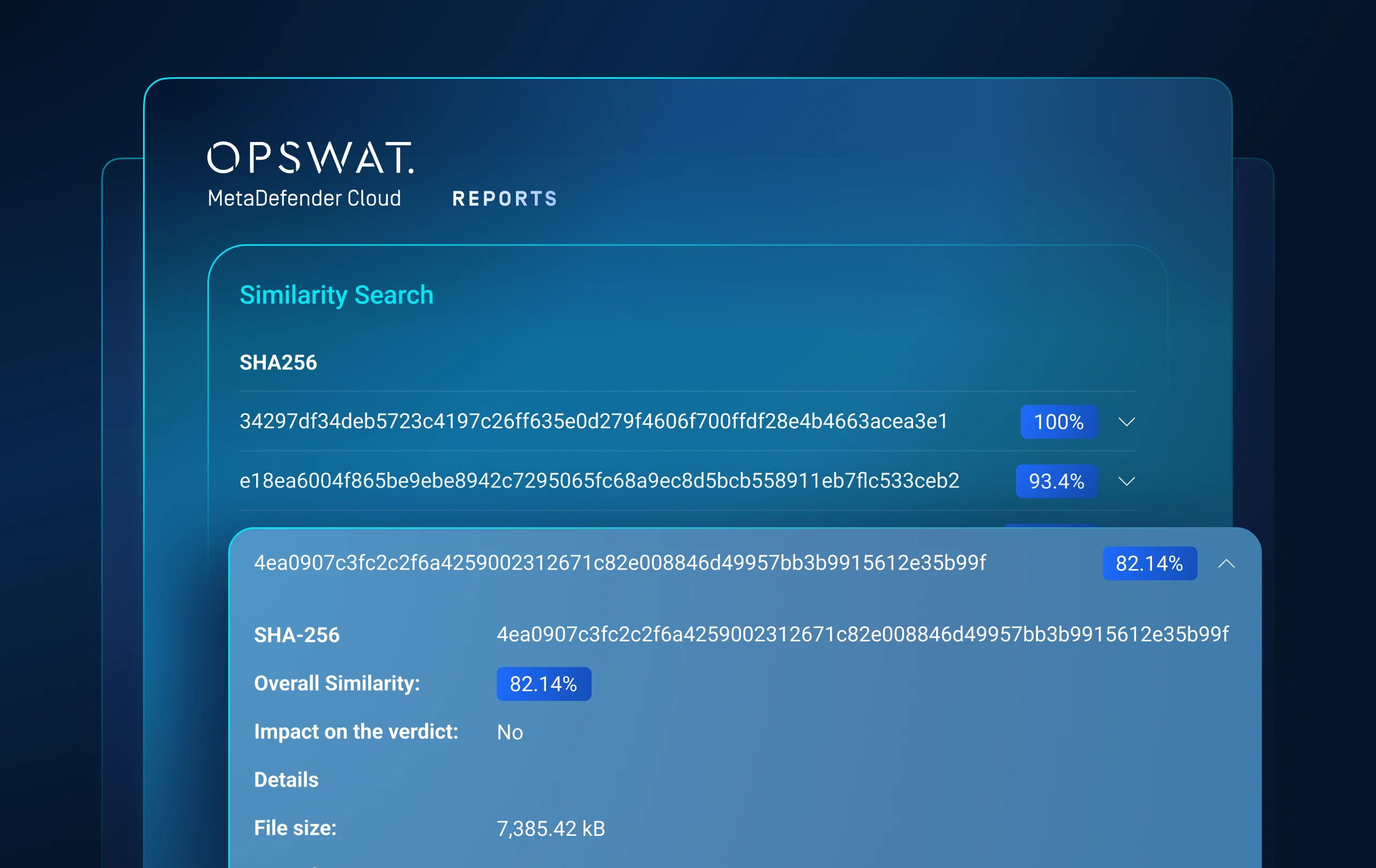
ML-powered similarity search and Threat Pattern Correlation connect unknown samples to known malware, infrastructure, tactics, and related variants.
Uncovers malware families and attacker campaigns, forcing adversaries to overhaul their tools, infrastructure, and tradecraft.
Get Started in 3 Simple Steps
OPSWAT Activates Access
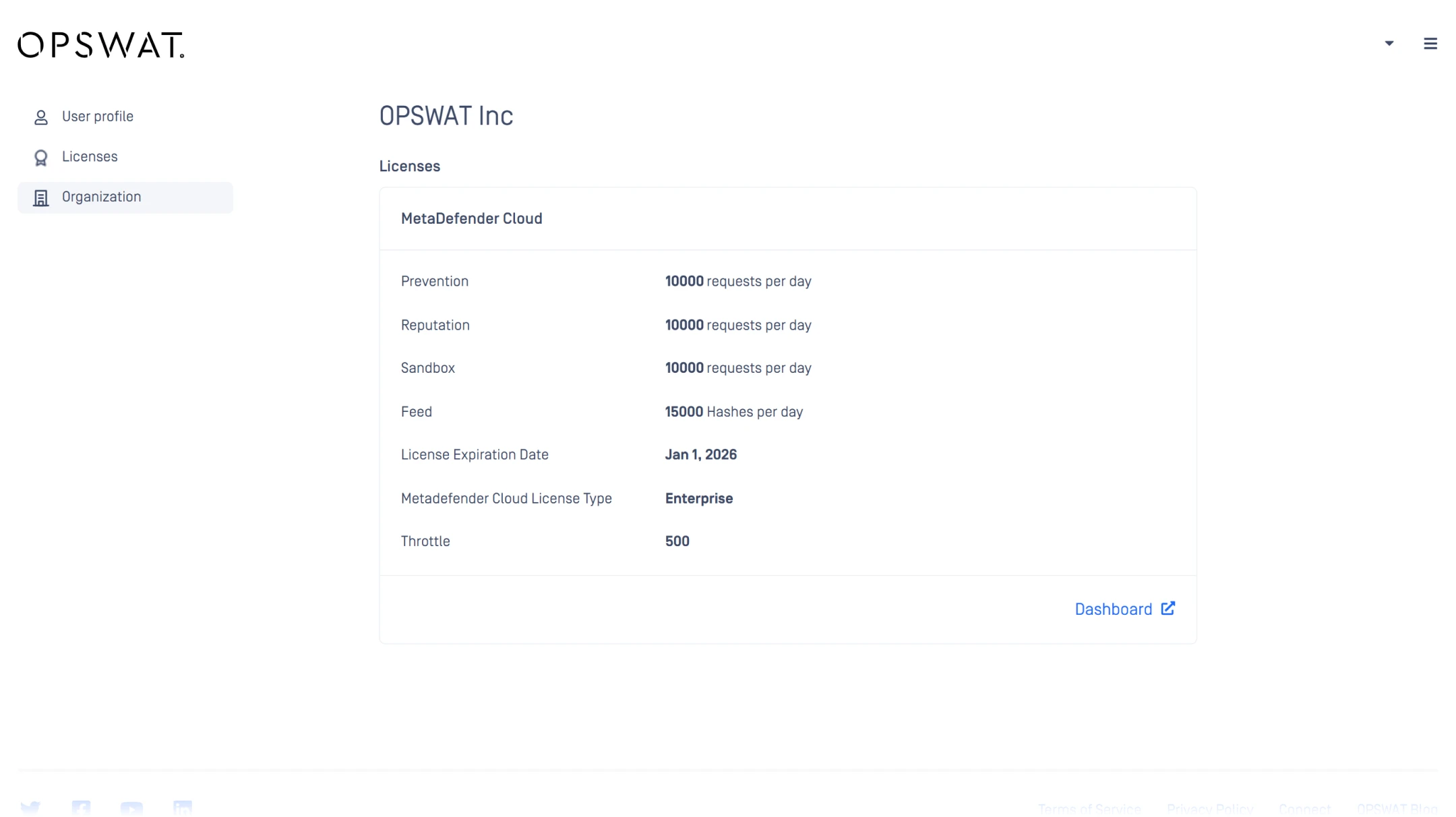
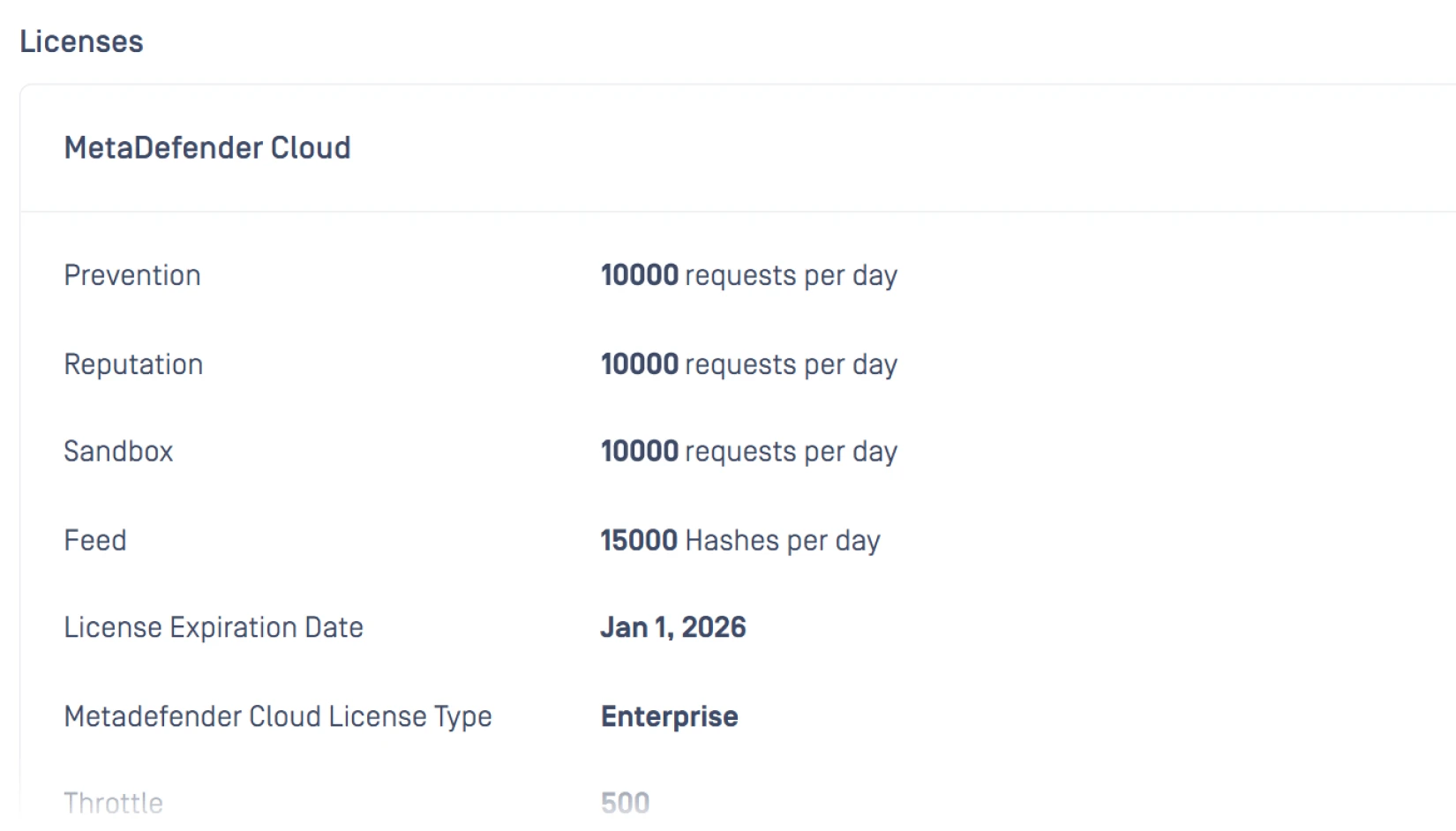
Your package is activated by an OPSWAT representative.
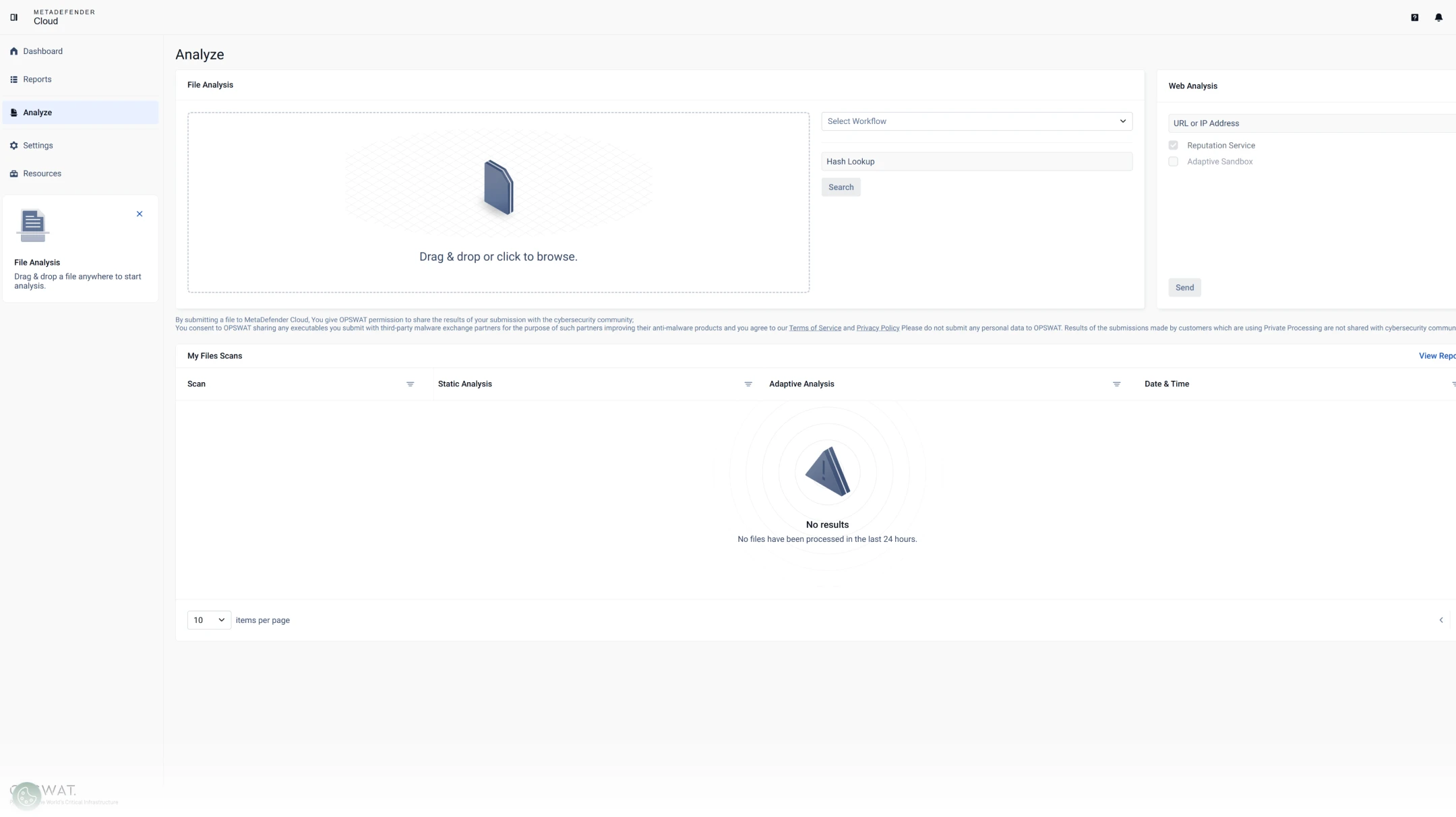
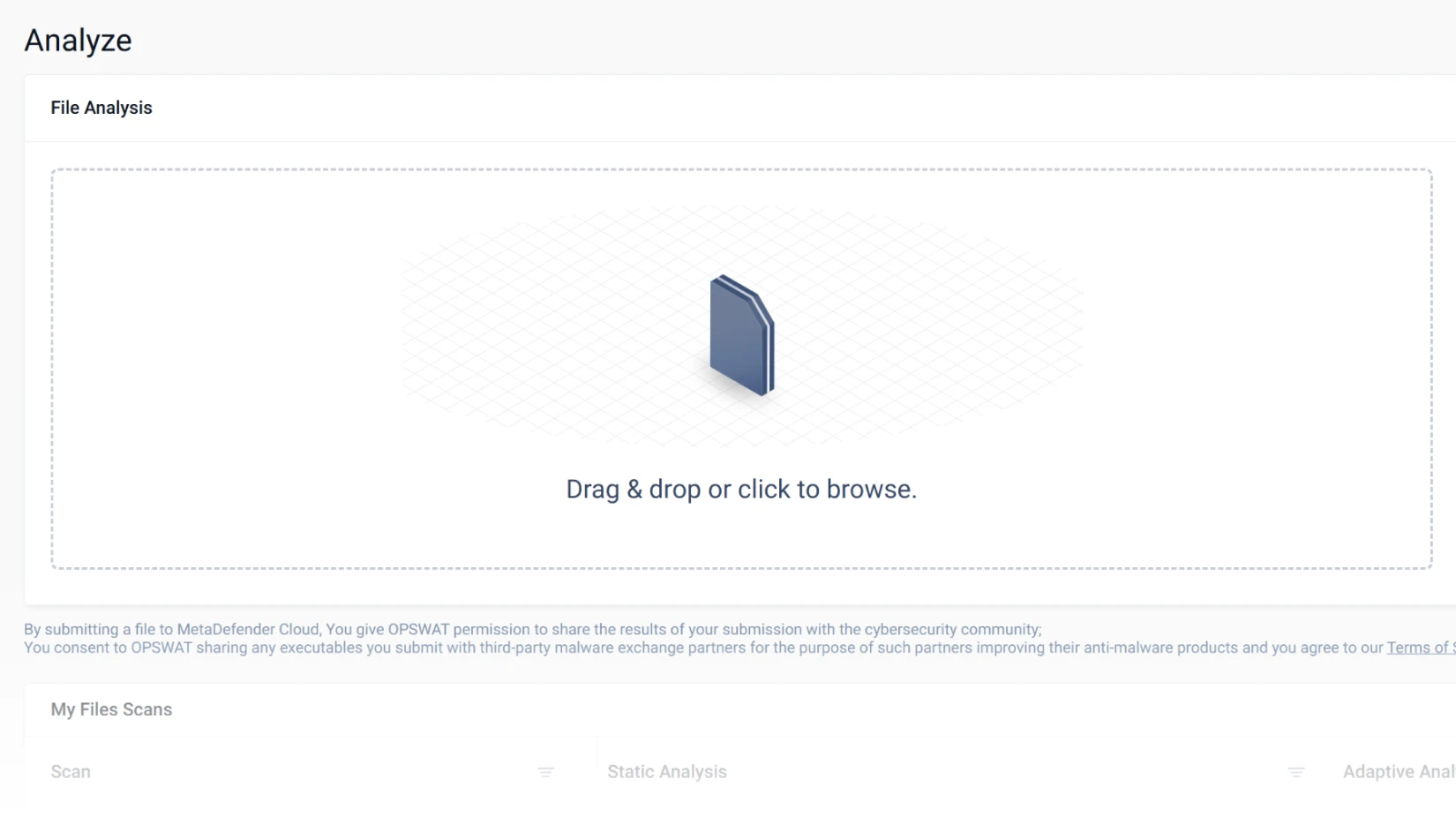
Drag and Drop Files
Select a file for dynamic analysis.
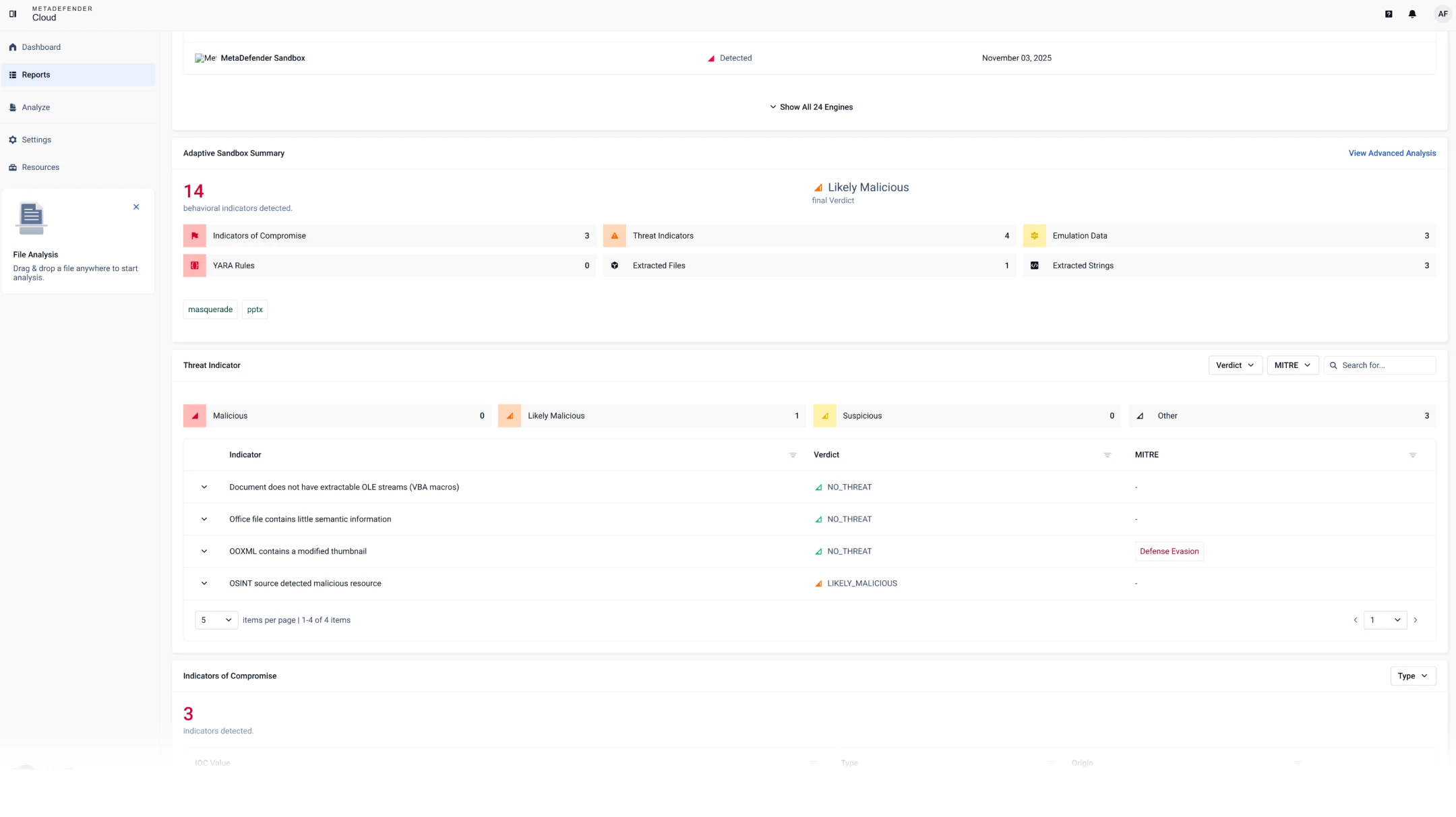
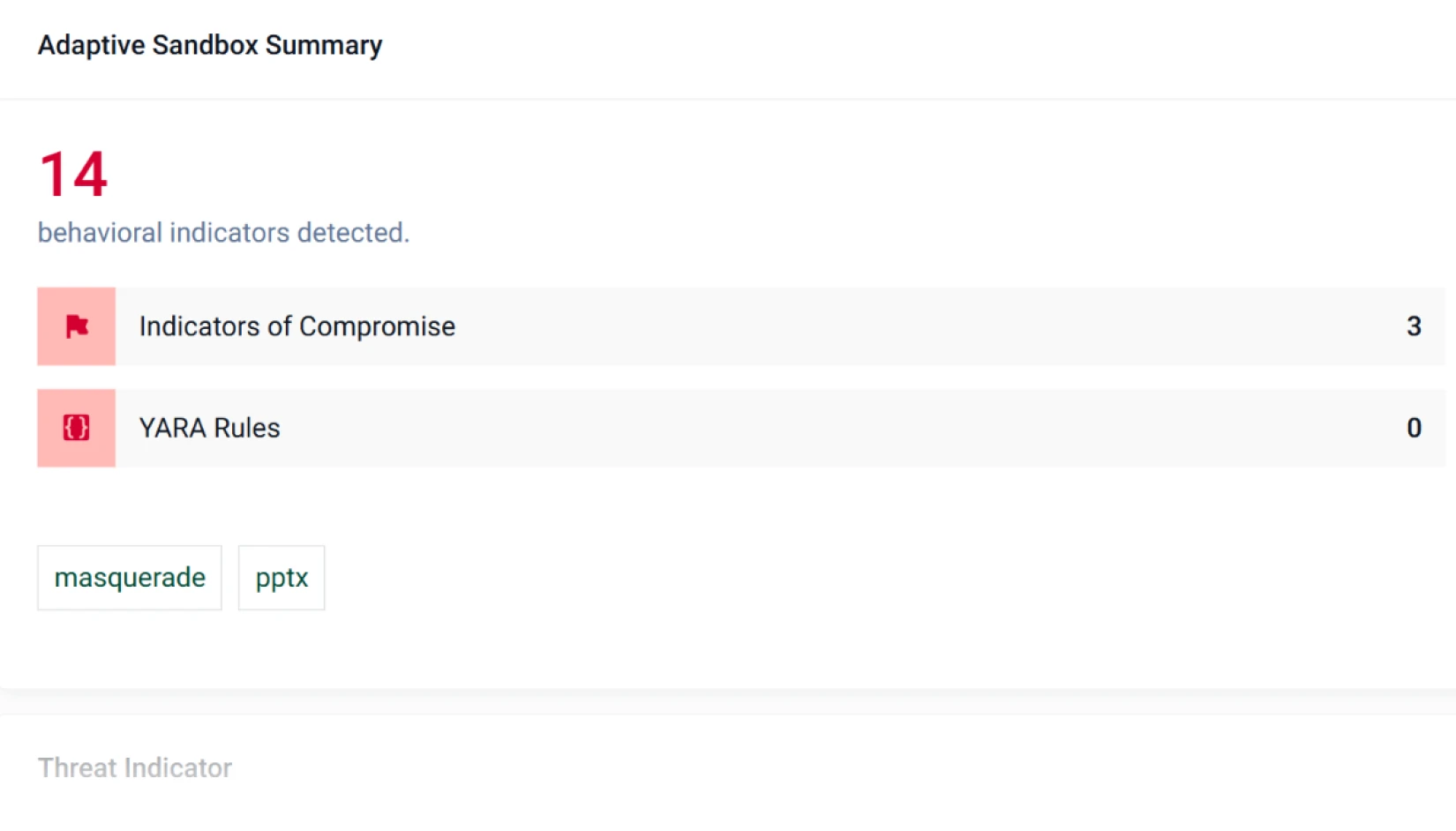
Get Results
View sandbox verdicts, threat scores, & IOCs directly within your Cloud dashboard.
- MetaDefender Cloud


- MetaDefender Cloud
- MetaDefender Cloud
Product Overview
Learn how MetaDefender Aether detects zero-day threats at the perimeter by combining adaptive sandboxing, threat intelligence, threat scoring, and similarity search before files enter critical environments.
Adaptive Sandbox Engine Features
for MetaDefender Cloud
The following table outlines Adaptive Sandbox for MetaDefender Cloud engine feature set. It doesn’t include platform features, such as the API coverage, configurable Access Control List (ACL), OAuth integration, Common Event Format (CEF) syslog feedback, etc.
Please contact us to book a technical presentation and get a run-through of all platform features and capabilities.
Adaptive Sandbox Integrations
for MetaDefender Cloud
Inside OPSWAT / SaaS Ecosystem
- MetaDefender Cloud public APIs (files, hashes, URLs, domains)
- Reputation and threat intelligence APIs (URL, domain, IP, hash lookups)
- Other OPSWAT cloud modules and services

External / 3rd-party Integrations
- REST API for file, URL, IP, and domain submissions with sandbox analysis results
- SIEM / logging platforms through API or event export
- Developer tools (CI/CD pipelines, repositories, SDKs, plugins)
- SOAR / orchestration platforms through API integration
Cross-environment / Hybrid
- Private file processing / scanning options for sensitive environments
- On-prem MetaDefender Core using Cloud reputation and threat intelligence services
- Inside OPSWAT / SaaS Ecosystem

Inside OPSWAT / SaaS Ecosystem
- MetaDefender Cloud public APIs (files, hashes, URLs, domains)
- Reputation and threat intelligence APIs (URL, domain, IP, hash lookups)
- Other OPSWAT cloud modules and services
- External / 3rd-party
External / 3rd-party Integrations
- REST API for file, URL, IP, and domain submissions with sandbox analysis results
- SIEM / logging platforms through API or event export
- Developer tools (CI/CD pipelines, repositories, SDKs, plugins)
- SOAR / orchestration platforms through API integration
- Cross-environment / Hybrid
Cross-environment / Hybrid
- Private file processing / scanning options for sensitive environments
- On-prem MetaDefender Core using Cloud reputation and threat intelligence services
Support Compliance
with Regulatory Requirements
As cyberattacks and the threat actors that carry them out become more sophisticated, governing bodies around the world are
implementing regulations to ensure critical infrastructure is doing what’s necessary to stay secure.





Recommended Resources

The Invariants of Cybersecurity
MetaDefender Aether for Cloud
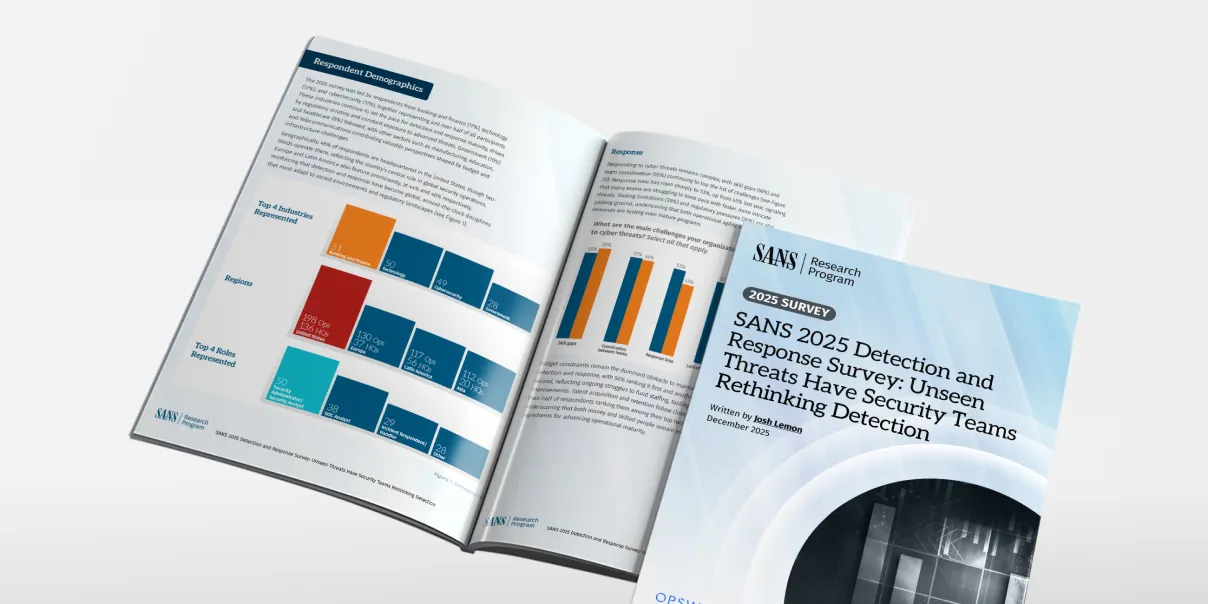
SANS Detection & Response Survey
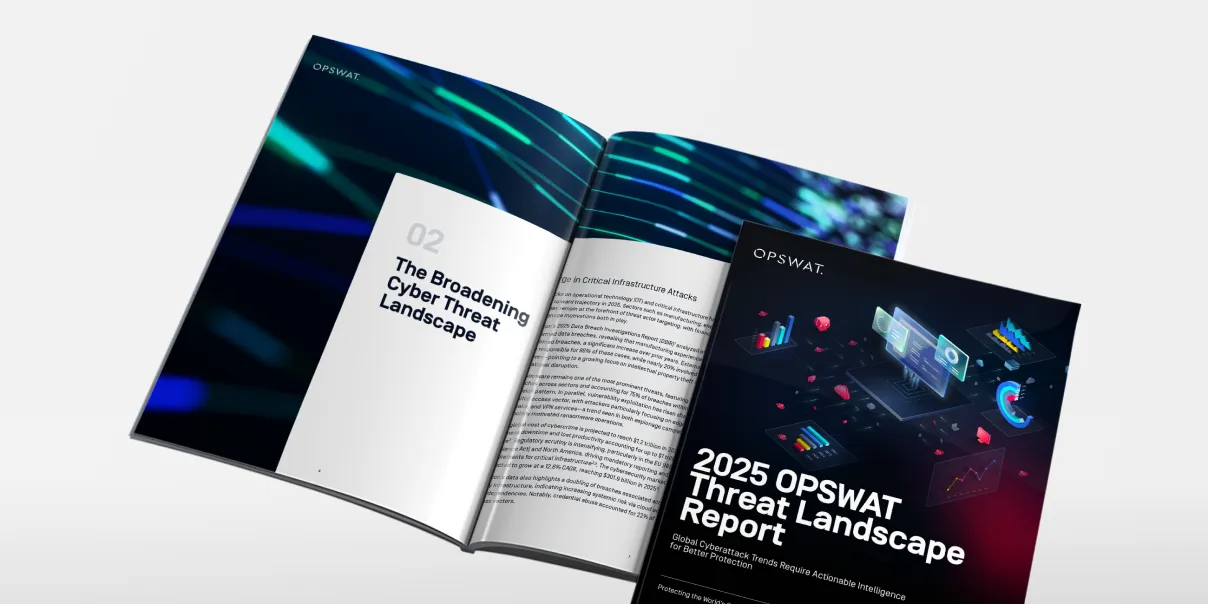
2025 OPSWAT Threat Landscape Report

Scan What Matters: 99.9% Precision AI Engine Improves Your Security Stack

Security-First MFT: AI-Native & Emulation-Driven Defense Against File-Based Attacks

Energy Provider Eliminates Alert Floods and Improves Zero-Day Detection with OPSWAT
0 results. Please try again.
FAQs
Large-scale, cloud-native detonation for files and URLs-perfect for email security/OEMs and teams that need elastic capacity without running their own sandbox farm.
Enhanced ML web threat detection (multi-label classification, structure/style analysis), PDF phishing heuristics, brand detection, and JavaScript/clipboard emulation to surface "template kits," QR smuggling, and low complexity phishing at scale.
Simple API (submit file/URL, get verdict/IOCs), plus MISP/STIX exports, Splunk SOAR/Cortex XSOAR connectors, and auto-generated YARA for follow-on hunting.
Auto-scaling with fast emulation keeps latency low while avoiding VM overhead; policy routing ensures you only detonate what's necessary-so you control volume and spend.
Yes-mix cloud for burst/URL analysis with on-prem sandbox for sensitive or sovereign data. Policies decide where each sample runs.
