Stop Tomorrow's Attacks
Detect zero-day threats & evasive malware using a next-gen, adaptive sandbox with built-in threat intelligence. Built for speed & deep analysis.
- 99.5% Zero-Day Efficacy
- 40X Faster Analysis
- Analyze All Files at the Perimeter
OPSWAT is Trusted by























Why Traditional Tools Don’t Cut It
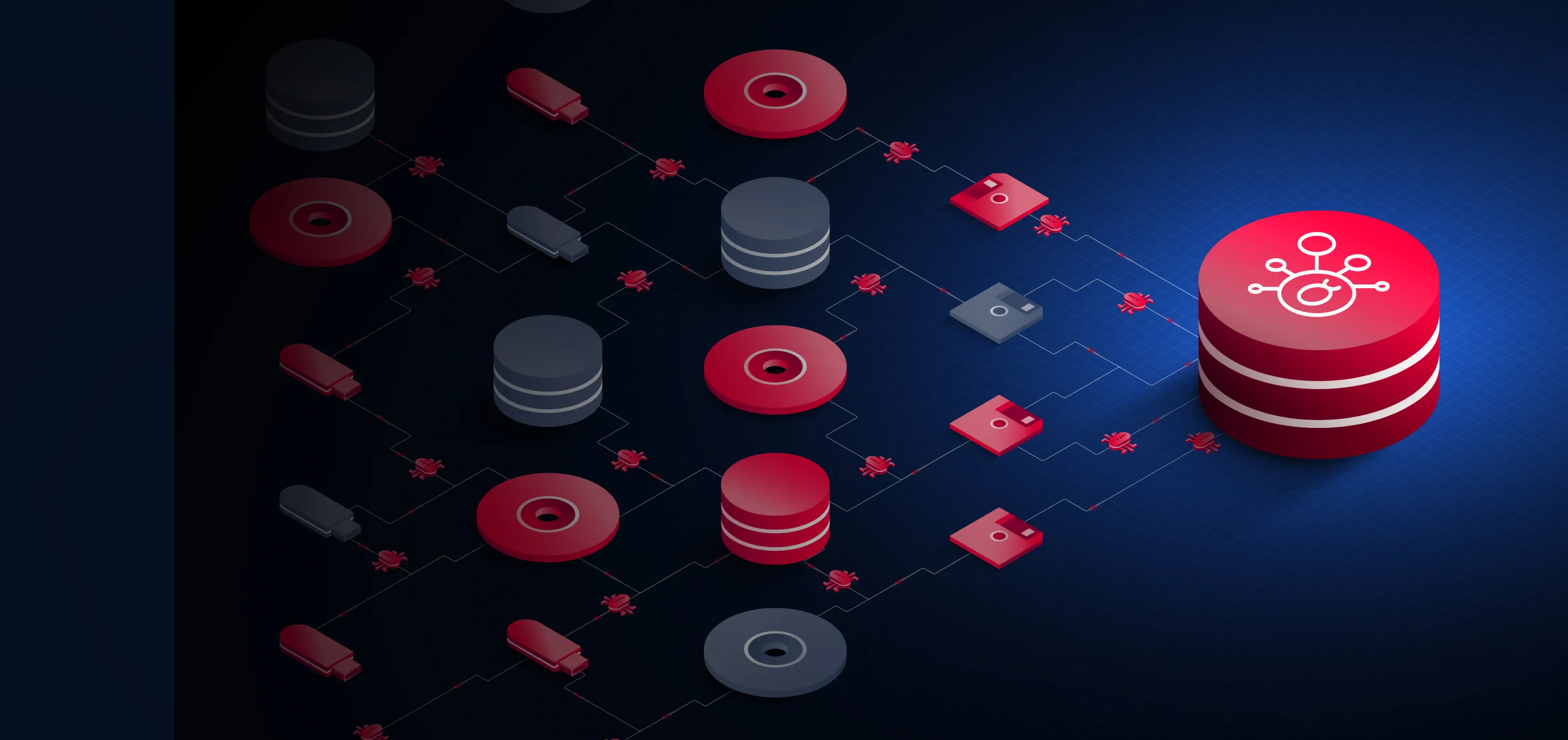
Zero-day and evasive malware exploit the gaps between reputation checks, static scanning, sandbox analysis, alert prioritization, and threat hunting.


Signature Dependence
Traditional security tools are strongest when a threat has already been identified.
New files, infrastructure, and malware variants can pass initial reputation checks because no signature, hash, or prior verdict exists yet.

Pre-Execution Gaps
Most tools cannot reliably assess malicious intent before a file runs.
Without predictive static analysis, security teams must either allow an unknown file through or send it to slower dynamic analysis, creating delays, backlogs, and unnecessary sandbox demand.


Threat Evasion
Modern malware is built to conceal its behavior from conventional sandboxes and static defenses.
Environment checks, timing delays, obfuscation, user-interaction gates, and anti-VM techniques help malicious files remain dormant until they reach a real target.


Alert Overload
Security teams receive too many disconnected alerts and too little decision-ready context.
Without confidence-based scoring and clear prioritization, analysts spend critical time investigating false positives while higher-risk threats continue moving through the environment.


Fragmented Threat Intel
Point tools often stop at an isolated file verdict.
Without shared behavioral indicators, similarity analysis, and campaign-level correlation, teams struggle to connect related malware variants, attacker infrastructure, and emerging attack patterns across the environment.
Unified Zero-Day Detection
Layer 1: Threat Reputation
Expose Known
Threats Fast
Stop known threats before deeper analysis.
Checks files, URLs, IPs, and domains against continuously updated reputation intelligence, online or offline..
Blocks reused malware and attacker infrastructure, forcing adversaries to rotate indicators and rebuild delivery paths.
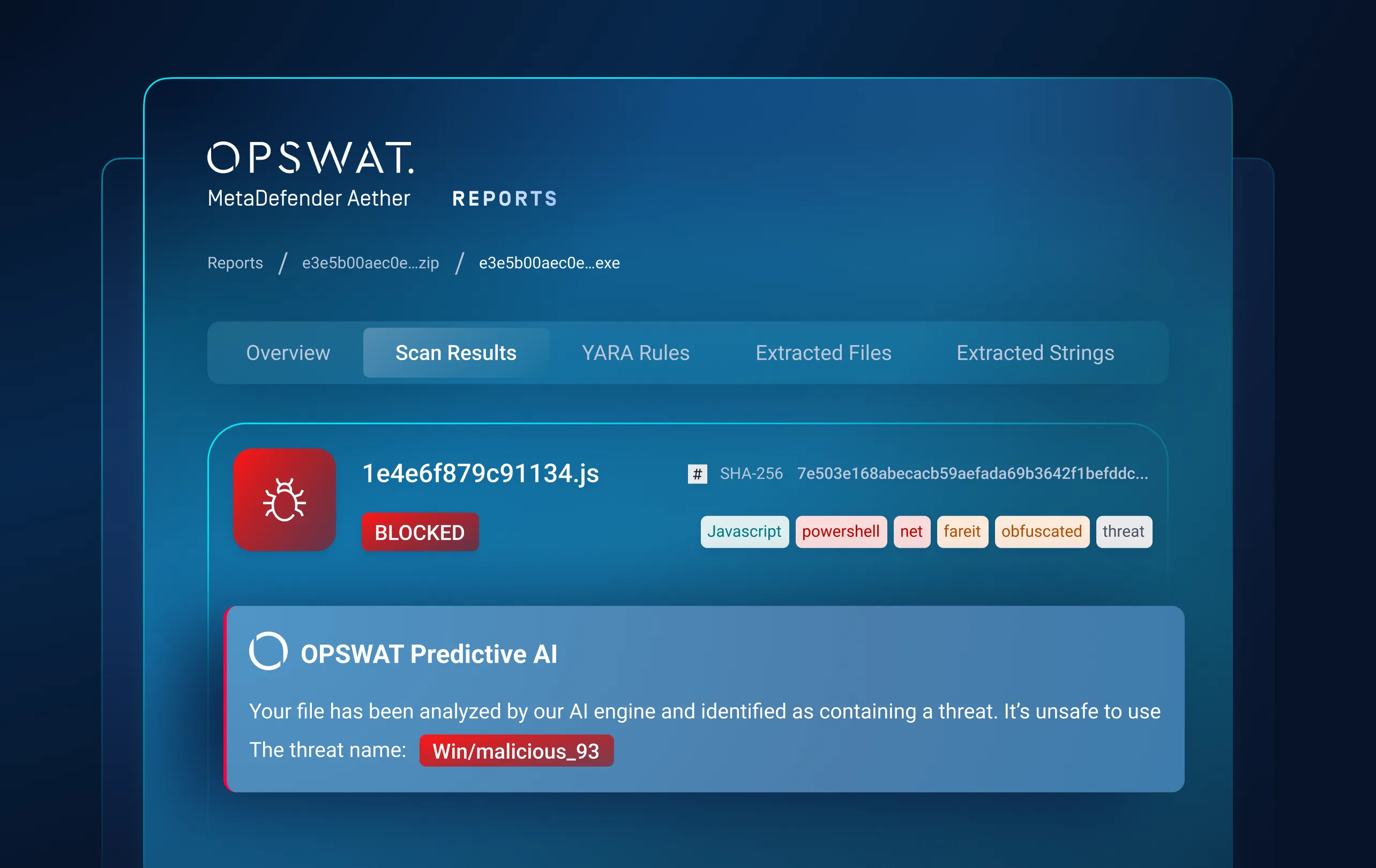
Layer 2: Static Analysis
Predict Unknown Threats Before Execution
Close the Pre-Execution detection gap.
Predictive Alin AI analyzes file structure and behavioral features to predict malicious intent in milliseconds, without signatures or detonation.
Detects never-before-seen and polymorphic malware before it runs, reducing downstream sandbox demand while keeping file flows fast.
Layer 3: Dynamic Analysis
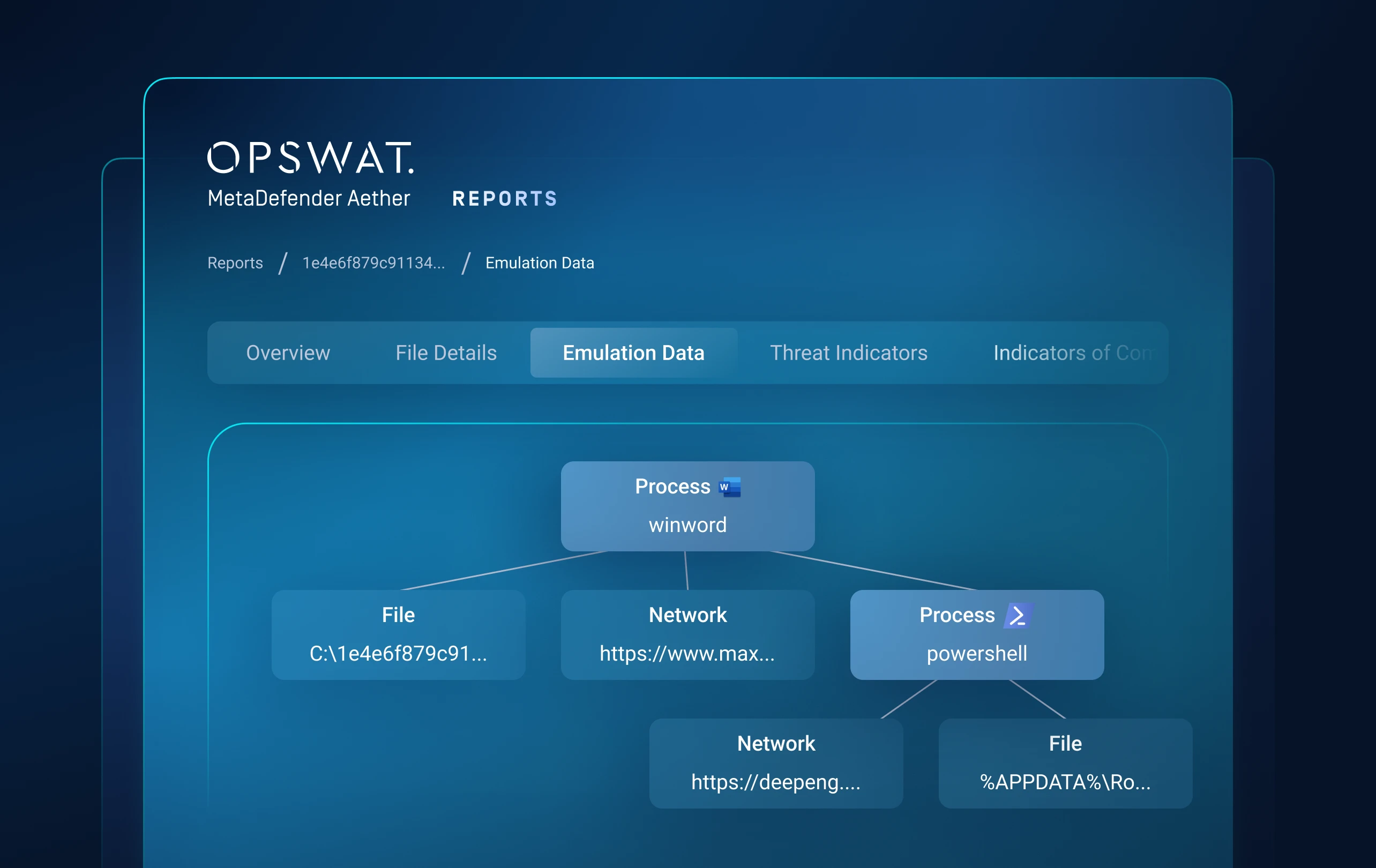
Force Hidden Threats to Reveal Themselves
Expose evasive malware that static and VM-based tools miss.
An emulation-based Adaptive Sandbox triggers malicious behavior and explores alternate execution paths without relying on a detectable virtual machine.
Reveals loader chains, runtime artifacts, obfuscated scripts, multi-stage payloads, and evasion techniques.
Layer 4: Threat Scoring
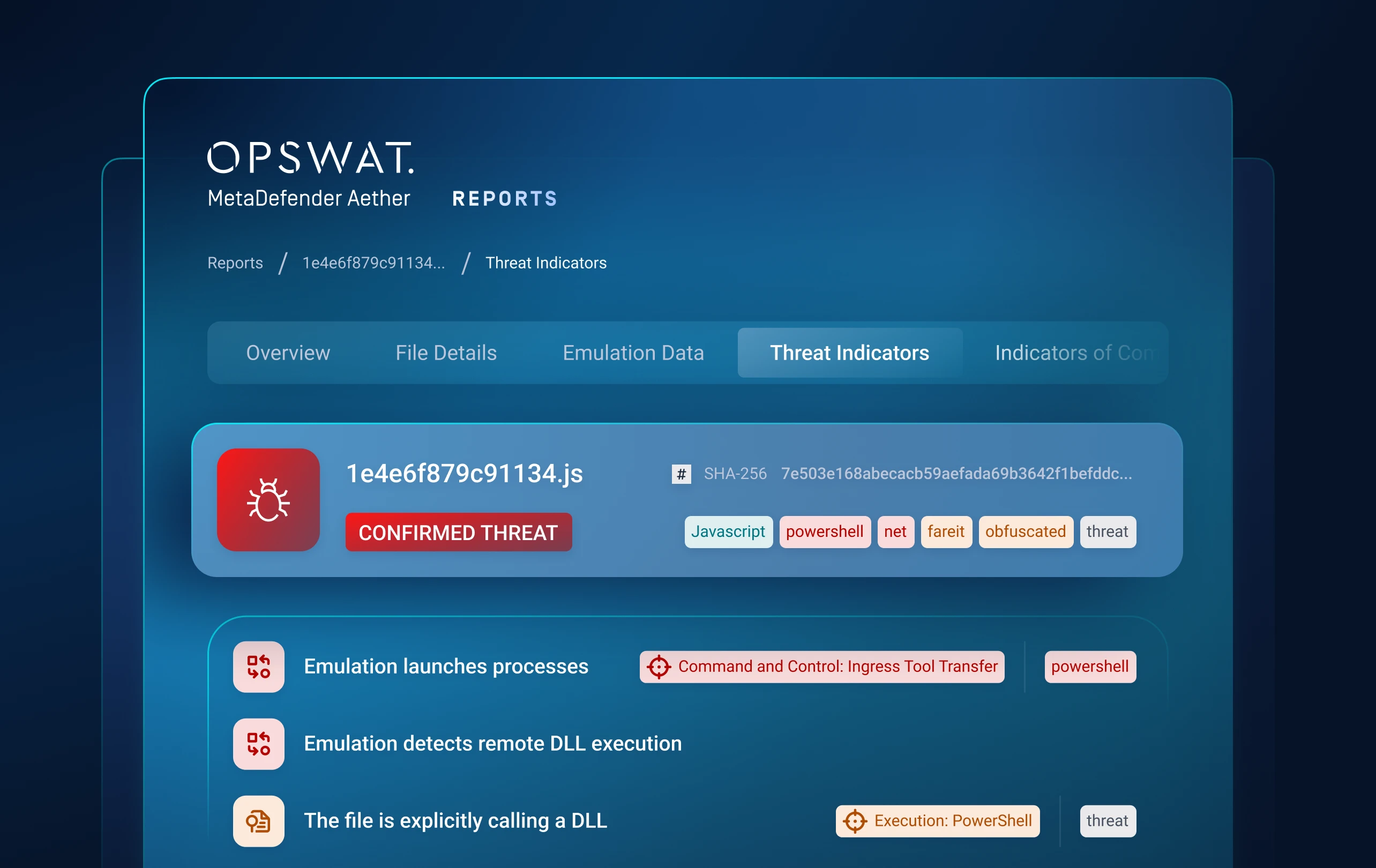
Prioritize What Matters Most
Turn complex threat behavior into an actionable verdict.
Correlates reputation, static, and dynamic analysis signals to assign a confidence-based risk score.
Highlights the highest-risk threats in real time, reducing false positives, alert noise, and analyst triage time.
Layer 5: Threat Hunting
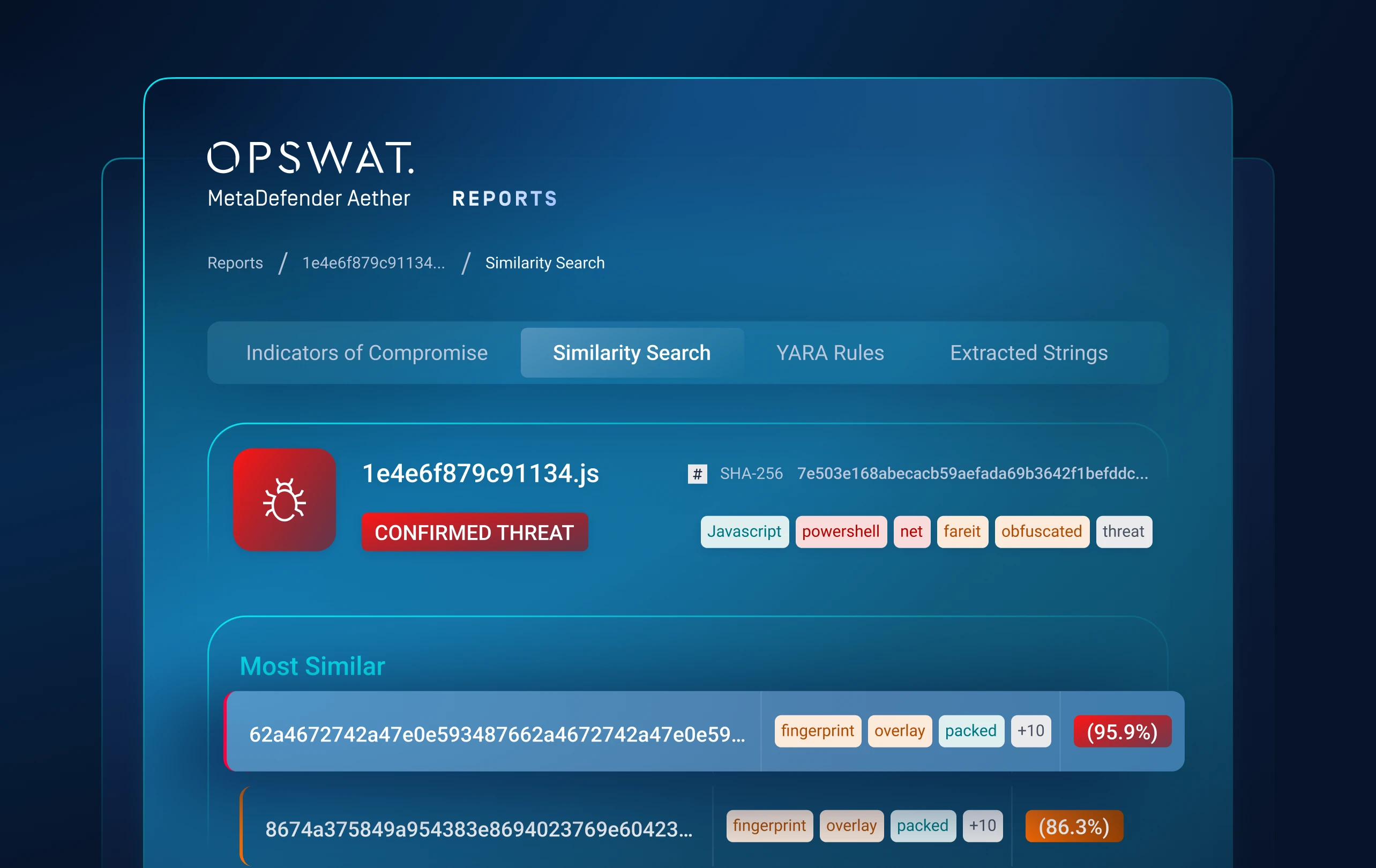
Connect Threats to Campaigns
Move from isolated file detection to campaign-level intelligence.
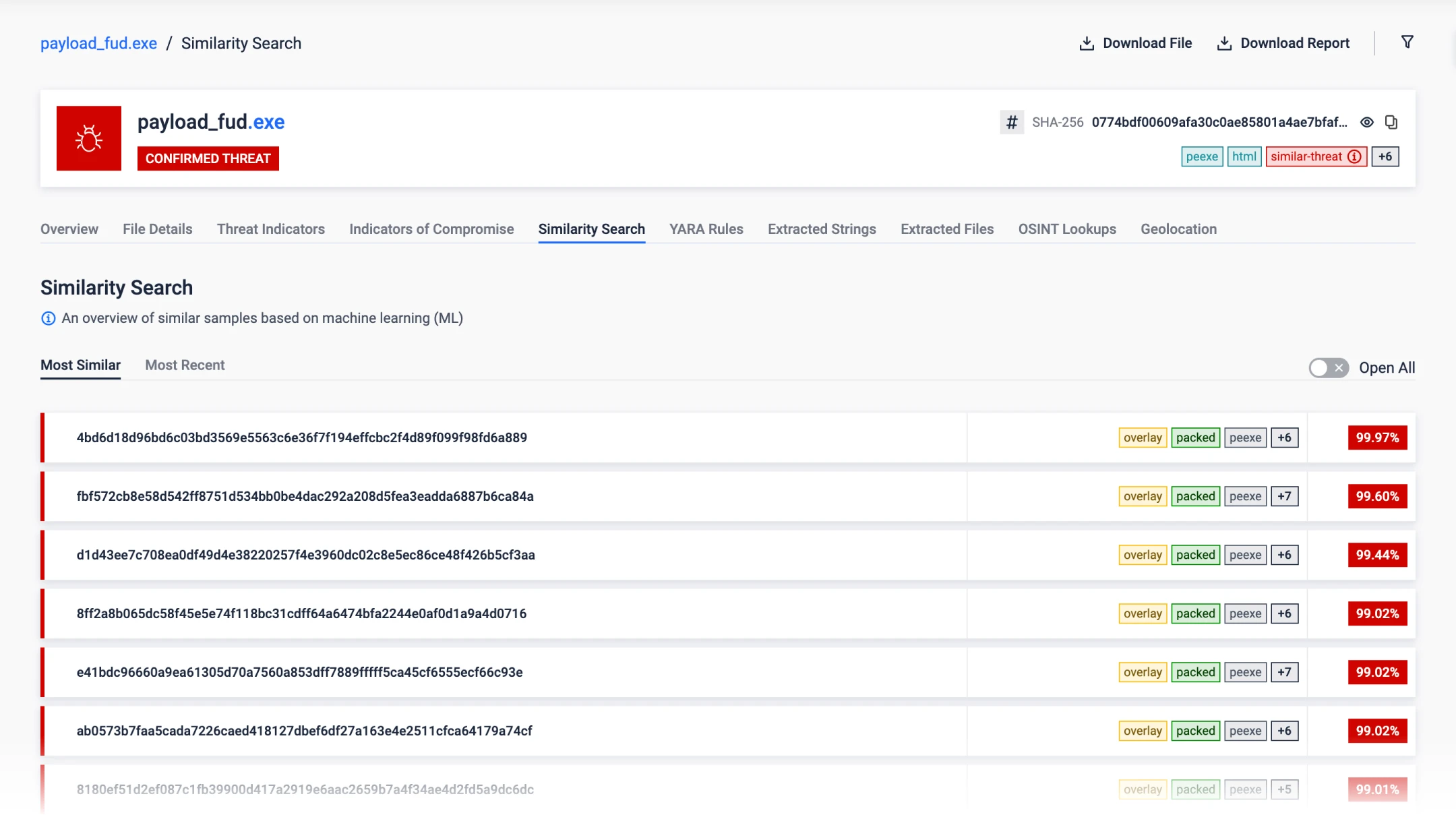
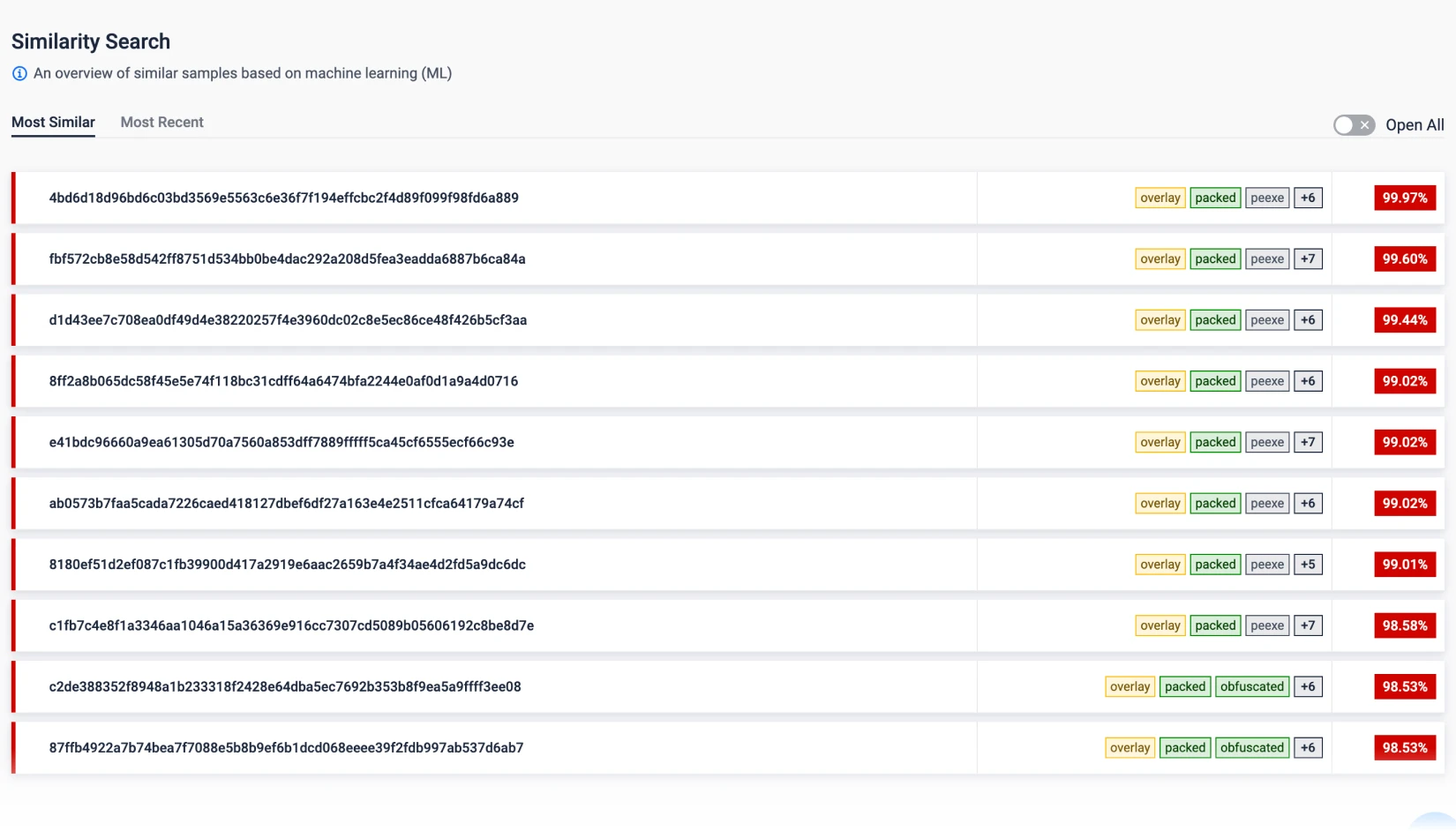
ML-powered similarity search and Threat Pattern Correlation connect unknown samples to known malware, infrastructure, tactics, and related variants.
Uncovers malware families and attacker campaigns, forcing adversaries to overhaul their tools, infrastructure, and tradecraft.
“Fastest Speed We’ve
Ever Tested.”
Venak Security
330+
Detectable Brands
for ML-Based
Phishing Detection
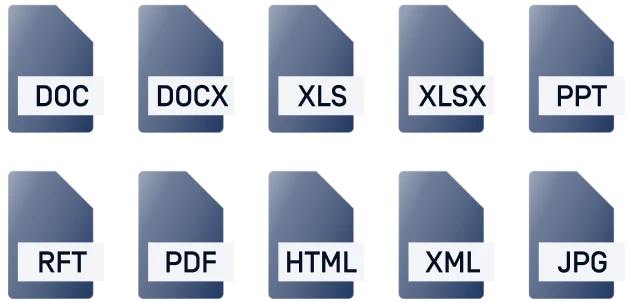
120+
File Types
Extract artifacts,
images, & more
>14
Automated Malware
Family Extraction
Integrate Easily
We stop the attacks that
no one knows exist.
40x
Faster than Traditional Solutions
See Zero Day Detection in Action
Learn how OPSWAT’s solutions detect zero-day threats at the perimeter by combining adaptive sandboxing, threat intelligence, threat scoring, and similarity search before files enter critical environments.
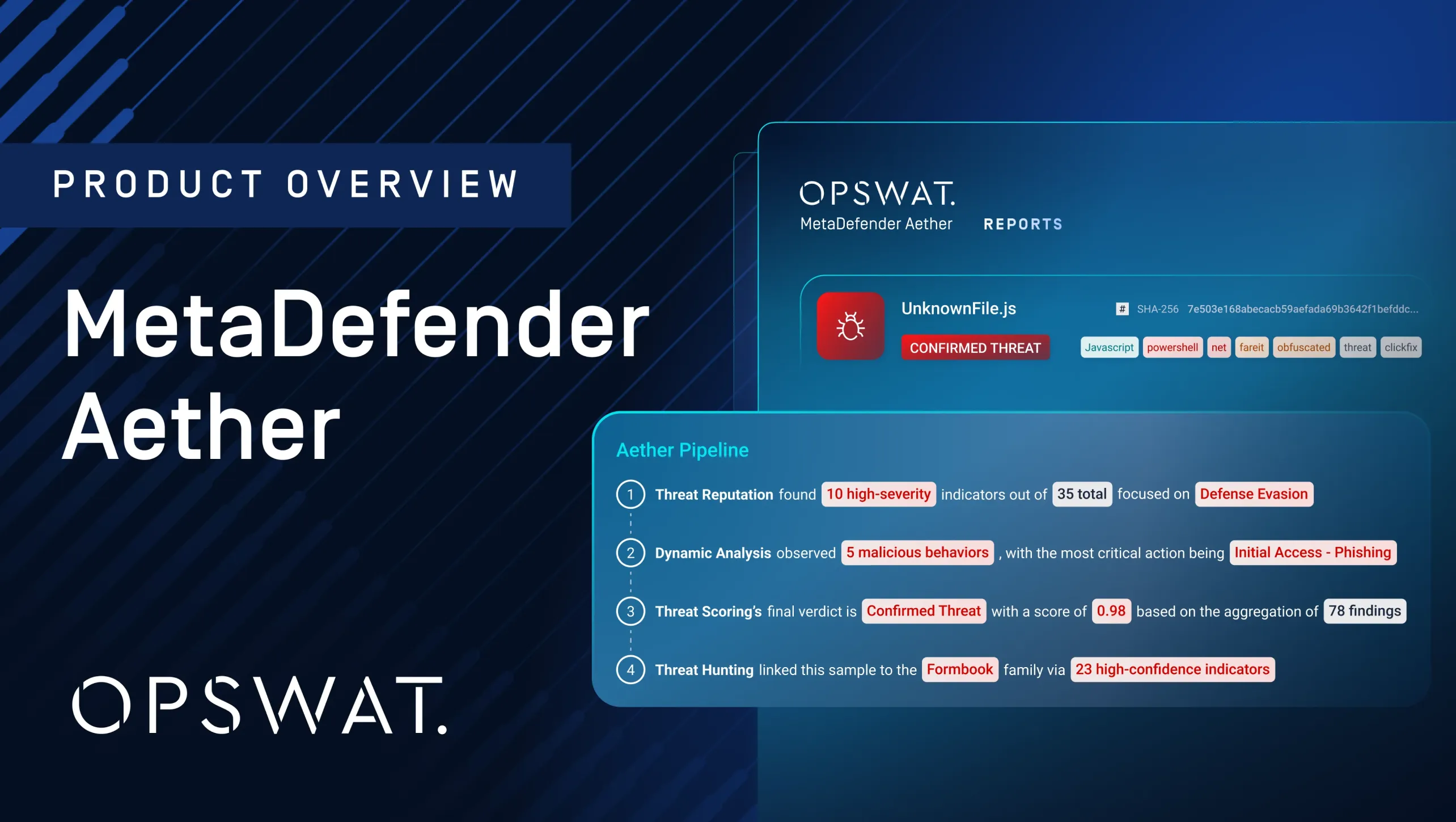
Playlist
1 video MetaDefender Aether Product Overview
Deep Visibility & Rapid Response
Harness billions of threat signals & machine-learning threat similarity search.
Deep Structure Analysis
Quickly analyze 50+ file types, including LNK and MSI, to extract embedded content, artifacts, and images.
Automated decoding, decompilation, and shellcode emulation—along with Python unpacking, macro extraction, and AutoIT support—deliver deep visibility into hidden threats.
Dynamic Analysis
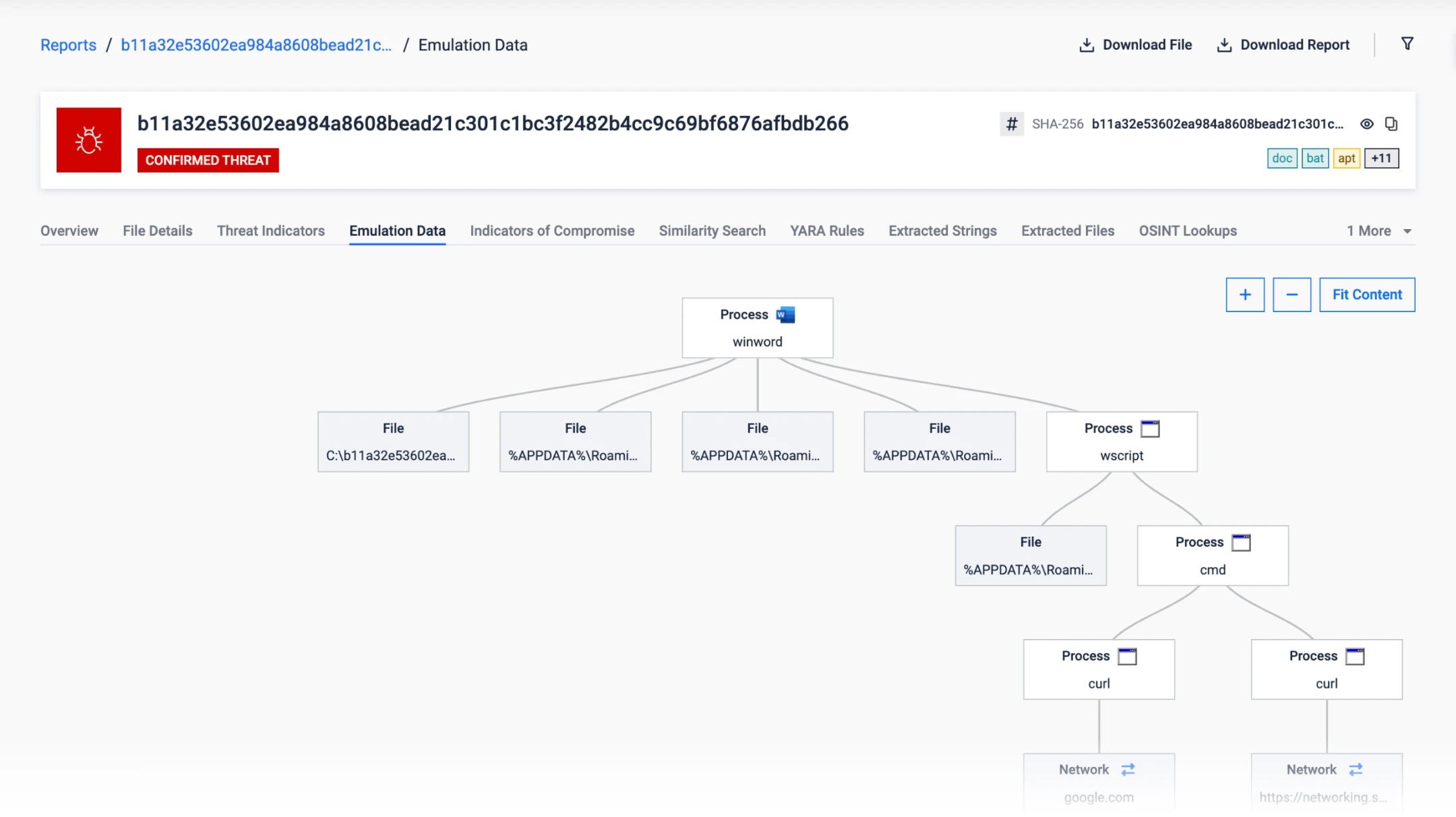
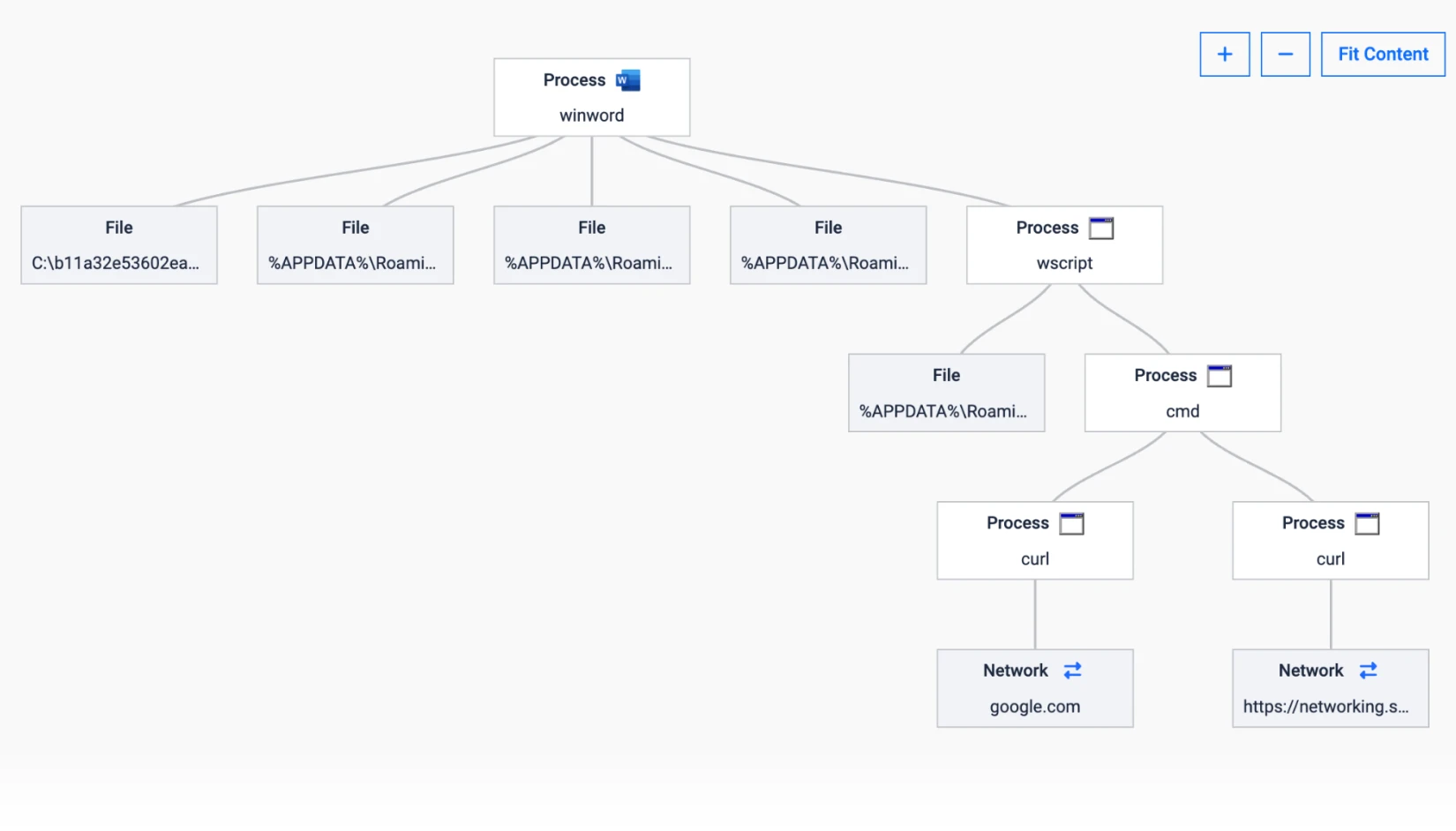
Detect and classify active threats using machine learning and targeted detonations in specific application stacks or environments.
Bypass anti-evasion checks, emulate JavaScript, VBS, and PowerShell scripts, and dynamically adapt control flows to uncover unknown threats.
Threat Detection & Classification
Detect 330+ phishing brands—even offline—using Machine Learning (ML) analysis.
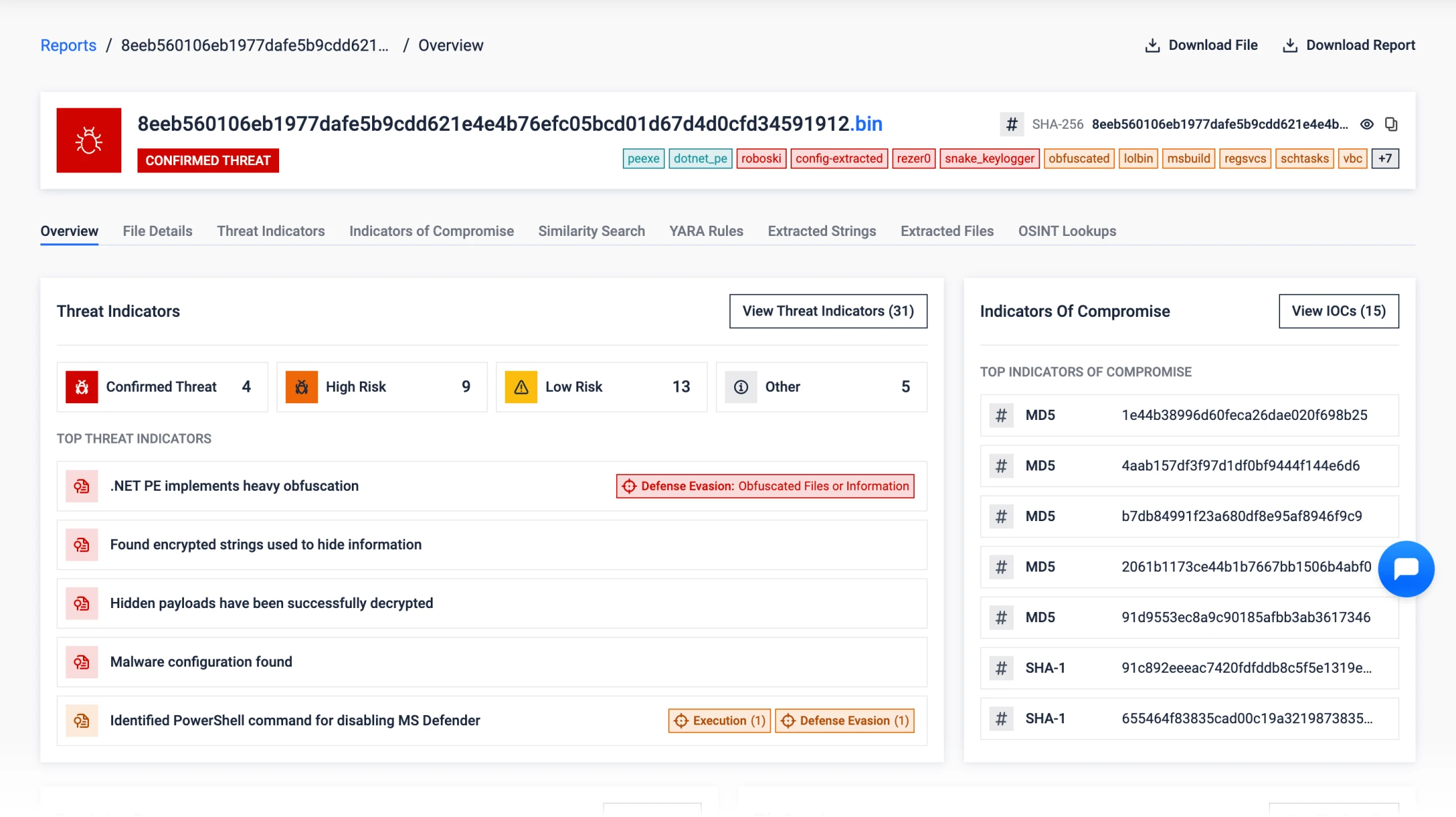
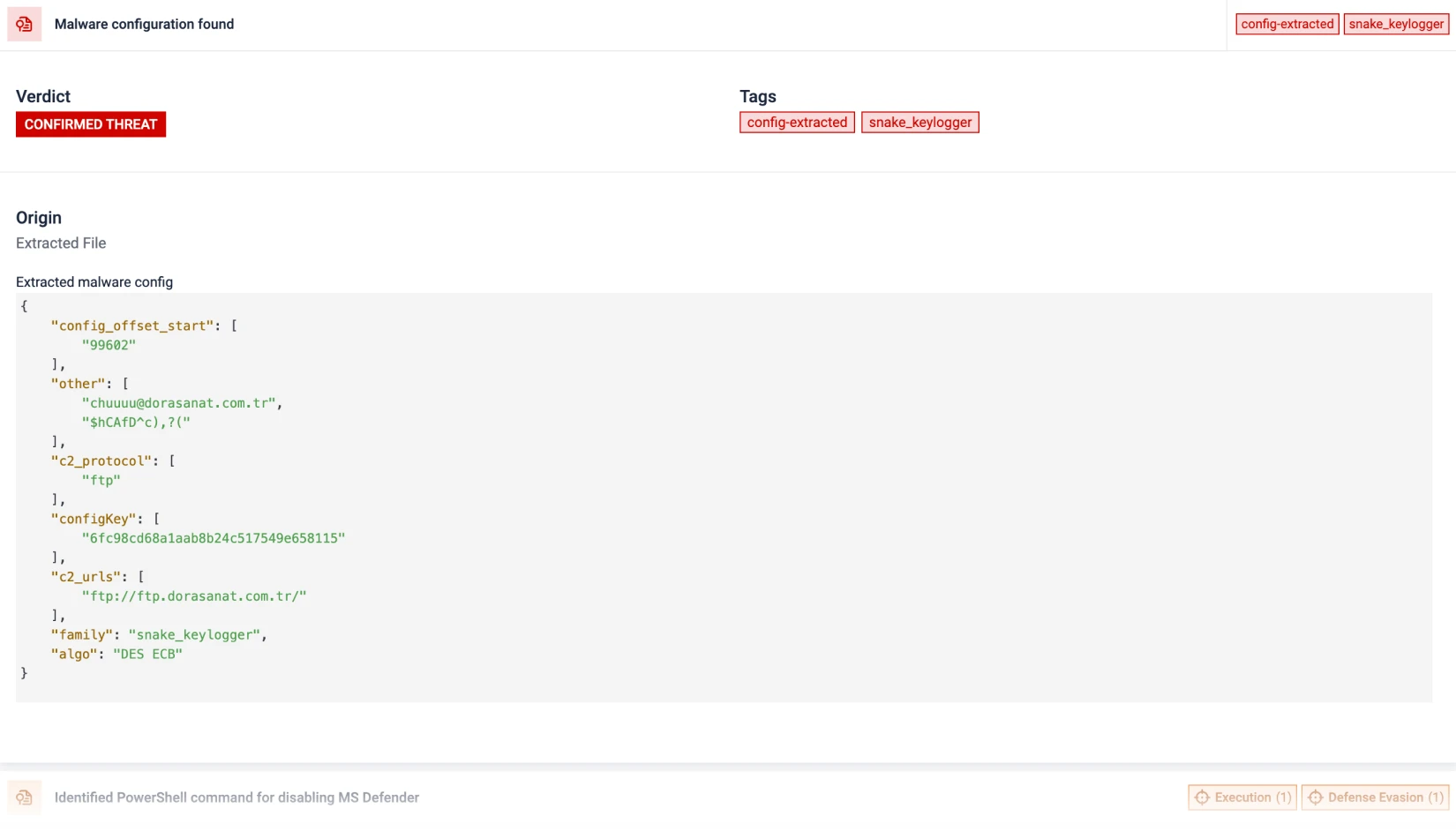
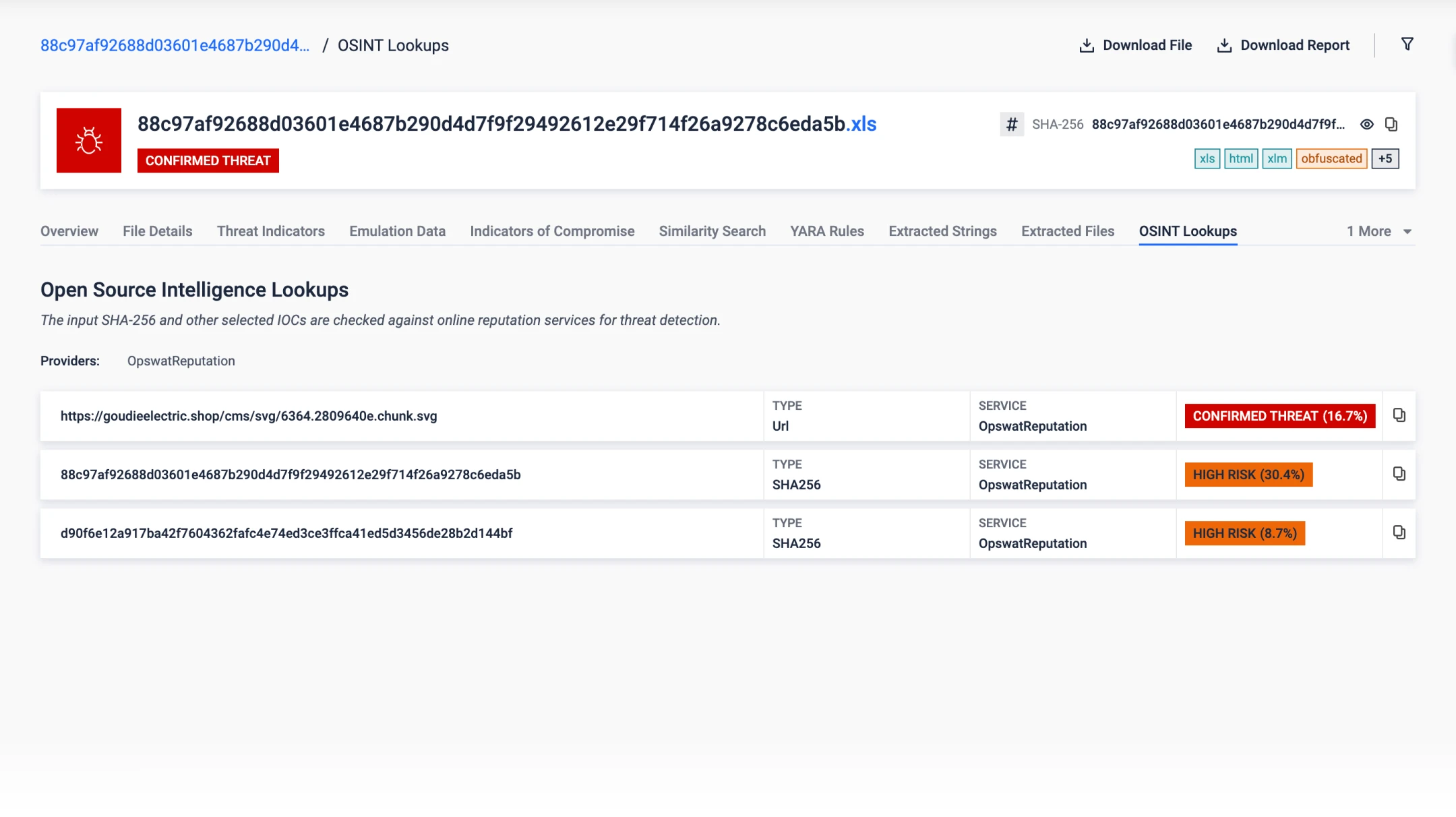
Correlate IOCs, identify malicious intent with 900+ behavioral indicators, extract configurations from 18+ malware families, and detect unknown threats through similarity-based clustering.
- MetaDefender Aether


- MetaDefender Aether
- MetaDefender Aether
Threat Intelligence & Integration
Automated threat hunting and real-time detection integrate seamlessly across intelligence sources.
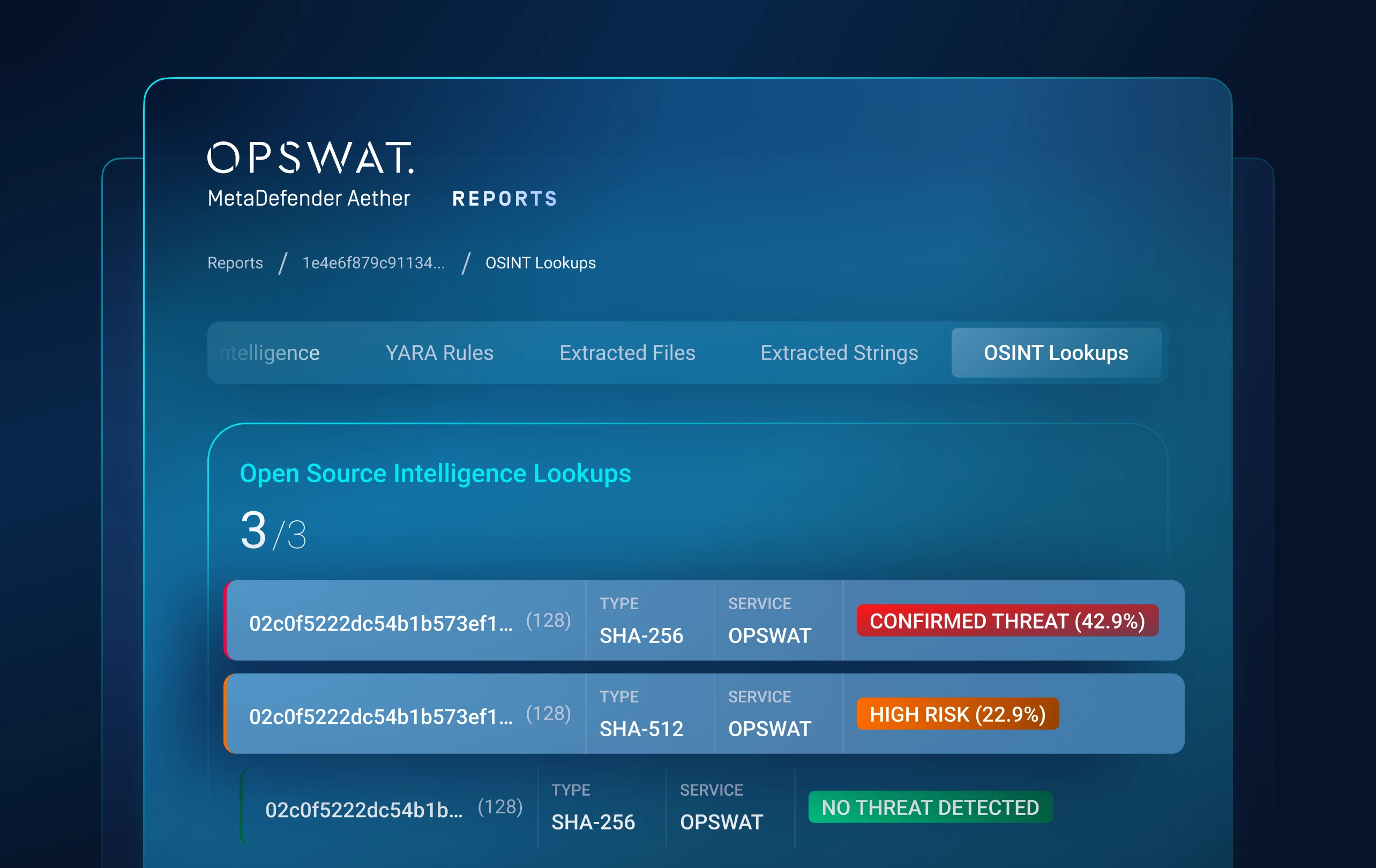
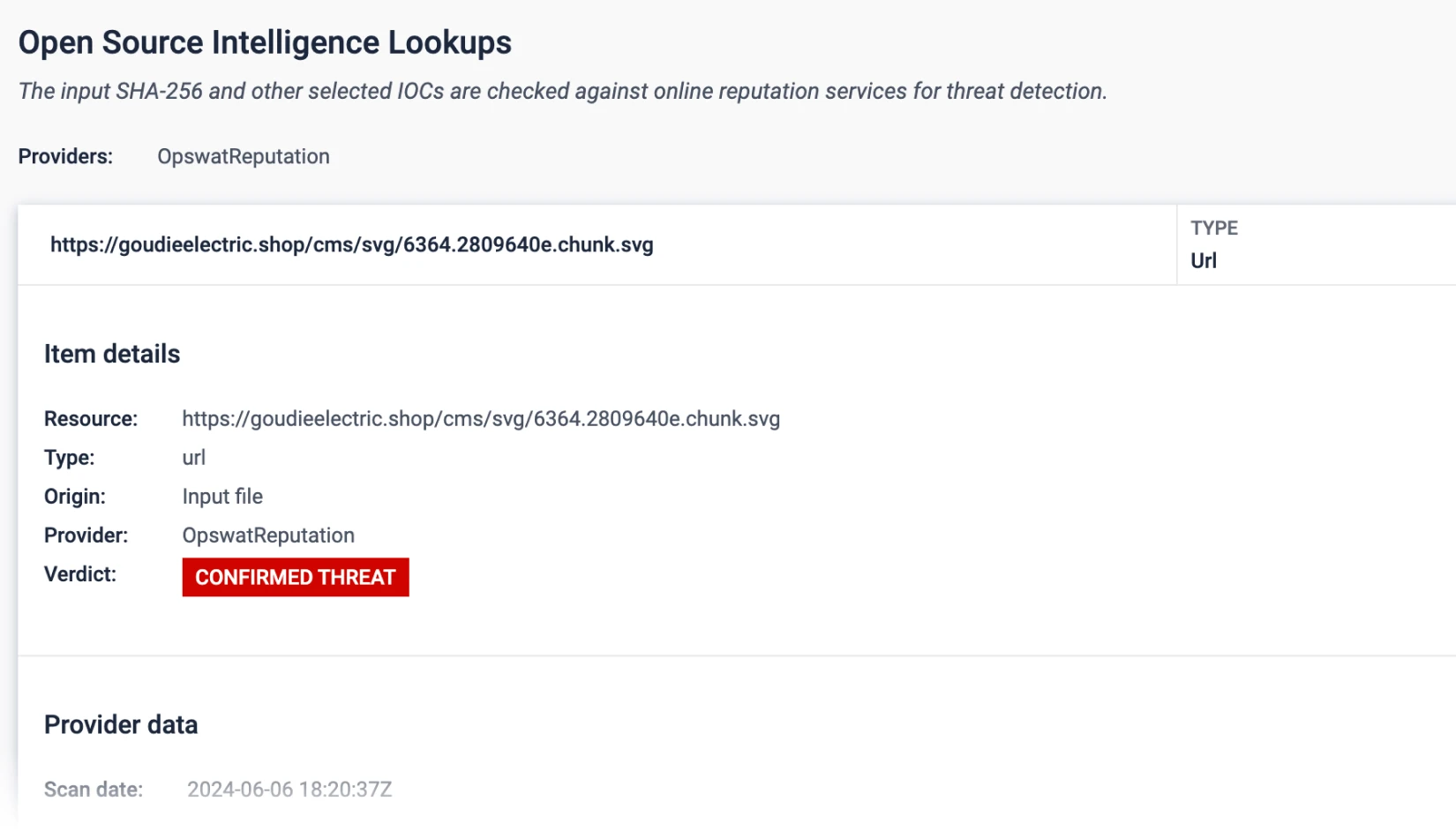
The system exports to MISP and STIX formats, queries the MetaDefender Cloud Reputation Service, connects with open-source intelligence vendors, and automatically generates YARA rules for each detected threat.
Next-Gen Anti-Evasion Engine
Extracts indicators of compromise from highly evasive malware and detonates targeted attacks so analysts can focus on high-value findings.
The sandbox defeats advanced evasion techniques including long sleeps and loops, user or domain checks, geofencing, OS locale checks, VBA stomping, advanced auto-execution behaviors such as mouse-hover triggers, and task scheduler abuse.
- MetaDefender Aether
- MetaDefender Aether
Powering Zero-Day Detection
Across Every Environment
OPSWAT’s Zero-Day Detection solution is built on a unified suite of technologies that combine sandboxing, adaptive intelligence, &
behavioral analysis to expose unknown threats at speed & scale—on-premises, in the cloud, or anywhere in between.




MetaDefender Threat Intelligence™
Identify zero-day related threats, assess file reputation in real time, and respond faster to emerging risks with machine-learning threat similarity search and threat reputation checks. Security teams gain enriched threat intelligence to ensure stronger defenses against evolving malware and targeted attacks.
Unlock Zero-Day Detection Across Solutions
Discover how zero-day detection can be brought to your network perimeter,
ensuring all files gain advanced zero-day detection without performance delays.

Zero-Day Detection
for KioskSecure environments from unknown threats on peripheral & removable media.
Zero-Day Detection
for MFTGain continuous zero-day detection at the perimeter and inside your network.
Zero-Day Detection
for ICAPMalware scan and analysis for web and file transfers via ICAP.
Zero-Day Detection
for Storage SecuritySecure all files transferred on a network to protect against unknown threats.



Detonator - The Endless Quest
for Zero-Day Detection
The Story Behind OPSWAT’s Industry-Leading Dynamic Analysis Technology
The Story Behind MetaDefender Aether
Jan Miller – CTO, Threat Analysis at OPSWAT
Jan Miller is a pioneer in modern malware analysis, known for launching platforms that transformed how the industry detects evasive threats. After founding Payload Security and later driving Falcon X at CrowdStrike, he continued innovating with Filescan.io, later acquired by OPSWAT. As an AMTSO Board member, he champions transparency while advancing techniques that blend dynamic analysis with threat intelligence to expose evasive malware.
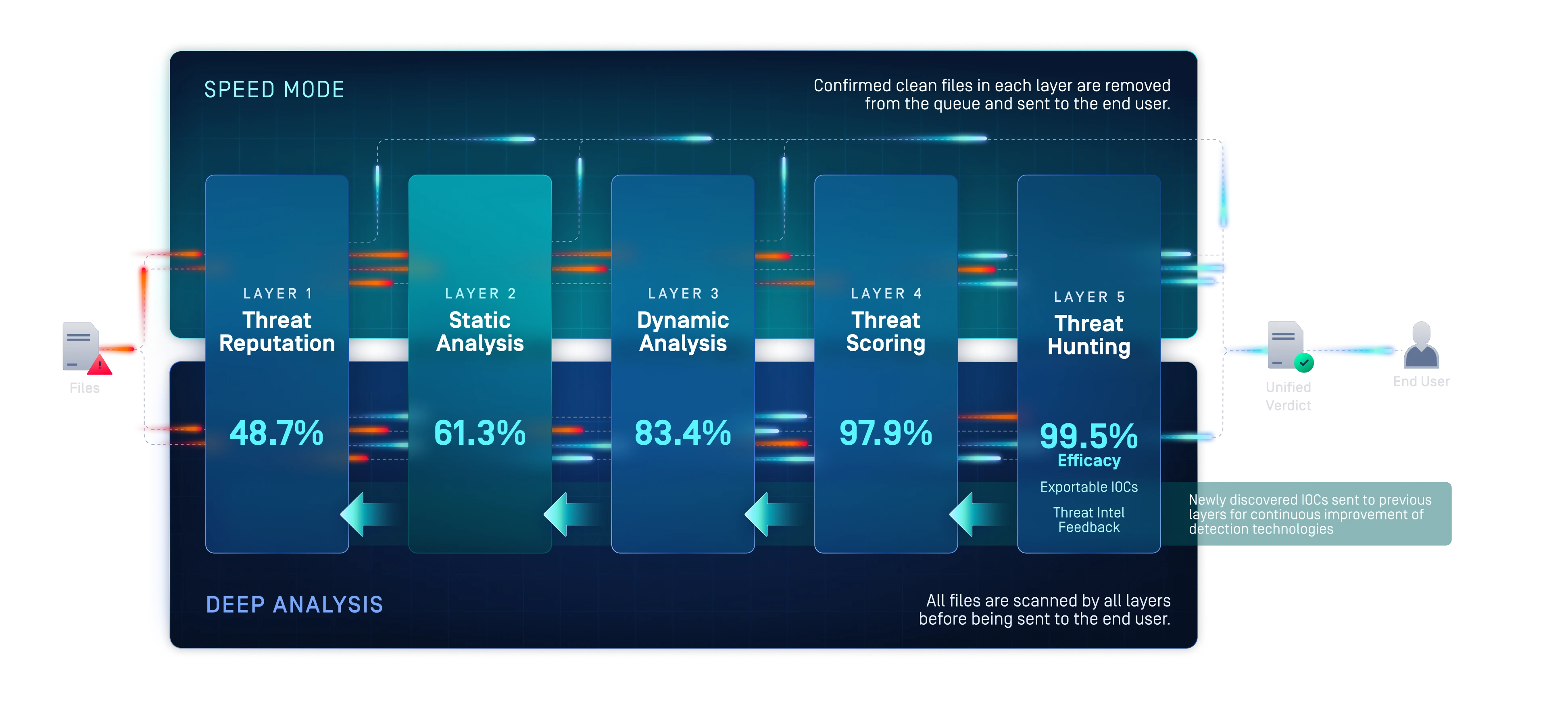
Five Layers Turn Unknown Files into Actionable Intelligence
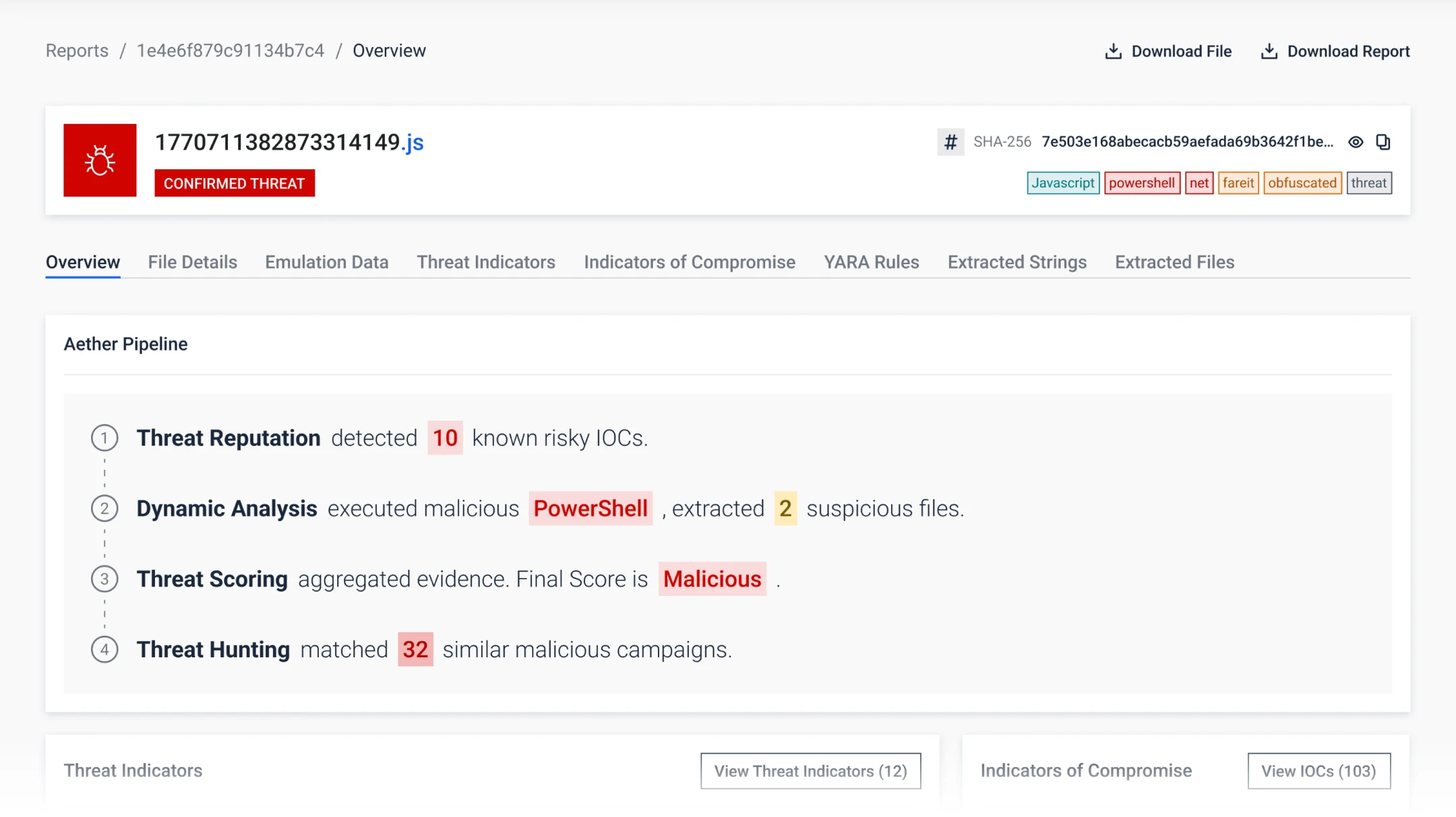
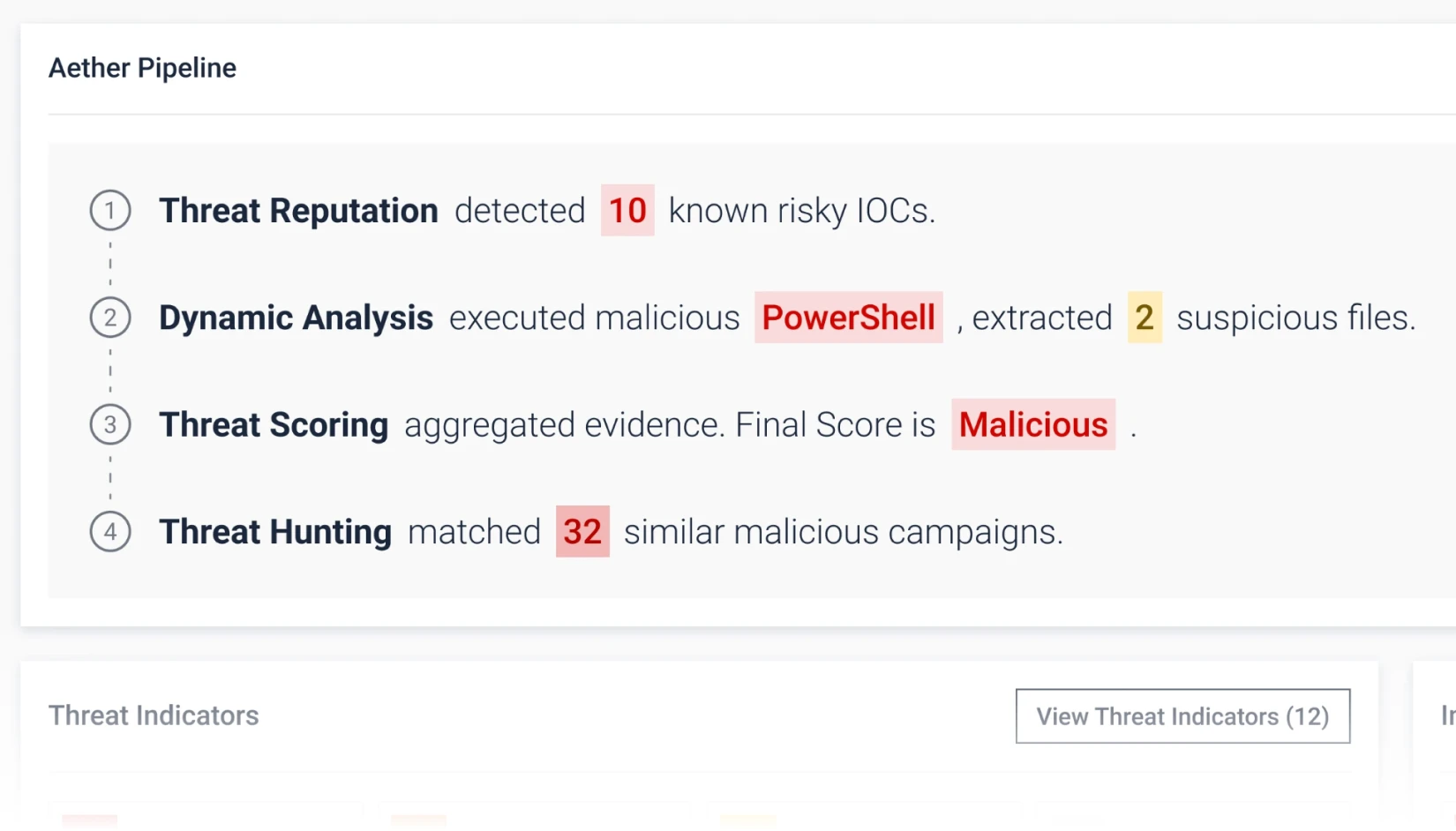
MetaDefender Aether unifies Threat Reputation, Predictive Alin AI static analysis, emulation-based Dynamic Analysis, Threat Scoring, and Threat Hunting in one detection pipeline. The result is faster Pre-Execution decisions, deeper zero-day visibility, clearer prioritization, and richer intelligence for automated response and campaign-level investigation across the security stack.

Validated Speed
& Security by AMTSO
Aligned with Anti-Malware Testing Standards Organization (AMTSO), Venak Security test confirms OPSWAT’s Adaptive Sandbox leadership.
Trusted Globally to Defend What's Critical
OPSWAT is trusted by 2,100+ organizations worldwide to protect their critical data, assets, and networks from
device and file-borne threats.


Clalit Health Services

- “With OPSWAT’s multiscanning capabilities and emulation-based sandbox, we get both depth and speed. Files are cleared or flagged in minutes, not hours.”A Government’s Cybersecurity Specialist
- By deploying OPSWAT’s Metascan™ Multiscanning and OPSWAT’s Adaptive Sandbox, the bank reinforced its cybersecurity framework without disrupting critical workflows. The seamless integration of these technologies enhanced threat detection, streamlined behavioral analysis, and ensured compliance with strict financial security regulations.
- “With OPSWAT we are confident that the sensitive data and information of our customer is secure.”Zahi Ben-AbuHead of Security and Infrastructure Communication,
Clalit Health Services - “We needed a solution that could scale to meet our growing demands while keeping costs under control. Traditional sandboxing was effective but became unsustainable as our data processing needs grew.”The Security Operations Lead
- The organization addressed its SOC and risk challenges by replacing its VM-based sandbox with OPSWAT’s MetaDefender Aether, a unified zero-day detection solution built on instruction-level emulation. This architectural shift allowed the security team to move dynamic analysis out of the SOC and into the perimeter where threats could be stopped before reaching users or endpoints.
Purpose-Built for Every Sector
Support Compliance
with Regulatory Requirements
As cyberattacks and the threat actors that carry them out become more sophisticated, governing bodies around the world are
implementing regulations to ensure critical infrastructure is doing what’s necessary to stay secure.





FileScan.io Community
Uncover hidden threats with insightful malware analysis
powered by OPSWAT’s MetaDefender Aether
technology—try it free.
FAQs
It closes the blind spot on unknown, file-based threats by combining reputation checks, emulation-based dynamic analysis, and behavioral intelligence-so you see in-memory payloads, obfuscated loaders, and phishing kits that signatures and endpoint tools miss.
It plugs in at ingest (ICAP, email, MFT, web), enriches your SIEM/SOAR (MISP/STIX, Splunk SOAR, Cortex XSOAR), and feeds back high-fidelity IOCs and MITRE-mapped behaviors to improve detections across all your tools.
No. Reputation "great-filter" removes most noise instantly; suspicious files are detonated in an emulation sandbox that's 10× faster and 100× more resource-efficient than legacy VM sandboxes-keeping file flow fast while still catching the 0.1% zero-day threats that matter.
Yes. Deploy cloud, hybrid, or fully on-prem/air-gapped (RHEL/Rocky Linux supported), with offline mode and certificate whitelisting, role-based access, audit logs, and data-retention controls for NIS2/IEC 62443/NIST-style environments.
Reduced incident volume/MTTR (fewer false positives, richer context), earlier detection of OSINT-silent threats, and measurable risk reduction for file workflows (email, MFT, portals). Most customers start with a scoped POC on their real traffic, then expand.
