File Structure Validation
File Structure Validation provides early-stage visibility and control by analyzing files at a structural level before traditional security tools engage.
- Early File Control
- Deep Content Insight
- Optimized Processing
OPSWAT is Trusted by
























Validates File Structure
Before Security Action
Extracts Potential Risk Objects
Such as Macros, Hyperlinks, or Metadata
Block
Malformed or Suspicious Files
Early
Supports
160+ File Types
Including Complex Formats and AI Model Files
Reduces Unnecessary Sandboxing and Heavy Analysis
Improves Downstream Engine Performance
Enables
Object-Level
Security Policies
Files Are Too Complex
for Traditional Security
Modern file formats — including any format that can wrap or embed other files — hide risks that conventional tools can't properly analyze, creating blind spots, inefficiencies, and increased exposure.


Limited Visibility
Signature-based security tools treat complex file formats as single binary objects, scanning only known patterns while missing embedded components like macros, nested archives, and hidden payloads.


Inefficient Security Processing
All files go through heavy inspection regardless of risk, increasing latency and wasting resources.


Incomplete Protection
Detection-based approaches struggle with unknown threats, while file modification methods may not suit integrity-sensitive environments.
Analyze First. Then Decide.
File Structure Validation inspects file structure and components before enforcement, enabling smarter, faster, and more precise security decisions.

Structural File Validation
Validates files against format specifications to detect anomalies and malformed content early.

Deep Content Visibility
Extracts and exposes embedded objects like macros, links, and metadata for full inspection — down to the deepest file layer, using Content Disarm and Reconstruction (CDR) principles.

Intelligent Routing and Control
Applies object-level policies and directs relevant content to appropriate security engines.
Early-Stage Intelligence for Every File
File Structure Validation operates before advanced security engines, preparing and structuring files for more effective downstream analysis.
 step 1
Validate File Structure
Checks file format integrity against specifications to identify malformed or suspicious structures early.
- step 2
Extract Embedded Objects
Breaks files into components such as macros, attachments, and links for granular inspection.
- step 3
Enforce Policies and Route
Applies object-level rules and sends risk content to Predictive Alin AI, Metascan, Proactive DLP, Adaptive Sandbox, Reputation, or Country of Origin.

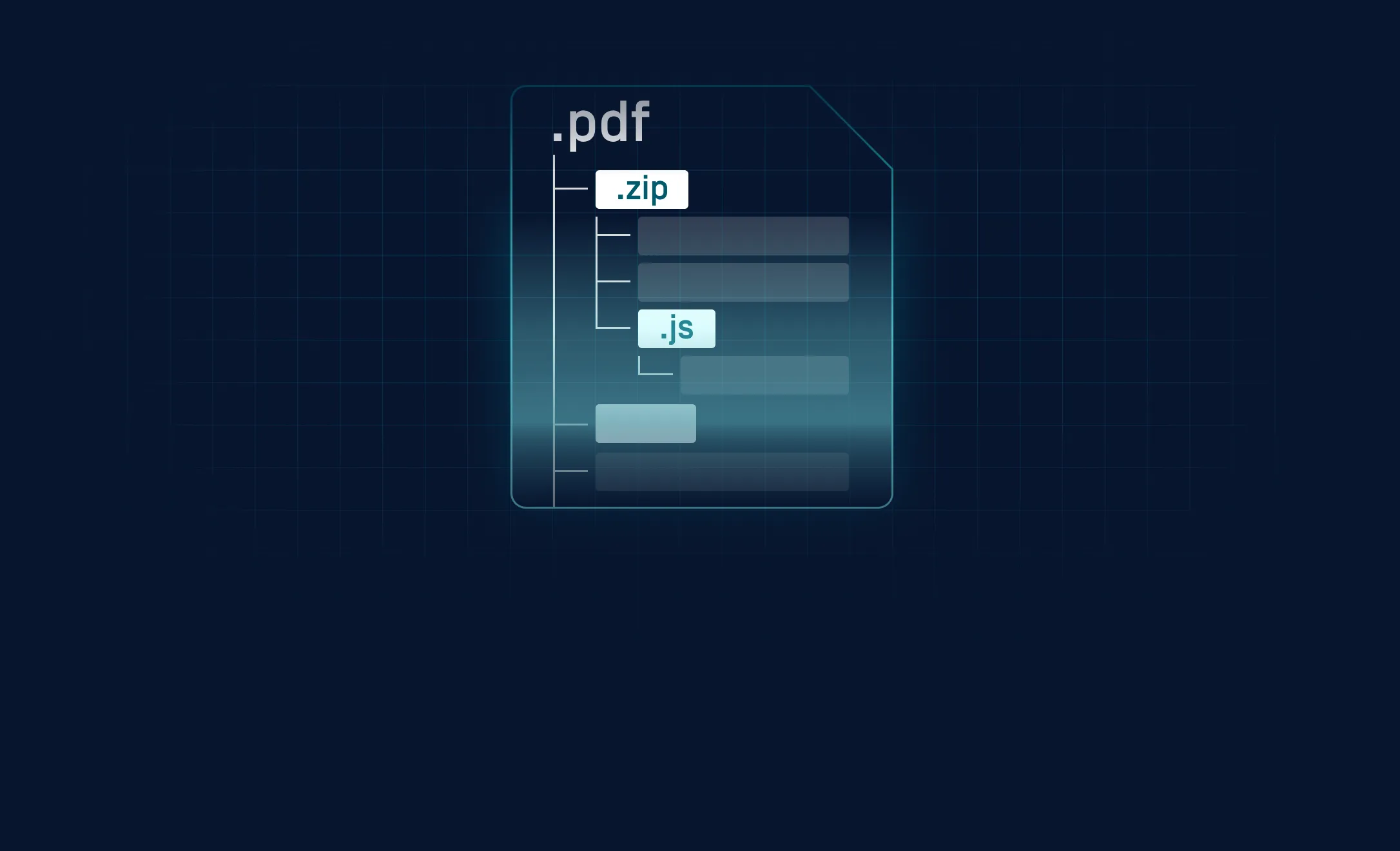

Key Features & Benefits
File Structure Validation
Detect malformed or non-compliant files early, reducing risk before deeper inspection begins.
Object-Level Extraction
Gain visibility into all embedded components to make precise and informed security decisions.
Selective Processing
Send only relevant content to downstream engines, improving performance and reducing processing overhead.
Policy-based Blocking
Enable built-in and configurable policies to block files and objects matching defined conditions.
See File Structure Validation in Action
Learn how File Structure Validation applies structural checks, extracts and enforces policies on risk objects, or sends them to downstream engines.
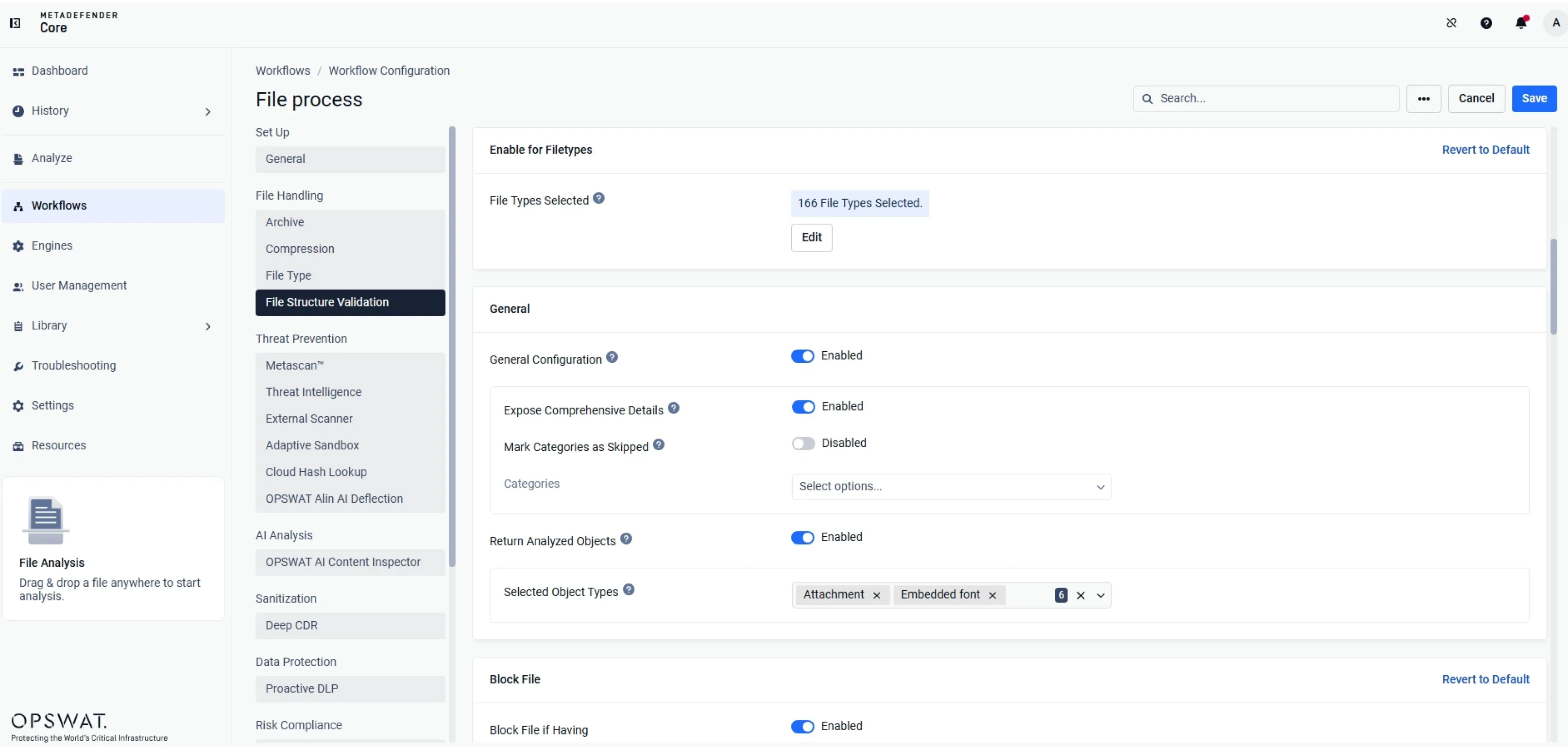
Validates format specifications across 160+ file types.
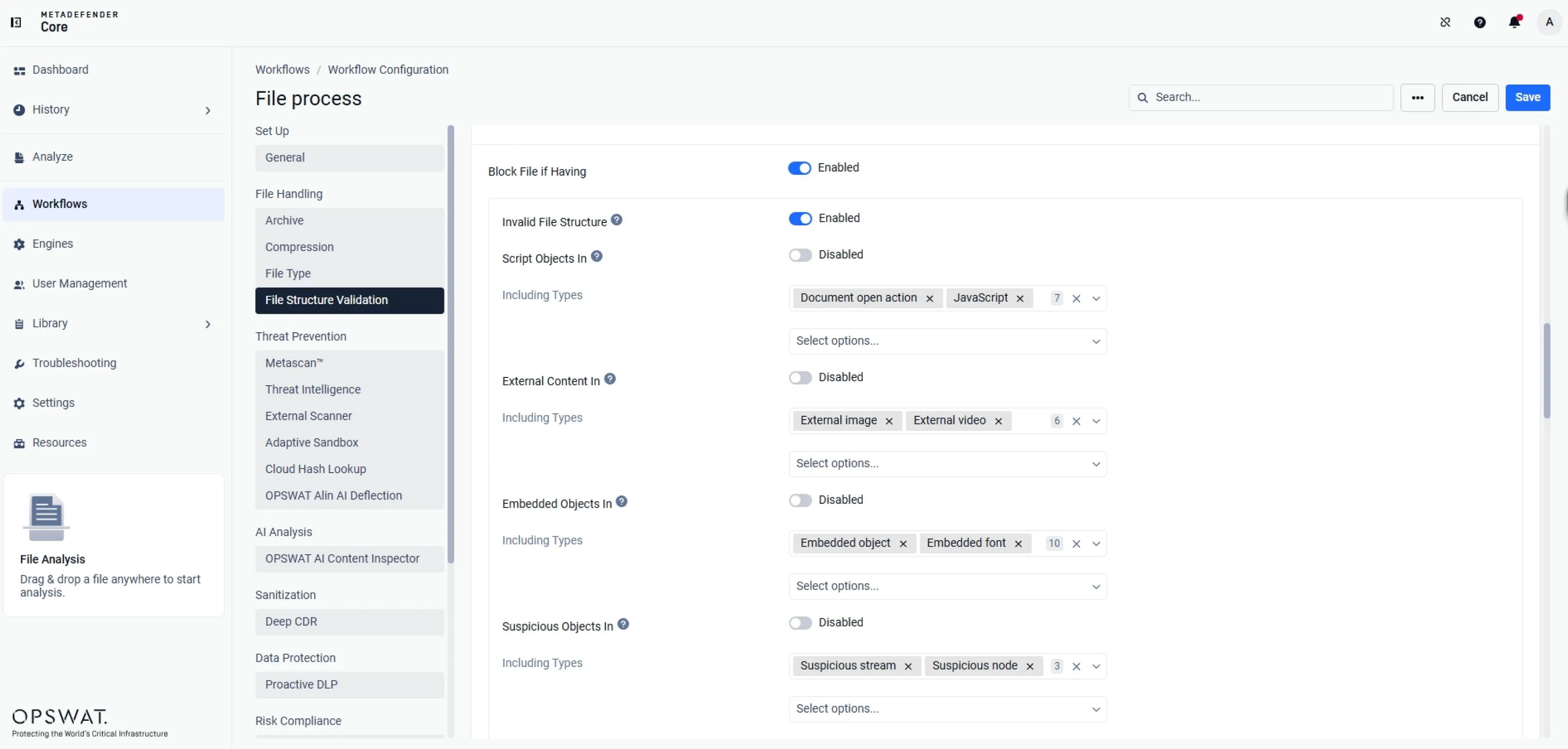
Applies built-in and JSON-based rules to block specific content and object types.
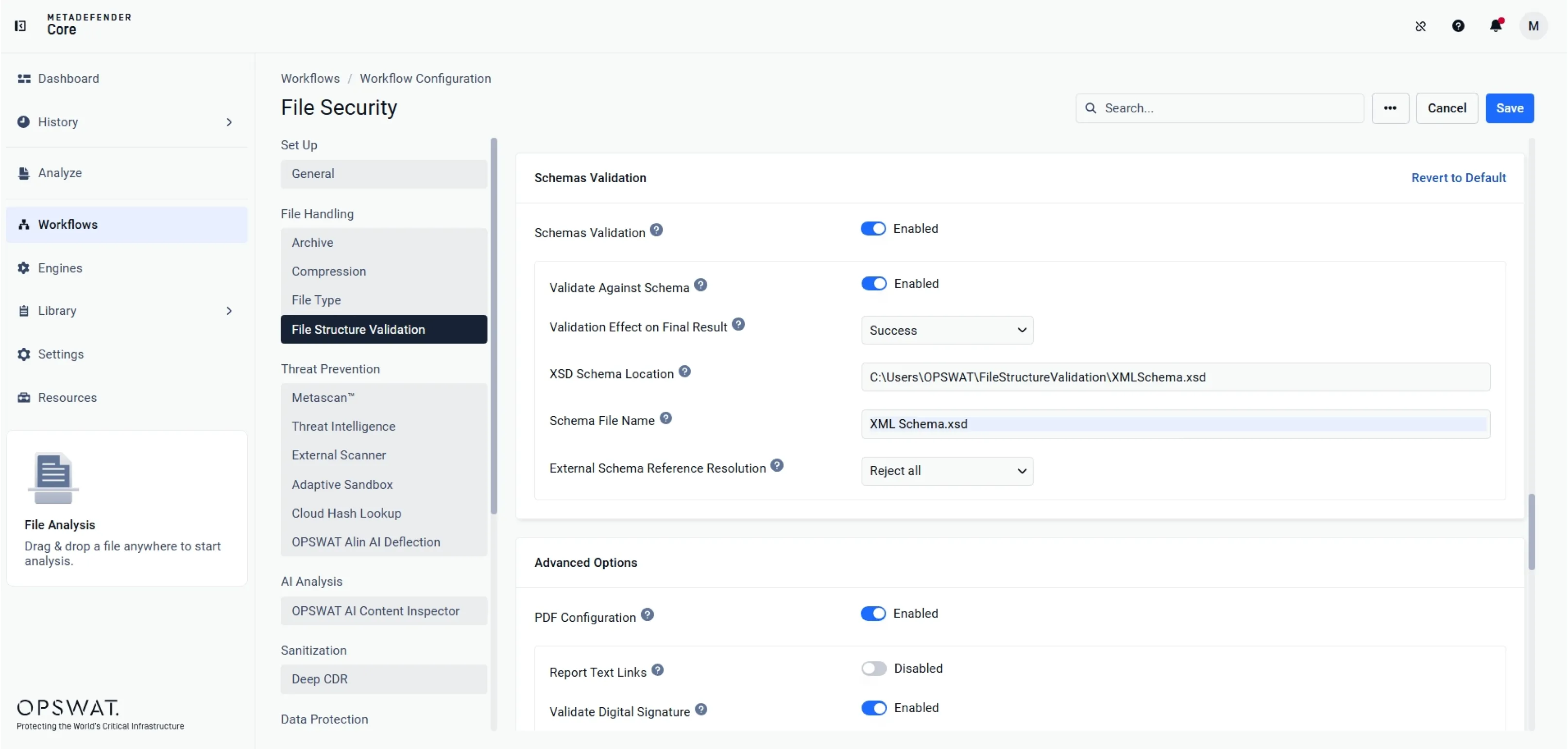
Validate files against XSD schemas. Applies to XML, ZEI, JNLP, TDS, RDF, BML, MPD and TTML
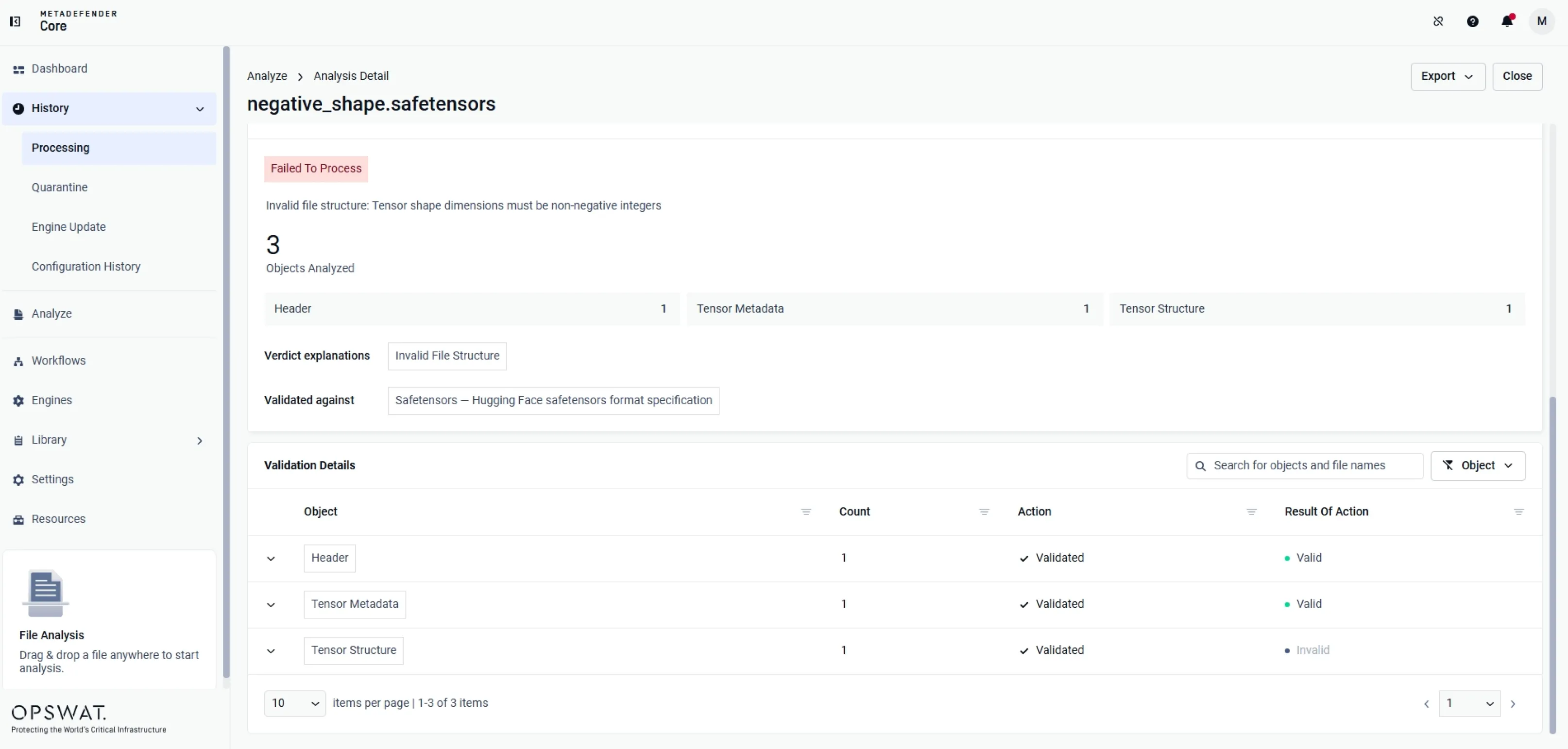
Stops files that fail structural checks at the gate, before other engines engage.
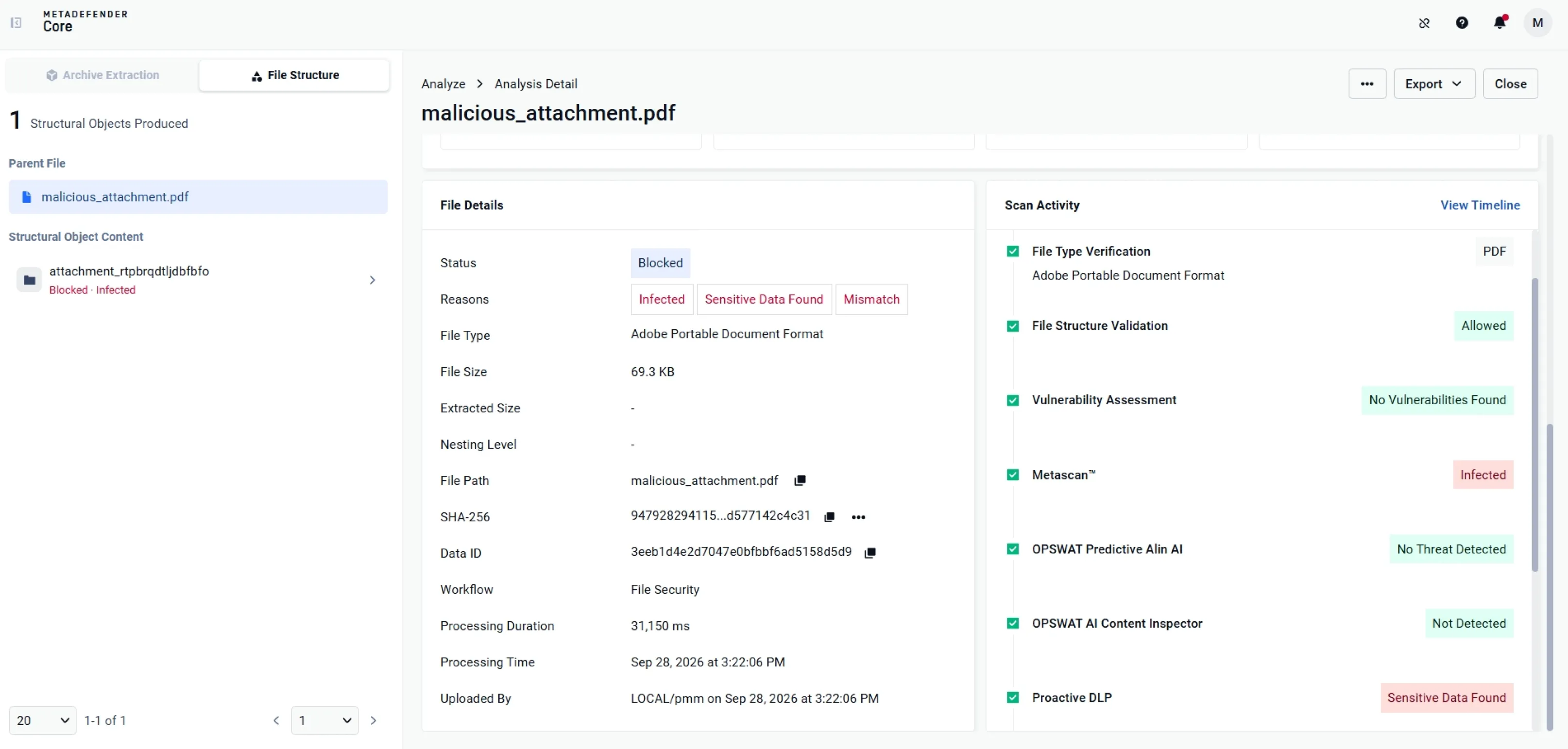
Extracts and routes risk objects to downstream engines for further inspection.
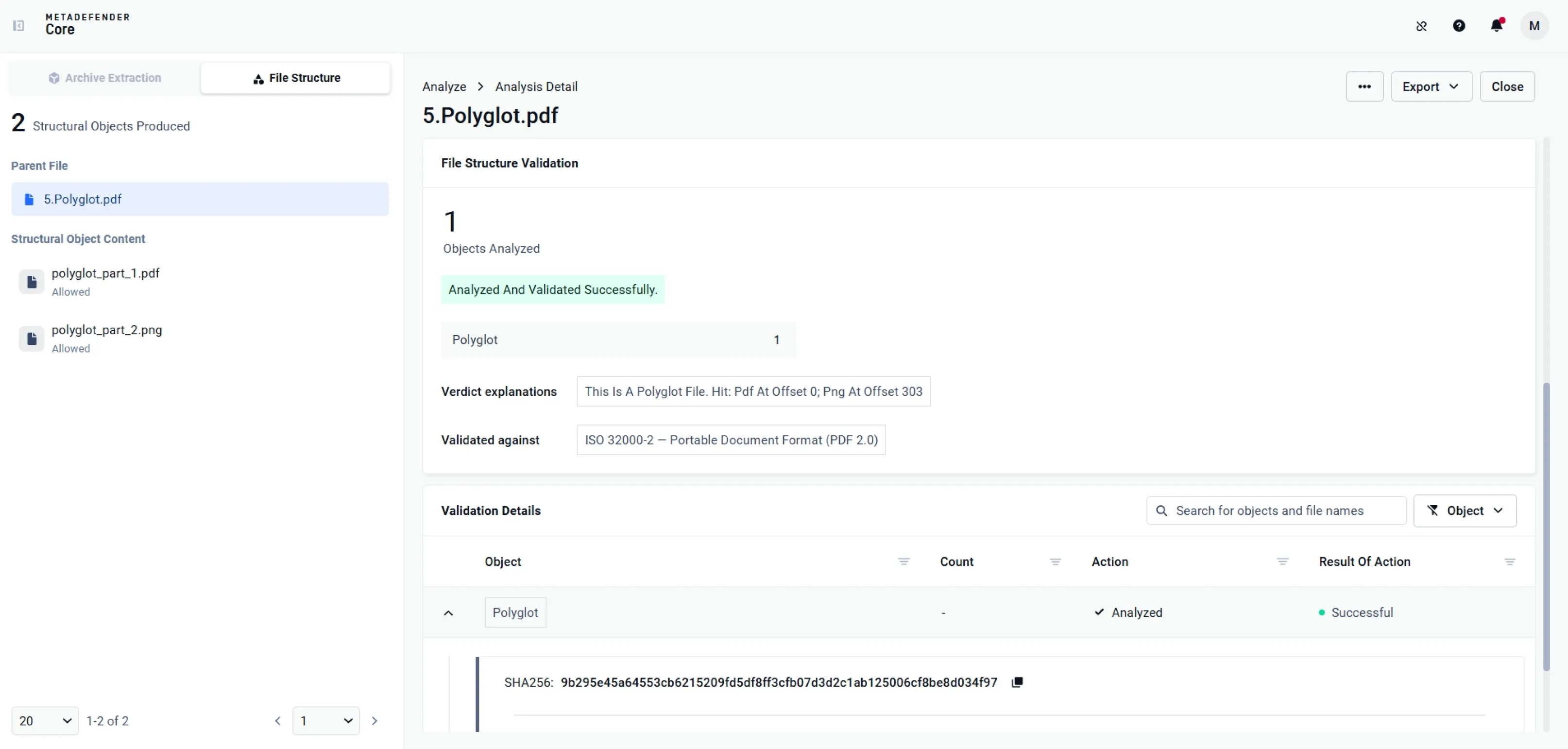
Extracts and scans primary and hidden formats as individual files
 File Format Validation
Validates format specifications across 160+ file types.
- Built-in and Custom Blocking
Applies built-in and JSON-based rules to block specific content and object types.
- Schema Validation
Validate files against XSD schemas. Applies to XML, ZEI, JNLP, TDS, RDF, BML, MPD and TTML
- Invalid File Blocking
Stops files that fail structural checks at the gate, before other engines engage.
- Object Extraction and Routing
Extracts and routes risk objects to downstream engines for further inspection.
- Polyglot Detection
Extracts and scans primary and hidden formats as individual files
Deployment Options

Cloud
Scalable, managed deployment for rapid integration. Ideal for organizations seeking flexibility and reduced infrastructure overhead.

Hybrid
Combine cloud scalability with on-premises control. Balance performance, compliance, and operational flexibility.

On-Premises
Full control within internal environments. Suitable for regulated industries and sensitive environments.
Resources

The Case for File Validation

Why File Transfers Are a Top Malware Entry Point

