In most critical infrastructure organizations, the SOC (Security Operations Center) is accountable for securing OT environments, even where it has no assigned on-site personnel. SOC teams typically manage dozens of sites and hundreds of assets through a dashboard that shows what is happening on the network, but nothing about what happens before transient devices are granted access.
Critical security risks increase when a third-party contractor or vendor's laptop connects to a PLC (Programmable Logic Controller) at a remote substation, or new equipment is introduced into a production environment. At remote sites, the decision on whether an unverified device can access the critical network is often made without the SOC participating.
When Device Access Decisions at OT Sites are Outside the SOC Visibility Domain
A structural gap exists between where security accountability sits and where security decisions get made. Field operators understand the systems they manage. They are not often trained to evaluate whether an incoming device is safe to connect, despite the need to make this decision at OT sites every day. This decision is often made without a security context, SOC input, or a track record to verify device safety.
Data from the SANS 2025 ICS/OT Cybersecurity Reports reflect the consequences:
- Only 9% of security professionals dedicate 100% of their time to ICS/OT security
- Transient cyber assets, including vendor laptops, account for 27% of OT attack vectors
- 27% of organizations experienced one or more ICS/OT security incidents in the past year, with half of them originating from unauthorized external access and more than 40% resulting in operational downtime
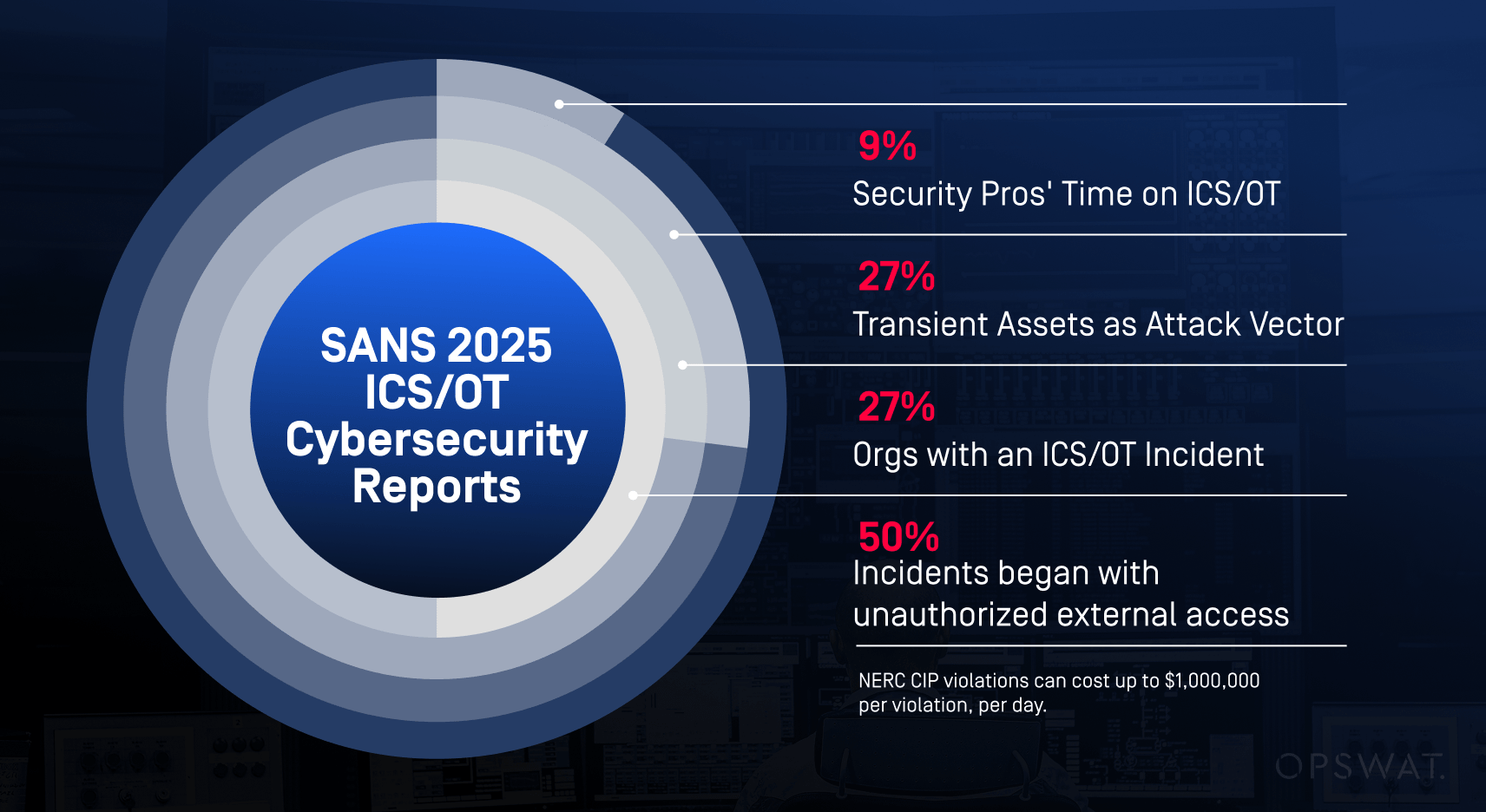
This security gap can result in serious compliance fines. Under NERC CIP requirements for TCAs (Transient Cyber Assets), organizations must document and enforce security controls for devices connecting temporarily to BES (Bulk Electric System) cyber systems. Without a centralized inspection record, there is no audit evidence, and NERC CIP violations can cost up to $1 million per violation per day.
The Need for a Solution to Increase SOC Visibility Prior to Transient Device Connections
The solution is to implement a workflow that places SOC visibility at the point where access decisions are made. The SOC makes the verdict, and the operator acts upon it. Field operators get a direct line to the security authority at the moment the decision is made, and the SOC gets visibility into the physical entry point before a device touches the network.
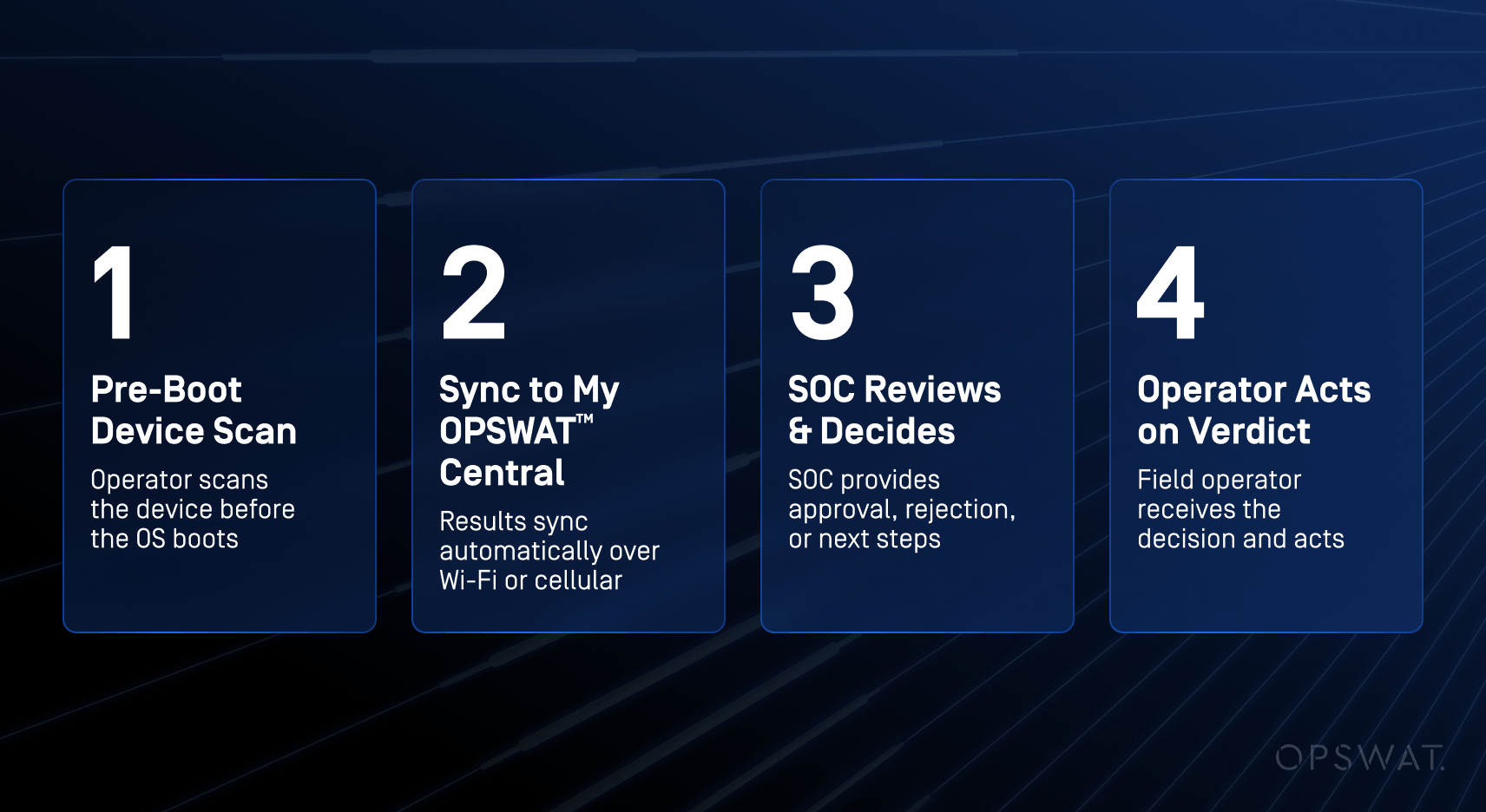
MetaDefender Drive™ with Smart Touch, with the capability to achieve up to 99.8% detection rates covering hidden and kernel-level threats, is built to close this gap in the following sequence:
- The field operator initiates a pre-boot scan on the incoming device before the operating system boots, using up to eight anti-malware engines
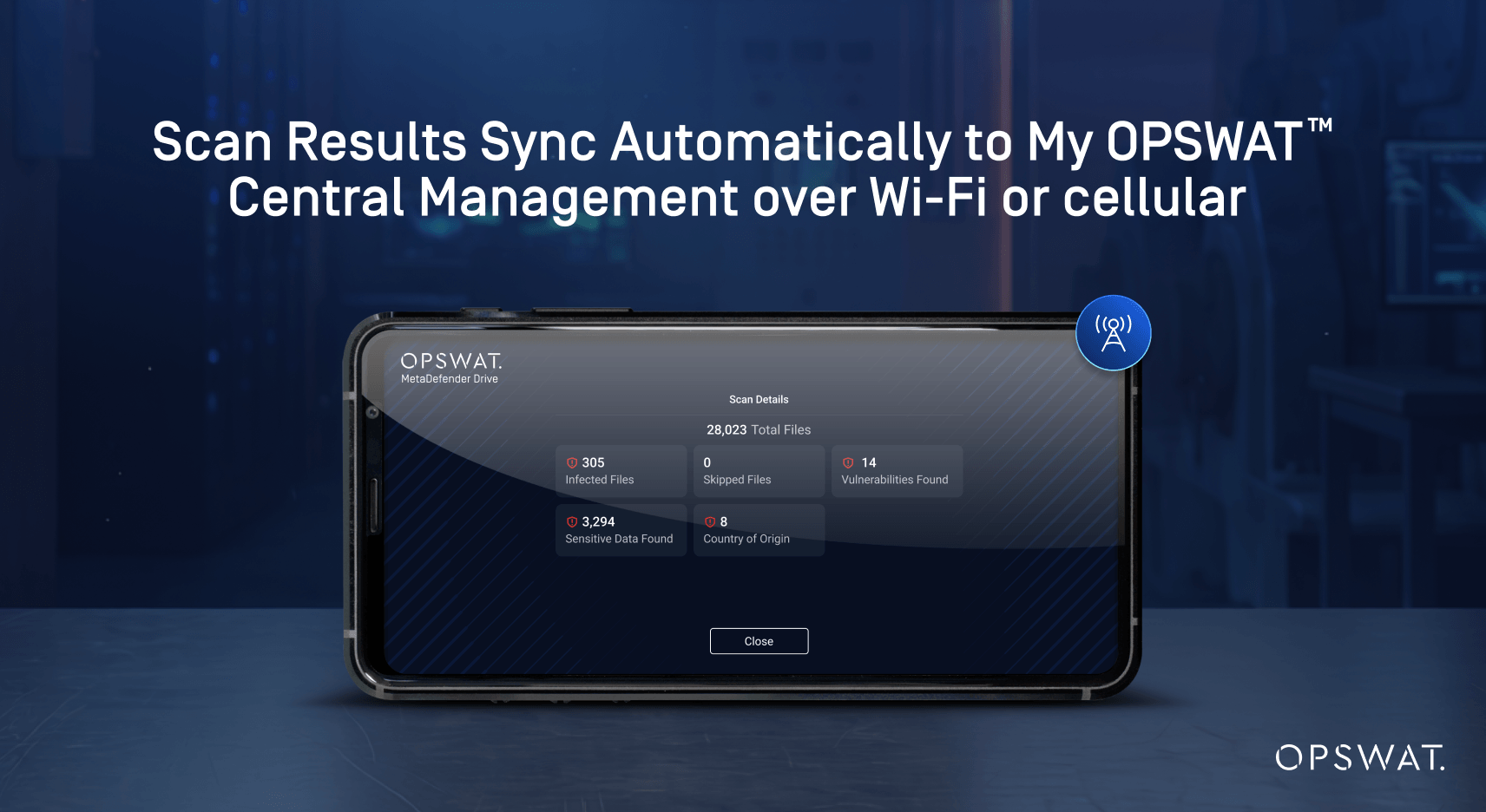
- Scan results sync automatically to My OPSWAT™ Central Management over Wi-Fi or cellular
- SOC reviews findings from a centralized dashboard and issues approval, rejection, or requires further action
- The field operator receives the decision and takes the necessary actions
Start Verifying Every Device in Your Environment
Learn how MetaDefender Drive™ with Smart Touch fits your critical infrastructure environment. Reach out to an OPSWAT expert today.