TP-Link Tapo cameras are widely used smart security devices designed for home and small-business monitoring. As network-connected cameras, these devices combine video streaming, remote management, mobile application integration, and other services within a compact embedded system.
Key Highlights
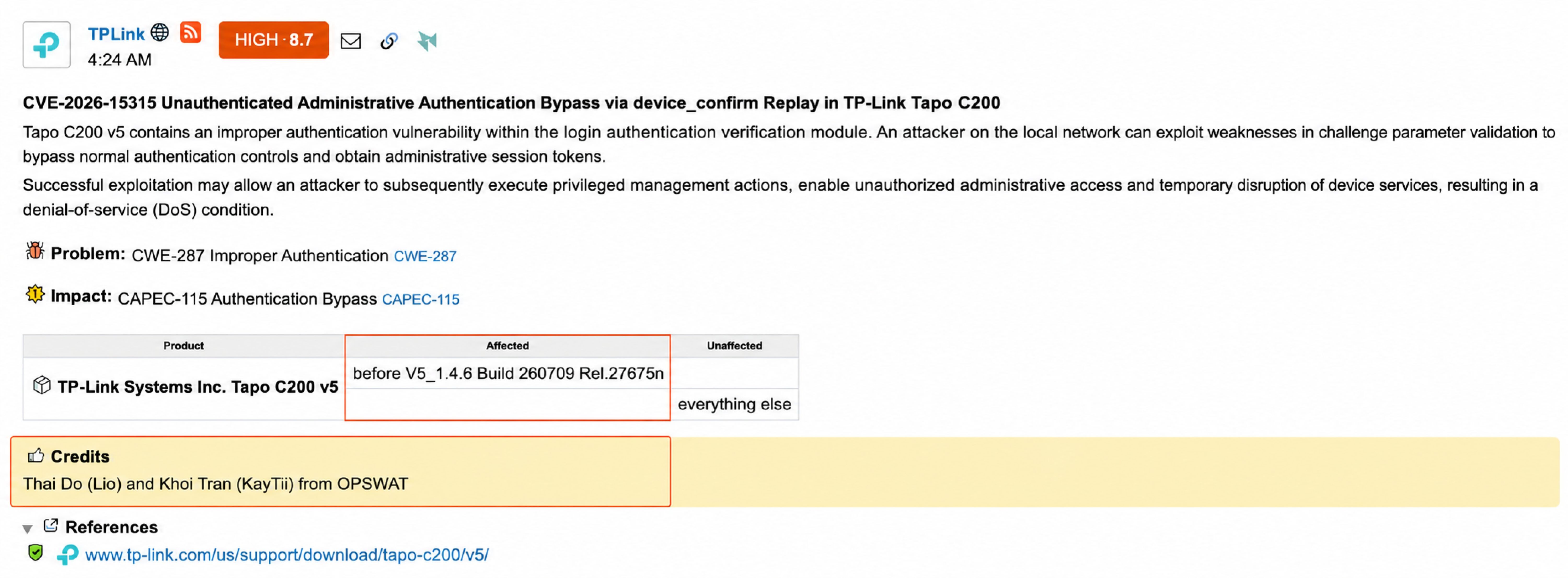
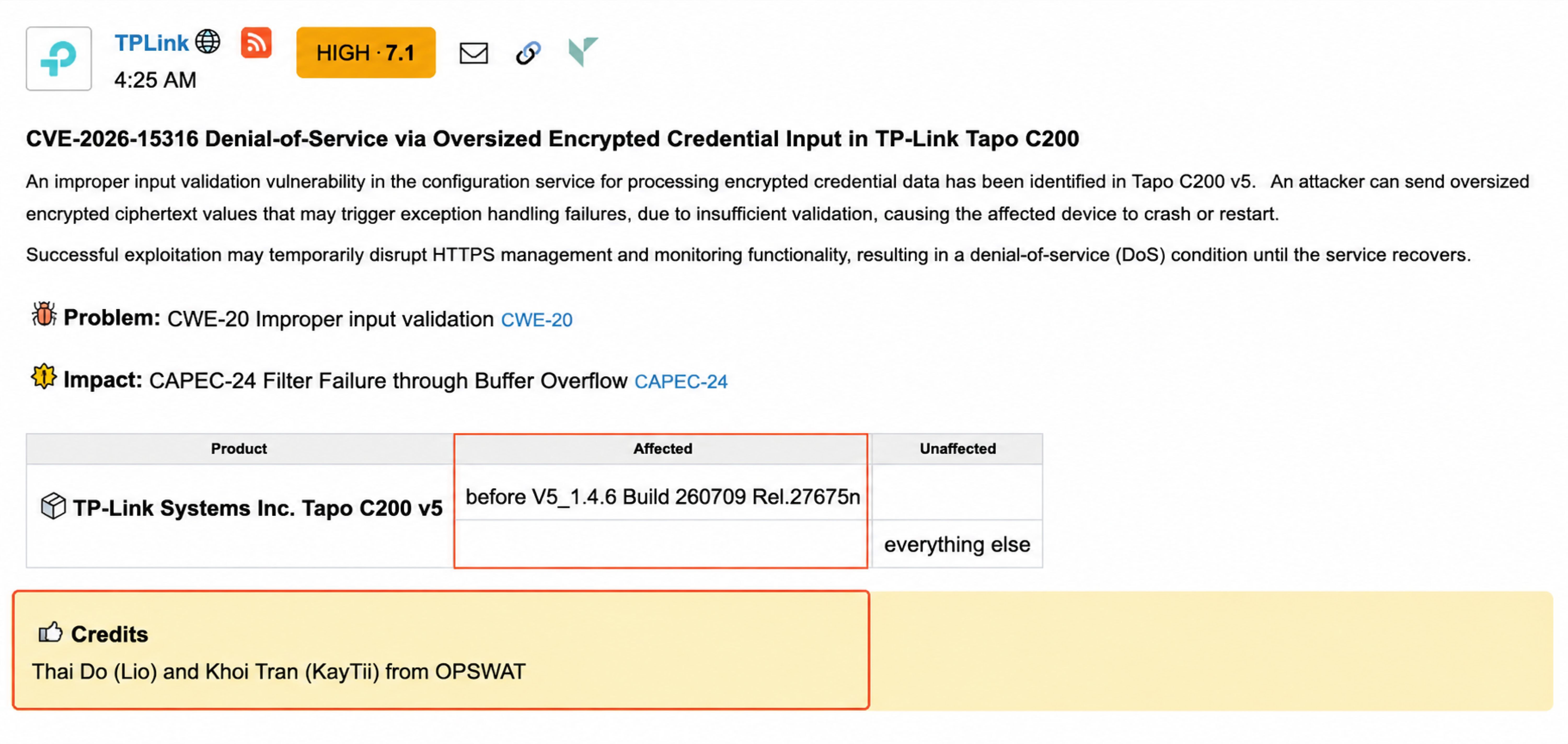
- Affected product: OPSWAT discovered two vulnerabilities in TP-Link Tapo C200 smart security camera
- CVE IDs: CVE-2026-15315, CVE-2026-15316
- Vulnerability types: CVE-2026-15315 - Authentication bypass via replay attack in the local management interface (unauthenticated attacker can obtain a valid admin session without the password); CVE-2026-15316 - DOS (denial-of-service) via insufficient input validation during Wi-Fi onboarding (crashes the camera's HTTPS service)
- Attack requirements: Local network access to the camera; no authentication or user interaction needed
- Patch status: Fixed
- Fixed firmware version: V5_1.4.6 (released August 18, 2026)
- Action required: Update affected cameras to firmware V5_1.4.6 or later immediately
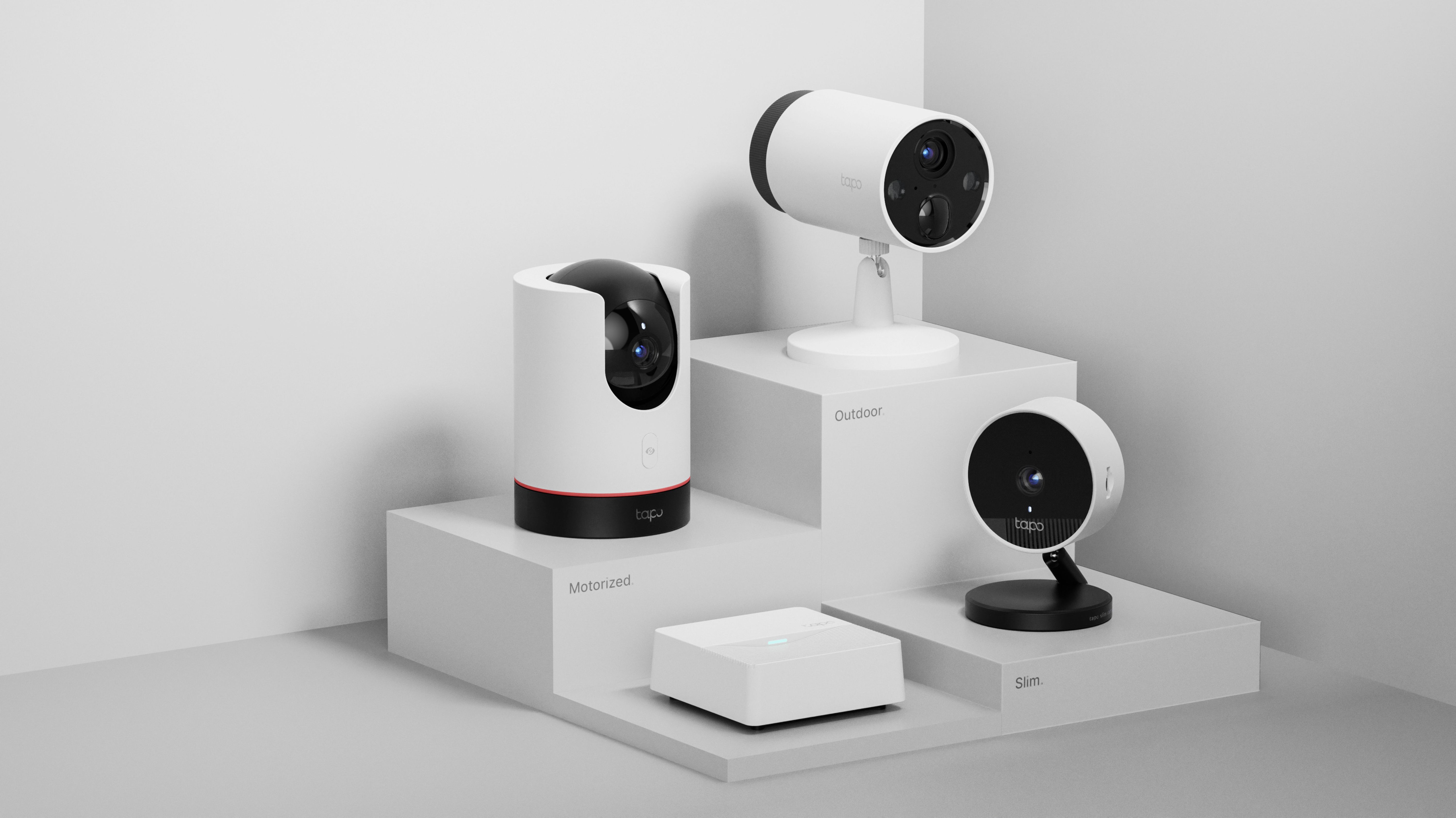
This connectivity also makes security especially important. A vulnerability that allows an attacker to bypass authentication or access privileged functionality could compromise the camera and potentially provide a foothold within the network where the device is deployed.
At OPSWAT, we actively contribute to the cybersecurity community through vulnerability research and responsible disclosure. We also help develop the next generation of cybersecurity researchers through the OPSWAT Critical Infrastructure Cybersecurity Graduate Fellowship Program, where fellows gain hands-on experience analyzing real-world security threats.
As part of this program, Khoi Tran selected a TP-Link Tapo C200 camera as the focus of his independent security research, conducted under the mentorship of Thai Do from OPSWAT Unit 515.
The research led to the discovery of first two previously unknown vulnerabilities, now tracked as CVE-2026-15315 and CVE-2026-15316. The findings affect authentication and availability. One vulnerability can allow an attacker with local network access to bypass the camera's local authentication mechanism, while the other can be abused to disrupt normal device operation and cause a DoS (denial-of-service) condition.
From Research to Vulnerability Discovery
The path to discovering this attack chain began with Khoi Tran and Thai Do examining the TP-Link Tapo C200's firmware and local communication mechanisms, with particular attention to the security of its local management functionality in OPSWAT’s laboratory.
During the research, we identified an unexpected weakness in the camera's authentication process. Khoi and Thai continued examining the camera's privileged management functionality. This investigation uncovered a second vulnerability that could be abused to affect the availability of the device.
Disclosure Timeline
- April 16, 2026: Khoi Tran and Thai Do from OPSWAT reported the vulnerabilities to TP-Link.
- July 10, 2026: TP-Link confirmed the findings and began working on fixes for the reported vulnerabilities.
- August 13, 2026: CVE-2026-15315 and CVE-2026-15316 were assigned to the vulnerabilities.
- August 18, 2026: TP-Link released firmware version V5_1.4.6 addressing the vulnerabilities and published the corresponding security advisory.
The research on the TP-Link Tapo C200 goes beyond the two vulnerabilities disclosed in this blog. Khoi Tran and Thai Do identified additional security issues during their investigation, including a vulnerability that could allow an attacker to fully compromise the camera and use the compromised device as a foothold within the network; however, these findings remain under coordinated disclosure with TP-Link and are therefore outside the scope of this publication.
OPSWAT continues to work closely with TP-Link on validation and remediation. Further technical details will be shared once appropriate fixes are available and the coordinated disclosure process is complete.
Inside the Vulnerabilities
The current two vulnerabilities identified during our research affect different security boundaries within the TP-Link Tapo C200. CVE-2026-15315 affects the camera's authentication mechanism, while CVE-2026-15316 affects the processing of configuration data during device onboarding. Both can be triggered by an unauthenticated attacker with local network access to the affected device.
The following analysis provides a high-level technical overview of the affected functionality, the underlying security flaws, and their resulting impact. To minimize the potential for misuse, OPSWAT does not disclose implementation-level details that could be used to reproduce or exploit the vulnerabilities.
CVE-2026-15315: Authentication Bypass Through Replay
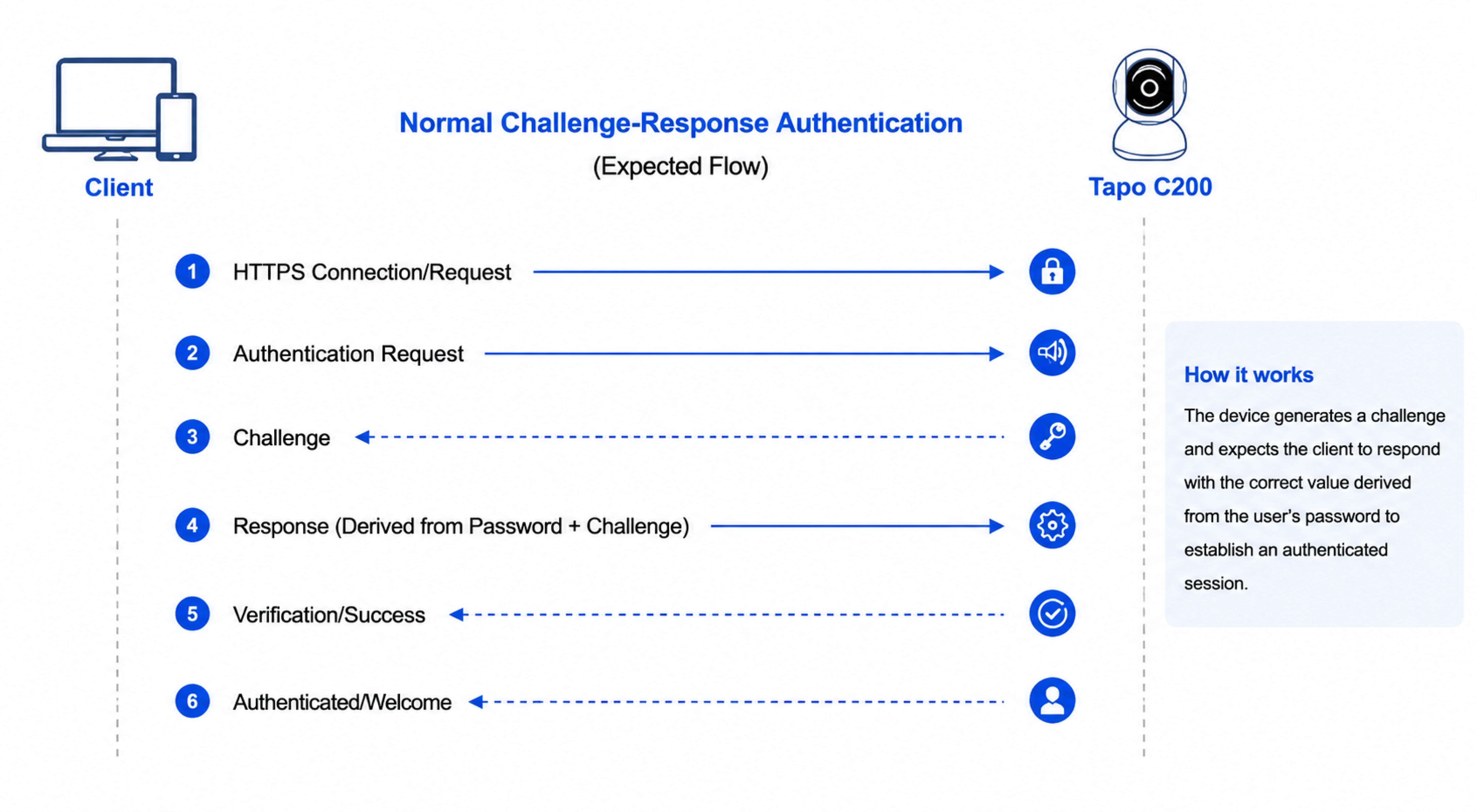
The TP-Link Tapo C200 exposes its local management interface over HTTPS on port 443 and uses a challenge-response mechanism to authenticate users. In the expected authentication flow, the camera generates a challenge and requires the client to return a corresponding response derived from the user's password before an authenticated session is established.
During firmware analysis, Khoi Tran and Thai Do identified an alternative authentication path that does not enforce the same credential verification. Under specific conditions, a value returned by the camera during the authentication exchange can be replayed in a subsequent request and accepted by the affected verification logic.
This breaks a fundamental property of the challenge-response mechanism. Instead of requiring the client to prove knowledge of the user's password, the vulnerable path allows a value originating from the camera itself to satisfy part of the authentication process.
An attacker with local network access to the affected camera can exploit this behavior to obtain a valid administrative session without knowing or recovering the user's password. No existing authenticated session is required, and the bypass can be completed through only a small number of requests to the local management interface.
Once authenticated, the attacker gains access to management functionality normally restricted to the camera administrator, allowing unauthorized changes to the device's configuration and other privileged operations.
CVE-2026-15316: Denial-of-Service during Device Onboarding
The second vulnerability exists in the camera's onboarding configuration flow, where the device processes encrypted Wi-Fi credential information.
Encrypted credential data should be properly validated before being passed to cryptographic and configuration-processing routines. However, our analysis found that the affected processing path does not adequately validate the size of the encrypted credential data before processing it.
An unauthenticated attacker with local network access to the camera can submit an oversized encrypted credential value. When the malformed data reaches the vulnerable processing path, it can cause the camera's HTTPS service to crash, resulting in a denial-of-service condition.
The impact is particularly relevant for a network-connected security camera, where disruption of management services can prevent legitimate users from accessing or managing the device until the affected service recovers.
Attack Scenario
An attacker with local network access to an affected TP-Link Tapo C200 could exploit CVE-2026-15315 to bypass the camera’s local authentication mechanism and establish a valid administrative session without knowledge of the legitimate user’s password. The resulting administrative access enables the attacker to invoke privileged management functions, modify device configuration, and perform operations that would normally require authorized administrator access. This access may also expose privacy-sensitive camera functionality, including live video streams and stored recordings, enabling unauthorized surveillance of footage captured by the affected device.
We prepared a PoC (proof-of-concept) video demonstrates the security impact of the vulnerabilities identified by Khoi Tran and Thai Do under controlled laboratory conditions.
Remediation for CVE-2026-15315 and CVE-2026-15316
On August 18, 2026, TP-Link published the security advisory and released firmware version V5_1.4.6 to address CVE-2026-15315 and CVE-2026-15316. Users and organizations operating affected TP-Link Tapo C200 cameras should update to the latest firmware provided by TP-Link to remediate the identified vulnerabilities.
Because exploitation requires local network access to the affected camera, reducing unnecessary exposure provides an additional layer of protection. Camera management interfaces should not be exposed to untrusted networks, and access should be restricted to authorized devices and users wherever possible. In business environments, IoT and surveillance devices should also be placed on appropriately segmented networks to limit their exposure to sensitive systems and reduce the potential impact of a compromised device.
Broader Security Implications
Beyond these specific vulnerabilities, the findings highlight the importance of assessing the security of connected devices beyond their intended functionality. Authentication mechanisms, onboarding workflows, and device management interfaces can introduce security weaknesses that may not be apparent during normal operation but can significantly affect the confidentiality, integrity, and availability of the device when exploited.
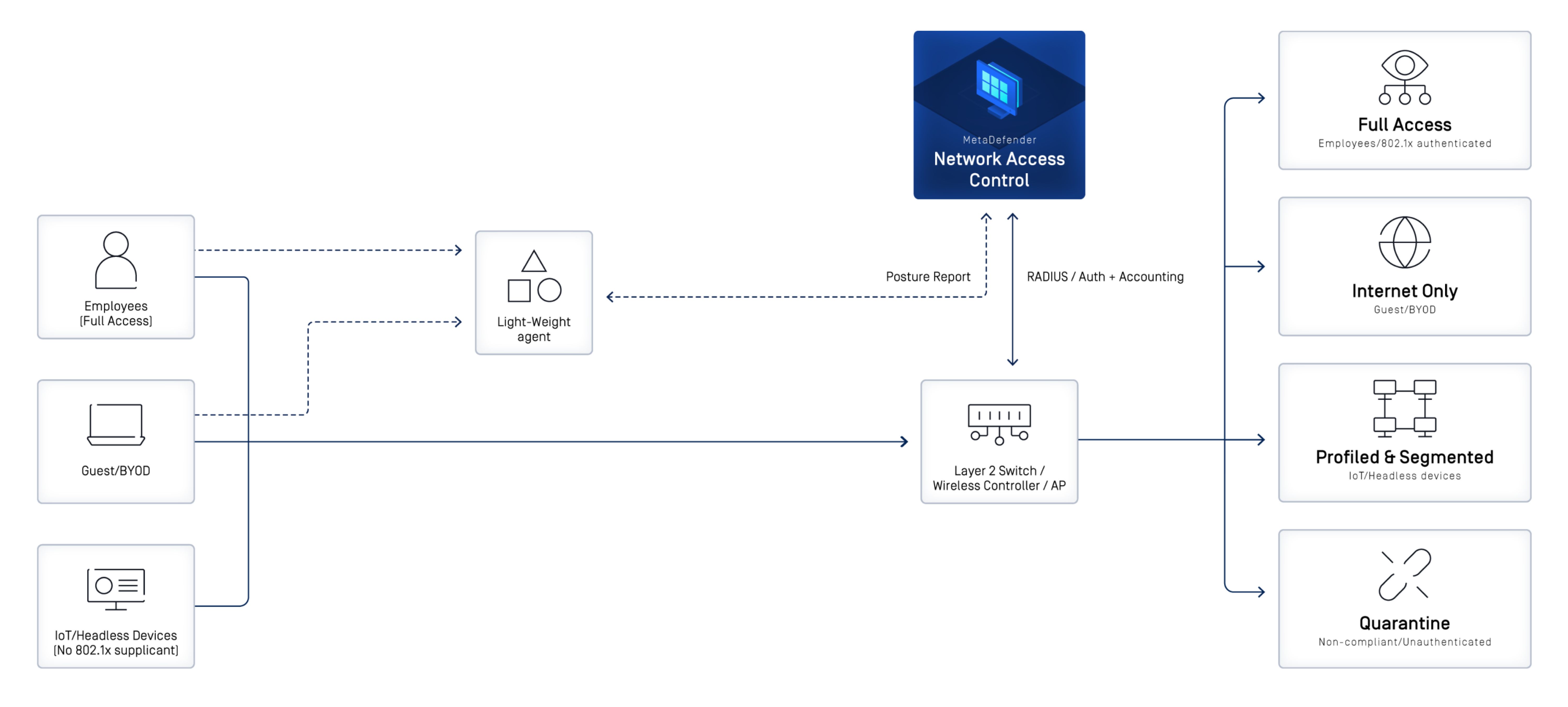
A layered approach to network security can further reduce the risks associated with vulnerable or compromised IoT devices. OPSWAT MetaDefender NAC provides visibility and access control for IoT and other network- connected devices and supports network segmentation through ACLs and VLAN assignment. These capabilities can help organizations control which devices are permitted on the network and limit their access to other network resources.
This research was conducted as part of the OPSWAT Critical Infrastructure Cybersecurity Graduate Fellowship Program, with mentorship from OPSWAT Unit 515. Through hands-on vulnerability research and responsible disclosure, OPSWAT continues to help identify and address security weaknesses in technologies used across connected environments.
Organizations seeking to evaluate the security of your products, applications, or infrastructure can engage OPSWAT Unit 515 for advanced penetration testing and security assessments designed to identify vulnerabilities before they can be exploited.