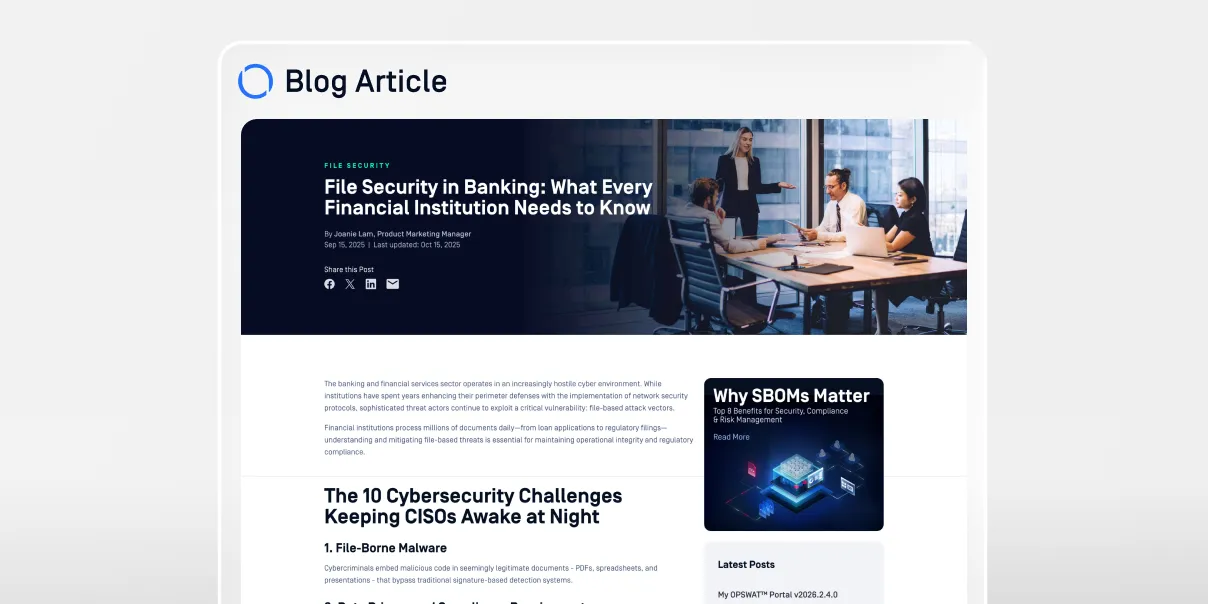
Cybersecurity for Financial Services
Secure customer data and transaction systems, while supporting regulatory compliance through multi-layered file and data threat prevention.
- File Threat Detection
- Regulatory Confidence
- Operational Resilience
OPSWAT Is Trusted By
7 out of 10
2,100+
100+
What Is Cybersecurity for Financial Services?
Cybersecurity for financial services is the practice of protecting the data, files, and transaction systems that banks, insurers, and capital-markets firms depend on, while addressing applicable compliance requirements, including those under DORA, PCI DSS, GLBA, SOX, and NYDFS Part 500.
Because financial institutions exchange documents constantly with customers, vendors, and regulators, every uploaded file is a potential entry point for malware.

OPSWAT delivers AI-powered cybersecurity for critical infrastructure. Our MetaDefender™ platform secures the file and data layer of the financial stack, inspecting and sanitizing every file entering financial institution's environment alongside the endpoint, network, and identity controls already in place.

Why File Risk Is Financial Risk
KYC submissions, trading files, and payment documents can carry malware or contain manipulated information. Malicious files can compromise financial systems, while falsified identity documents can support synthetic identity fraud and undermine customer verification.
DORA, PCI DSS, GLBA, GDPR, and NYDFS Part 500 establish security and data-protection obligations, with documentation and evidence requirements that vary by framework. Malware prevention helps organizations address these obligations.
Separate security tools across uploads, transfers, and storage can create inconsistent policies and fragmented visibility. Financial institutions need coordinated file protection wherever their data resides.



Trust No File Across the Financial File Lifecycle
OPSWAT inspects, sanitizes, and logs every file before, during, and after it moves through financial workflows.
Deep Content Inspection
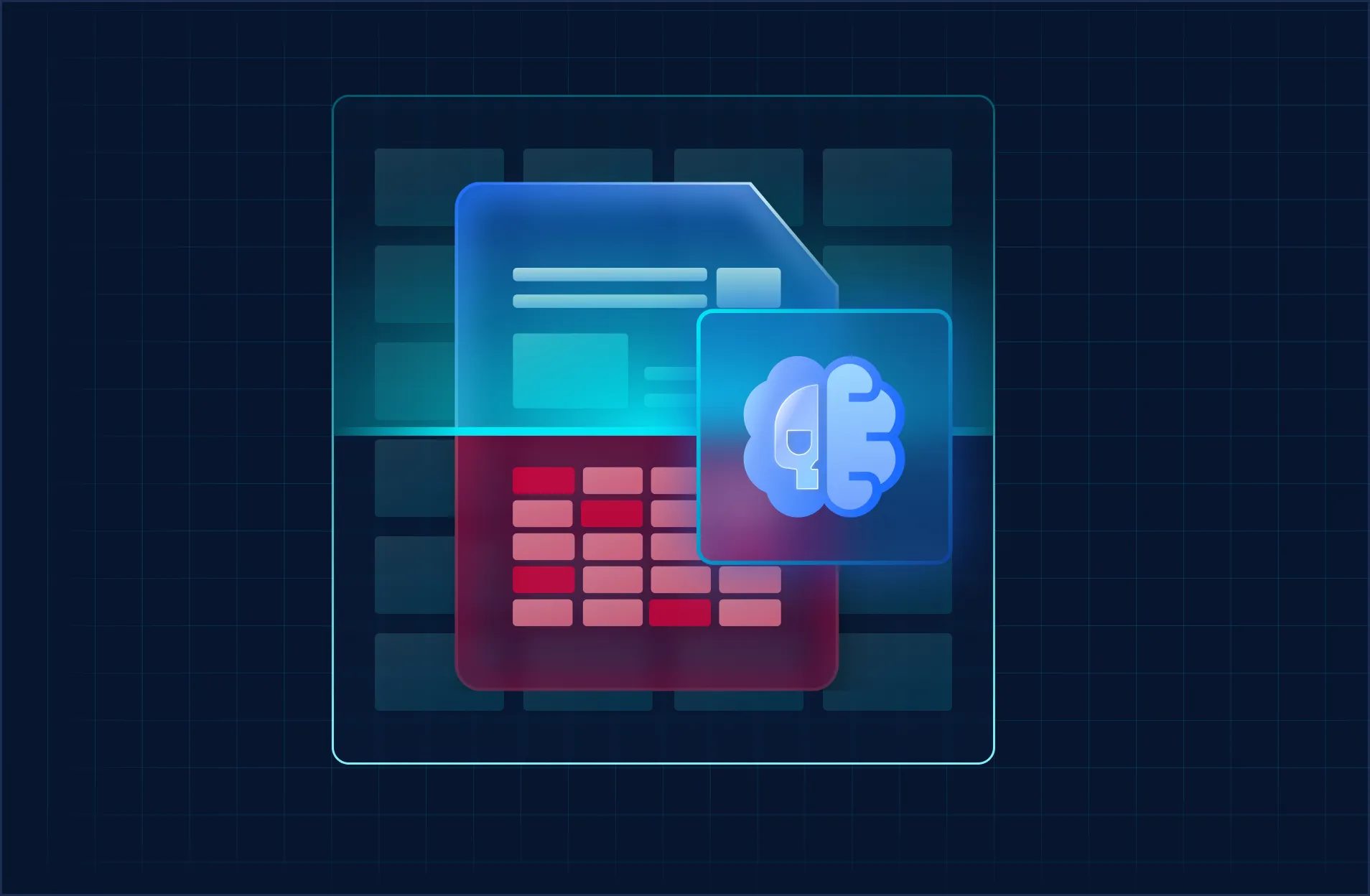
Multi-engine malware detection, AI-powered predictive analysis, and threat intelligence identify and block known and unknown file-based threats before they execute.
Business-First Protection
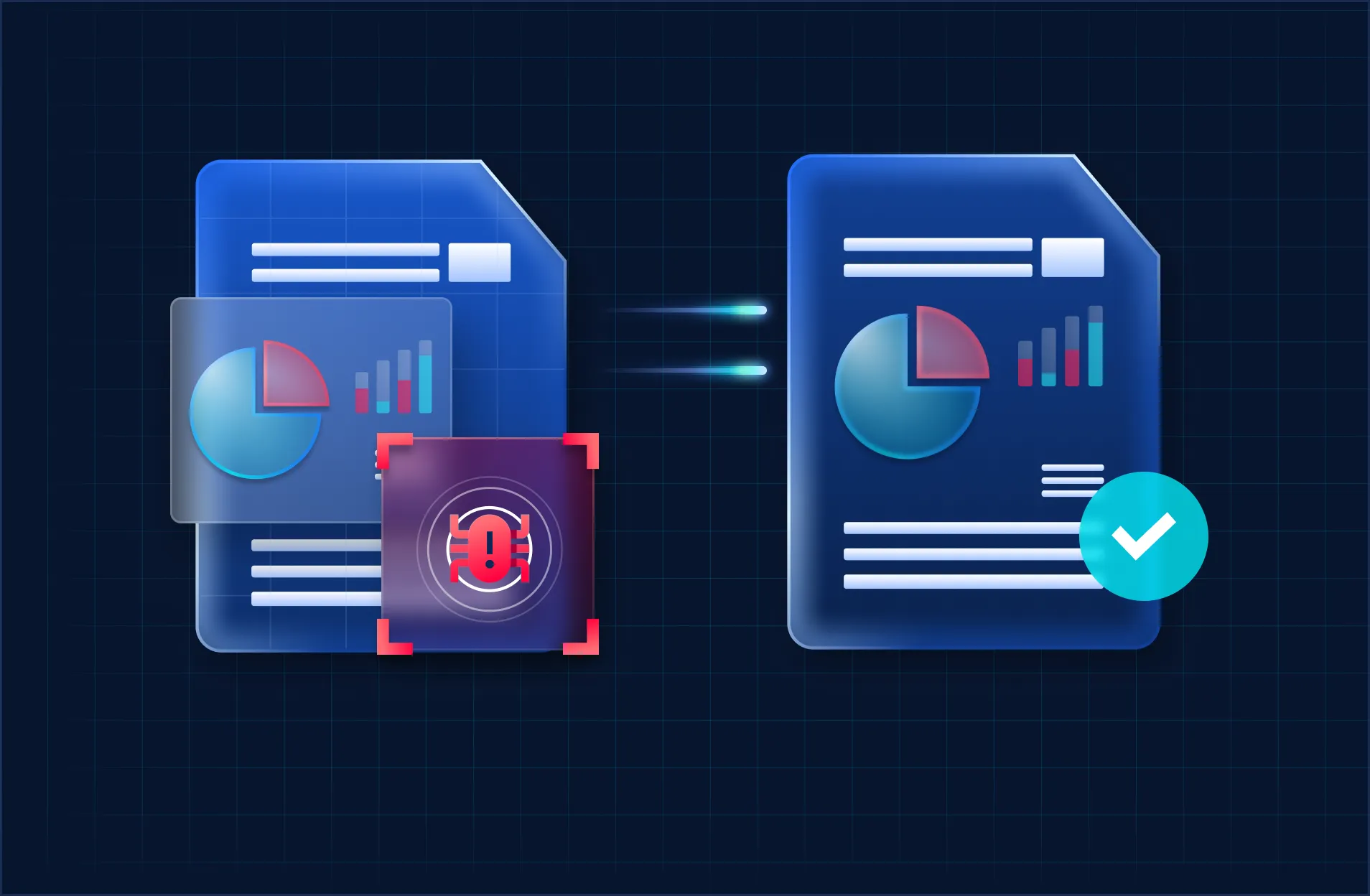
Deep CDR™ Technology removes threats while preserving file usability, so operations continue securely without disruption. Proactive DLP™ prevents sensitive customer data from leaving the institution.

Vendor-Agnostic Integration
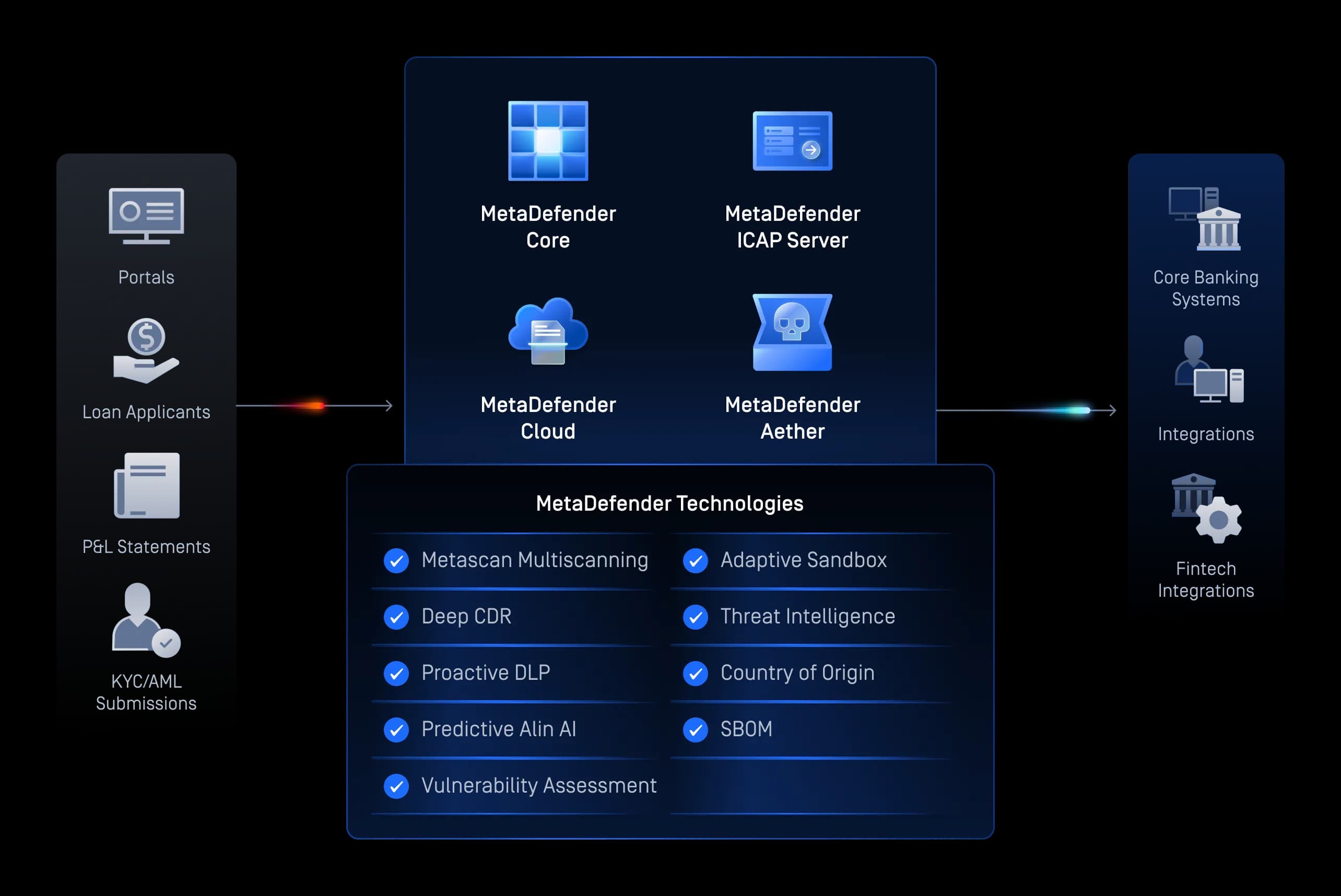
Deploy across on-premises, hybrid, and cloud environments using ICAP and APIs without re-architecting existing financial systems.
Where OPSWAT Fits in Your Financial Security Stack
OPSWAT secures the file and data layer, working alongside the endpoint, network, and identity tools already in your stack.
Financial institutions typically run endpoint detection and response, network security, and identity and access management. Those controls protect devices, traffic, and users.
OPSWAT complements them with dedicated file inspection and content sanitization. MetaDefender inspects files entering a financial institution, whether it arrives through customer uploads, email attachments, managed file transfers, cloud storage, or removable media.
Embedded threats are removed before the file reaches a core system, and the MetaDefender™ Platform runs alongside existing EDR, firewall, and identity investments, helping customers protect data wherever it resides.
| Endpoint (EDR) | Detects and responds to threats executing on devices |
|---|---|
| Network | Controls traffic and segments environments |
| Identity (IAM) | Governs who can access which systems |
| File and Data (OPSWAT) | Inspects, sanitizes, and logs the content within financial workflows |
Use Cases
File Uploads
Secure Customer & Public File Uploads
Inspect and sanitize customer-submitted documents, including KYC files, loan applications, tax forms, and contracts to remove malware, zero-day exploits, and exposed sensitive data at upload without disrupting onboarding.
File Transfers
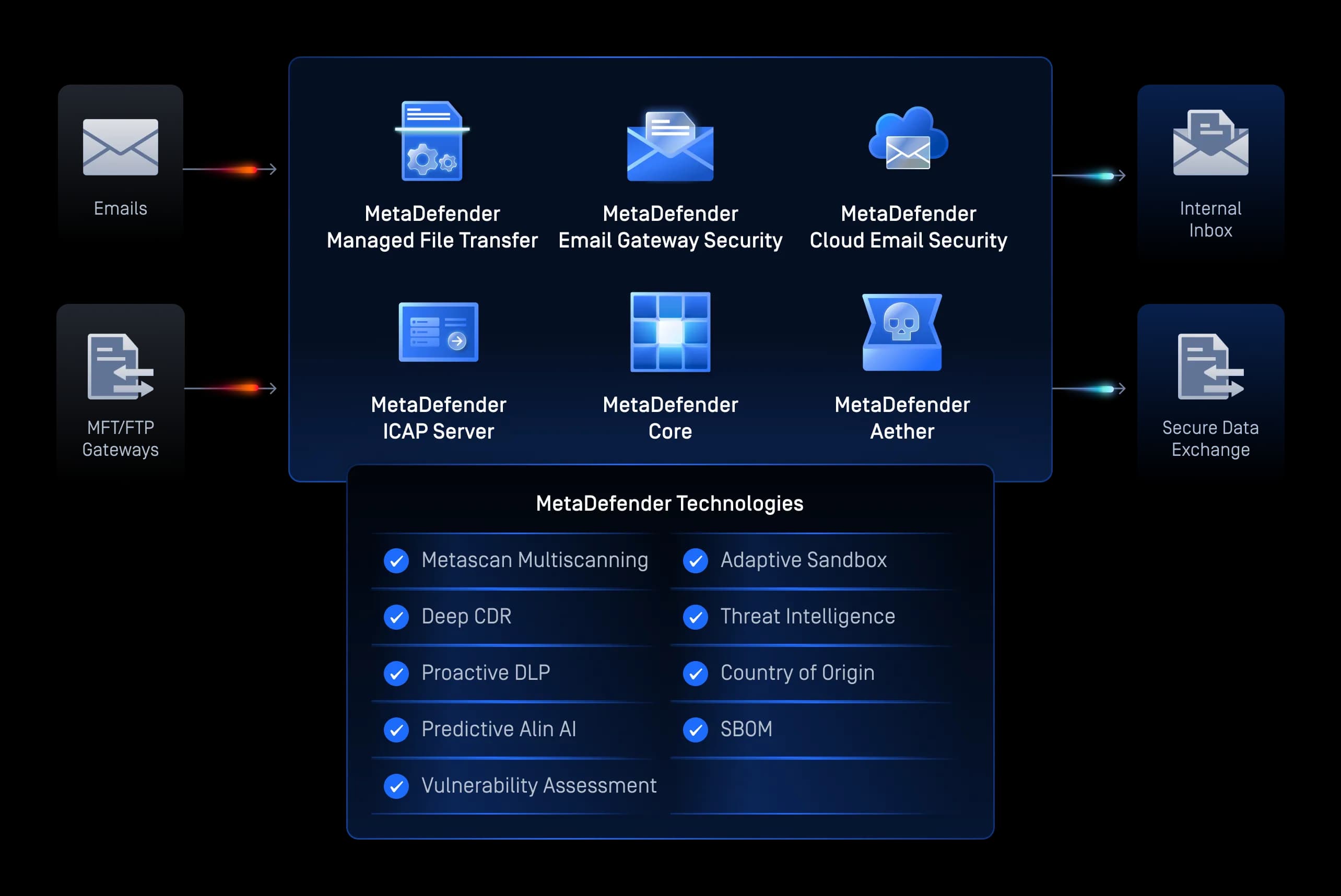
Secure File Transfers & Email Collaboration
Protect transfers and email attachments from malware, phishing payloads, and data leakage across financial data exchange workflows.
File Storage
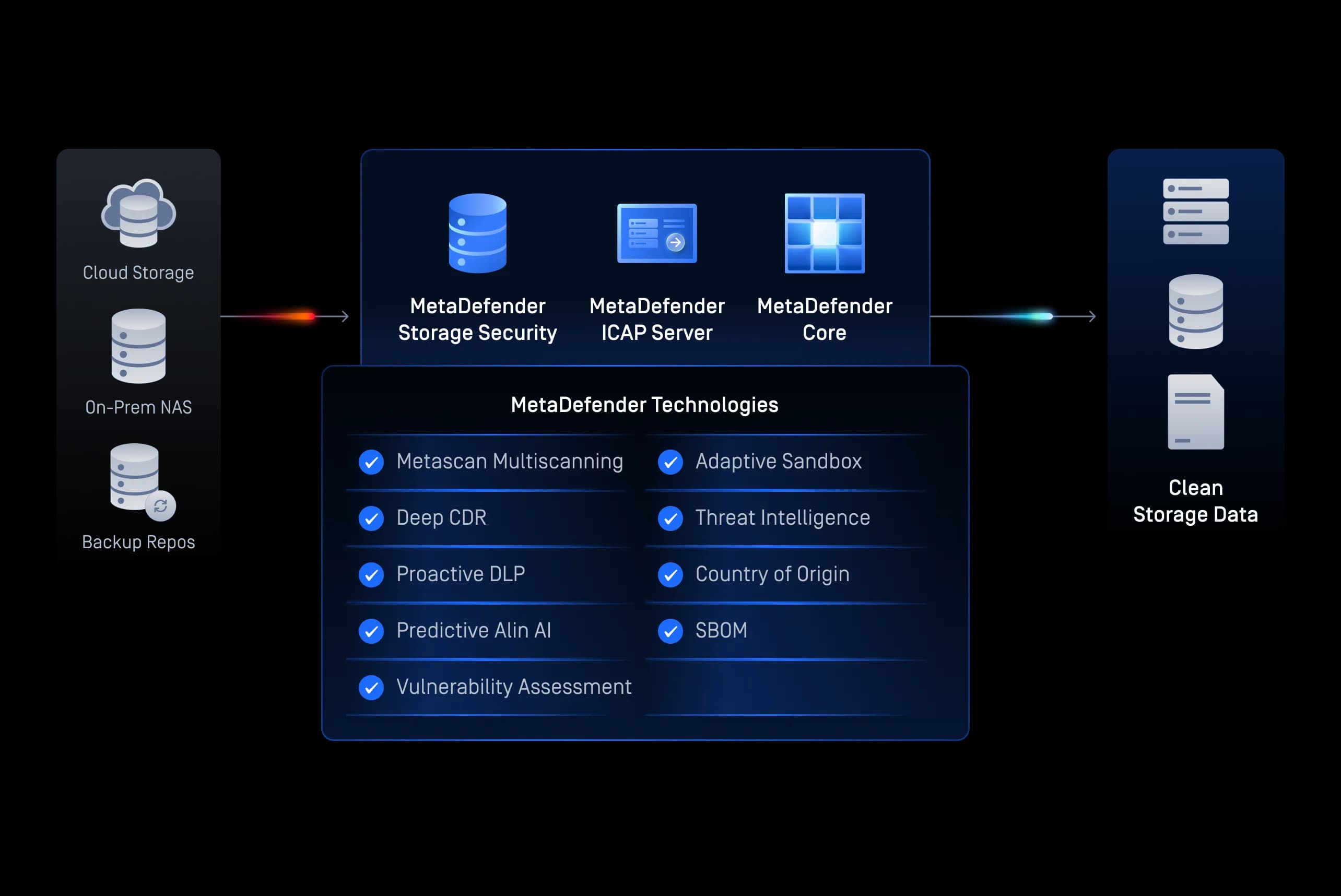
Secure File Storage & Backups
Continuously inspect stored financial documents, cloud repositories, and backup files to prevent dormant threats and meet long-term audit and retention requirements.
DevSecOps
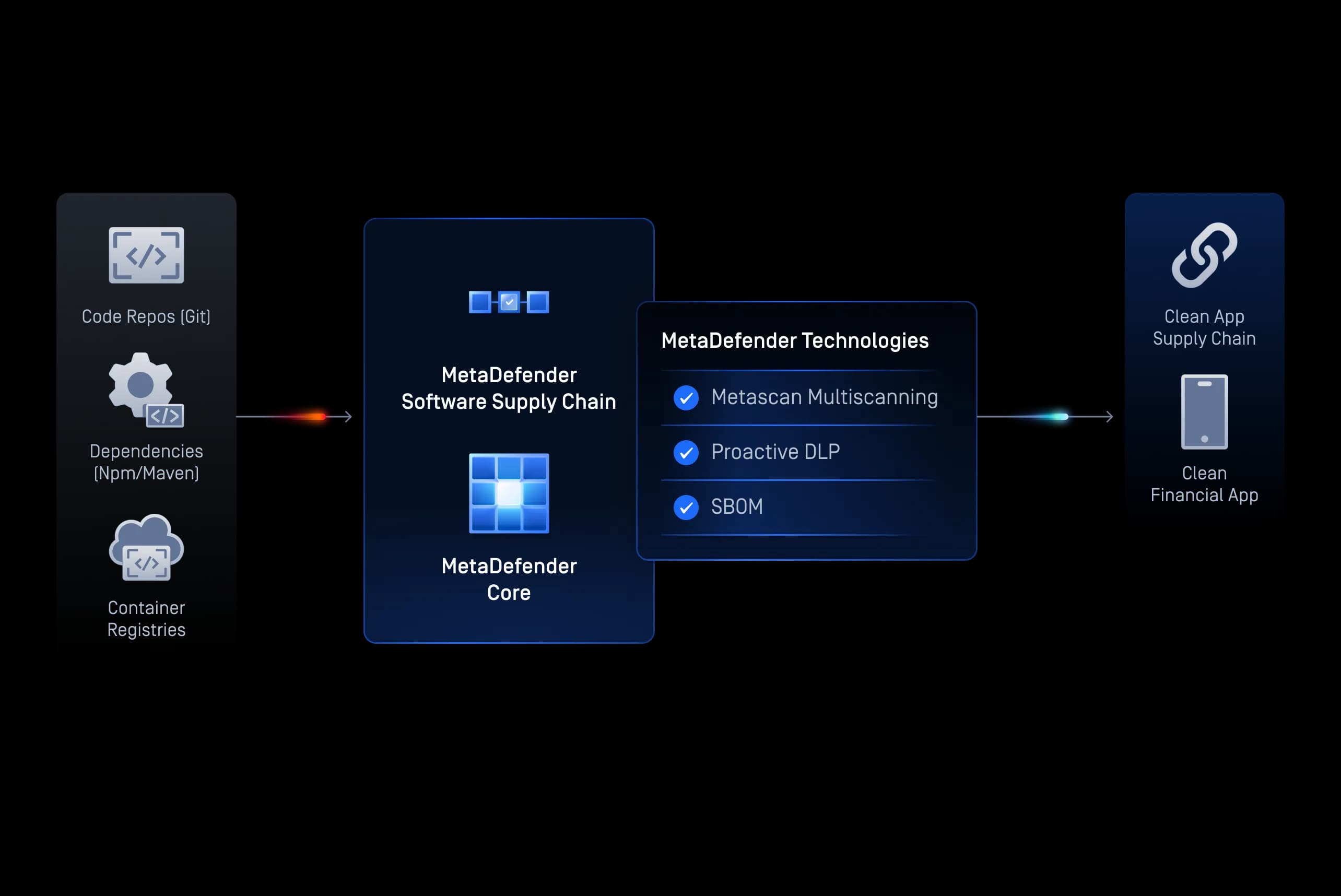
Secure Financial Applications
Inspect build artifacts, open-source dependencies, containers, and CI/CD pipeline outputs to prevent threats from entering cloud-native banking applications.
Post-Quantum
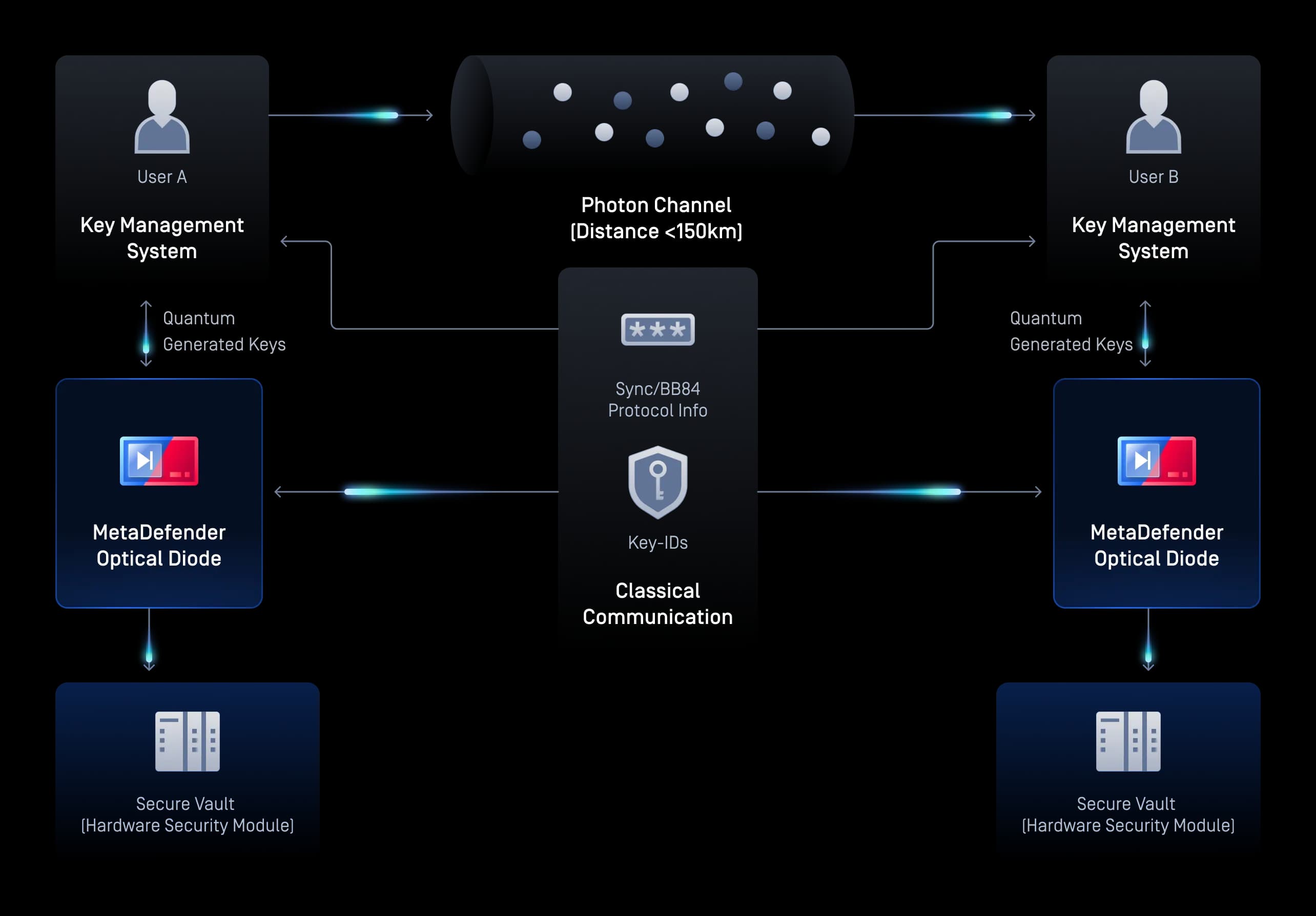
Secure the Post-Quantum Cryptography Transition
Deliver quantum-resistant keys, entropy, and firmware updates into your trusted environment through a hardware-enforced unidirectional gateway. Defend against "Harvest Now, Decrypt Later" attacks while a physical break blocks any outbound leakage or backchannel communication.
Peripheral Media Protection
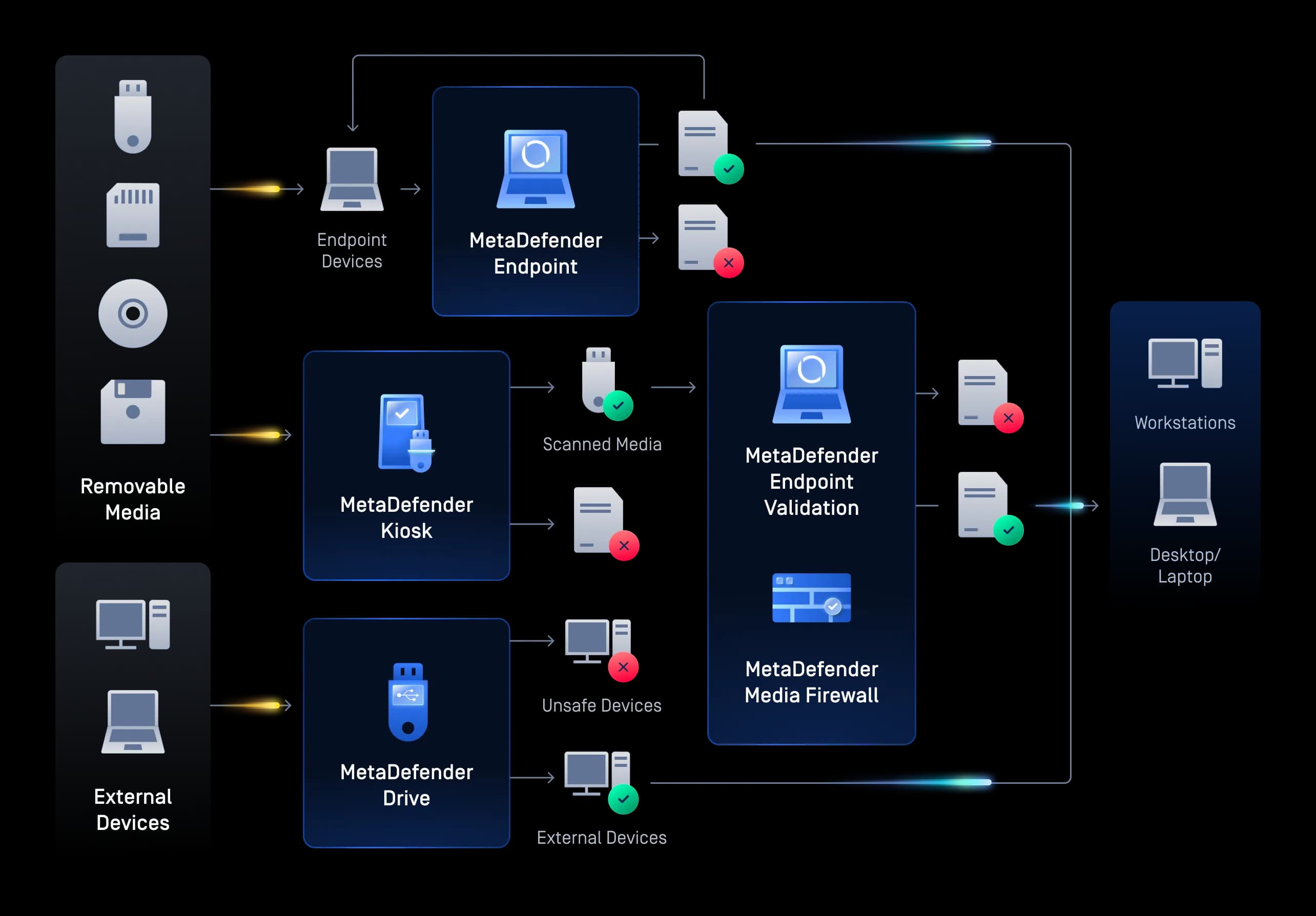
Removable Media and External Devices
Inspect and control files introduced via USB drives and external devices across branch offices and data centers, blocking malware and zero-day exploits before they reach internal financial systems.
- File Uploads
File Uploads
Secure Customer & Public File Uploads
Inspect and sanitize customer-submitted documents, including KYC files, loan applications, tax forms, and contracts to remove malware, zero-day exploits, and exposed sensitive data at upload without disrupting onboarding.
- File Transfers
File Transfers
Secure File Transfers & Email Collaboration
Protect transfers and email attachments from malware, phishing payloads, and data leakage across financial data exchange workflows.
- File Storage
File Storage
Secure File Storage & Backups
Continuously inspect stored financial documents, cloud repositories, and backup files to prevent dormant threats and meet long-term audit and retention requirements.
- DevSecOps
DevSecOps
Secure Financial Applications
Inspect build artifacts, open-source dependencies, containers, and CI/CD pipeline outputs to prevent threats from entering cloud-native banking applications.
- Post-Quantum
Post-Quantum
Secure the Post-Quantum Cryptography Transition
Deliver quantum-resistant keys, entropy, and firmware updates into your trusted environment through a hardware-enforced unidirectional gateway. Defend against "Harvest Now, Decrypt Later" attacks while a physical break blocks any outbound leakage or backchannel communication.
- Peripheral Media Protection
Peripheral Media Protection
Removable Media and External Devices
Inspect and control files introduced via USB drives and external devices across branch offices and data centers, blocking malware and zero-day exploits before they reach internal financial systems.
PCI DSS Compliance Guide and Checklist
Understand the requirements. Fix what’s missing. Build a compliance strategy.
Built for Financial Regulatory Reality
OPSWAT helps financial institutions address applicable compliance requirements through malware prevention, data protection, and security logging at the file and data layer. These capabilities support an institution’s broader security and compliance program.

DORA (EU Digital Operational Resilience Act)
DORA is an EU regulation that establishes a binding, comprehensive ICT risk management and digital operational resilience framework for financial entities and their critical third-party ICT providers. OPSWAT solutions help financial institutions address DORA’s requirements for ICT security, resilience testing, incident reporting, and third-party risk by securing data flows, applying Zero Trust controls around files and devices, and supporting reporting for resilience assessments.

PCI-DSS
The PCI DSS (Payment Card Industry Data Security Standard) is a set of security standards designed to ensure that all companies that accept, process, store, or transmit credit card information maintain a secure environment. PCI DSS aims to protect cardholder data from theft and fraud. OPSWAT solutions play an important role in securing credit card numbers, security codes, and other cardholder data, minimizing the risk of data breaches and unauthorized access, both of which are critical to maintaining PCI-DSS compliance.

GLBA
GLBA is a U.S. law that requires financial institutions to protect the privacy and security of customers’ nonpublic personal information through written information security programs and safeguards. OPSWAT solutions help covered entities implement technical safeguards for data in motion and at rest, monitor file and device activity, and support continuous monitoring as part of GLBA Safeguards Rule compliance.
SOX
SOX is a U.S. law that strengthens corporate governance by requiring robust internal controls, accurate financial reporting, and independent auditing for public companies. OPSWAT solutions help organizations enhance the integrity and confidentiality of financial systems and records through secure data movement, malware prevention, file integrity controls, and audit logging, supporting SOX ITGC and application control objectives.

NYDFS Part 500
New York’s cybersecurity regulation for financial services companies requires documented controls and defenses against unauthorized access to nonpublic information. File-level inspection and data loss prevention support relevant protections, while security logs help document the controls applied.

GDPR
GDPR (General Data Protection Regulation) is a European Union regulation governing the protection of personal data and privacy rights of individuals within the EU and the European Economic Area, applicable to any organizations that target or collect personal data in these regions. OPSWAT helps organizations achieve GDPR compliance by ensuring the confidentiality, integrity, and availability of personal data, mitigating the risk of data breaches and non-compliance penalties.
NIST CSF 2.0
NIST CSF 2.0 provides nonprescriptive outcomes for managing cybersecurity risk. File inspection, data protection, and security logging can contribute to relevant outcomes, with mappings based on the institution’s implementation and selected priorities.
Stopping Threats Starts with Market-
Leading Technology
OPSWAT’s proven, globally trusted, award-winning, and market-leading technology prevents file-borne malware from entering and propagating into your critical environments.
AI-Powered Zero-Day Prediction at the Perimeter
- Pre-Execution Detection & Deflection
- ML-Model trained on Enterprise File Workflows
More Engines Are Better Than One
- Detect nearly 100% of malware
- Scan simultaneously with 30+ leading AV engines
Stop Threats That Others Miss
- Supports 200+ file formats
- Recursively sanitize multi-level nested archives
- Regenerate safe and usable files
True File Type Detection for Security-Critical Workflows
- AI-Enhanced
- Detects spoofed file types in milliseconds
- Inline enforcement without performance loss
Prevent Sensitive Data Loss
- Utilize AI-powered models to locate and classify unstructured text into predefined categories
- Automatically redact identified sensitive information like PII, PHI, PCI in 125+ file types
- Support for Optical Character Recognition (OCR) in images
Detect Evasive Malware with Advanced Emulation-Based Sandboxing
- Analyze files in a high-speed
- Anti-evasion sandbox engine extracts IOCs
- Identify zero-day threats
- Enable deep malware classification via API or local integration
- File Type Detection
True File Type Detection for Security-Critical Workflows
- AI-Enhanced
- Detects spoofed file types in milliseconds
- Inline enforcement without performance loss
99%+ AccuracyOn Disguised Extensions
Seamless Integration With Your Ecosystems
OPSWAT integrates with existing financial ecosystems: managed file transfer platforms, email gateways, file servers, cloud storage, and custom applications. It supports AWS, Azure, GCP, and legacy on-premises environments.



















How Financial Leaders Strengthen Security
with OPSWAT



- “As part of our evaluation, we were looking for a provider that supported both the REST interface and ICAP. We then carried out a POC and found that OPSWAT was the right choice, and only provider that supported this.”Cihan BalSoftware Engineer, LLB
- “The MetaDefender Platform provides Swiss Re with a comprehensive, easy-to-deploy and maintain solution that meets regulatory compliance requirements and eliminates the risk of malware entering the organization.”Raymond BucherDirector/Cloud Architect, Swiss Re
- “OPSWAT has become a cornerstone of our cloud security architecture. It gives us the control we need today and the agility we’ll need tomorrow.”Senior Cloud Architect
- “MetaDefender Kiosk, supported by MetaDefender Managed File Transfer (MFT) and MetaDefender Endpoint Validation, made it easy for our employees to transfer USB files securely. We’ve successfully eliminated this entry point for file-borne malware entering our protected environments.”IT Operations Director
Get Started in 3 Simple Steps



FAQs
The EU’s Digital Operational Resilience Act requires covered financial entities to manage ICT risk across their operations, including risk introduced by third parties and by the data entering their systems. Its supporting technical standards address protection against malicious code and information leakage. For file and data workflows, that means inspecting inbound content, preventing malicious files from reaching critical systems, and retaining evidence that those controls ran. OPSWAT supports these obligations by inspecting, sanitizing, and logging every file entering financial systems.
PCI DSS establishes security requirements for payment account data and applicable systems, including protection against malicious software and safeguards for stored account data. Files containing cardholder data may fall within scope, depending on how and where they are stored, processed, or transmitted. Multi-engine malware detection and content sanitization support the anti-malware requirements, and data loss prevention helps prevent cardholder data from leaving through file channels.
The Gramm-Leach-Bliley Act’s Safeguards Rule requires US financial institutions to protect customer information, with specific obligations determined by the applicable regulator. Because customer data most often moves as files such as statements, applications, and tax documents, inspecting and sanitizing those files and logging each result supports the safeguards and access-control elements the rule expects.
Banks can reduce file-based malware by inspecting every file at configured entry points rather than relying on detection after execution. Layered controls increase the detection rates. Effective controls combine multi-engine scanning and machine learning to catch known and unknown malware, content disarm and reconstruction to recursively neutralize zero-day exploits from documents, and file-type verification to catch spoofed extensions. OPSWAT applies these controls at customer uploads, email attachments, file transfers, cloud storage, and removable media.
OPSWAT operates at a different layer than endpoint detection and response. EDR platforms detect and respond to threats executing on devices, while OPSWAT inspects and sanitizes file content before it reaches a device or a core banking system. A financial institution typically runs both: EDR for endpoint behavior, and OPSWAT for the files and data moving through its workflows.
Yes. OPSWAT deploys on-premises, in hybrid environments, and in the cloud, with support for AWS, Azure, and GCP. Financial institutions integrate it using ICAP, APIs, and native connectors to existing managed file transfer platforms, email gateways, file servers, and cloud storage. This includes scanning files in cloud object storage across multiple accounts and regions.
OPSWAT’s file-security capabilities help financial institutions implement malware prevention, data protection, and security logging controls that support applicable requirements under DORA, PCI DSS, GLBA, GDPR, and NYDFS Part 500, as well as relevant NIST framework outcomes. Compliance is always determined by an institution’s full control environment, not by any single product. To learn how OPSWAT can support your organization’s compliance efforts, contact our team to discuss your requirements.
The performance impact varies by organization, depending on infrastructure, file characteristics, and enabled security controls. OPSWAT works with your team to understand your environment and recommend deployment options and scanning policies that best fit your workflows, security needs, and performance requirements.
Recommended Resources
Proven Deployments in Banking and Financial Services
PCI DSS Compliance Guide and Checklist
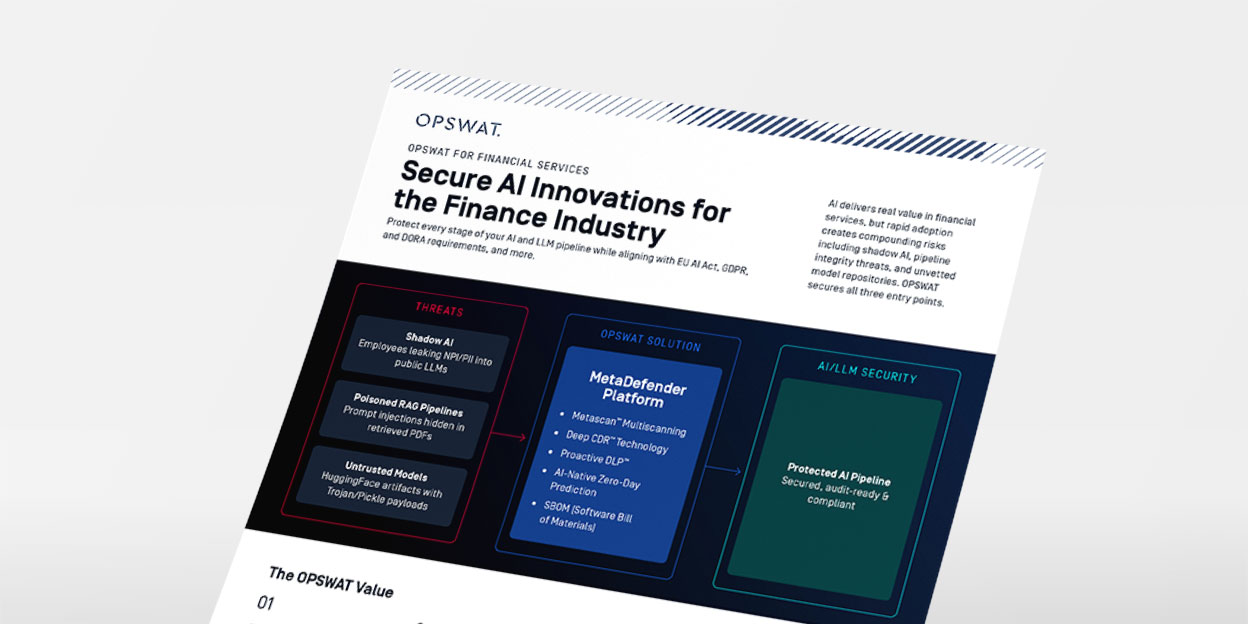
OPSWAT for Financial Services: Secure AI Innovations for the Finance Industry
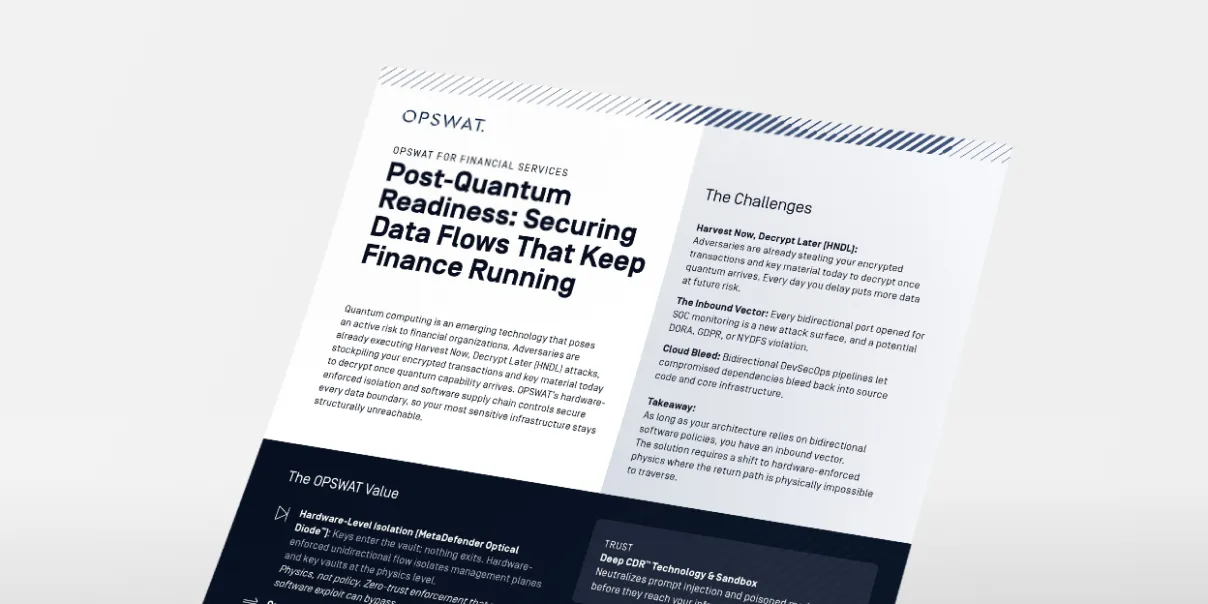
OPSWAT for Financial Services: Post-Quantum Readiness
File Security Proven Deployments in Banking and Financial Services

From Compliance to Confidence: How Europe's Financial Services Providers Secure Files
File-Based Malware: A Hidden Compliance Risk for Financial Institutions