Whether files are uploading, downloading, or moving between systems, spikes in volume put scanning infrastructure to the test. Here is how MetaDefender™ Cluster keeps inspection fast, available, and under control at any scale.
What Challenges Come with High-Volume File Traffic?
1. Multi-Nested Archive File
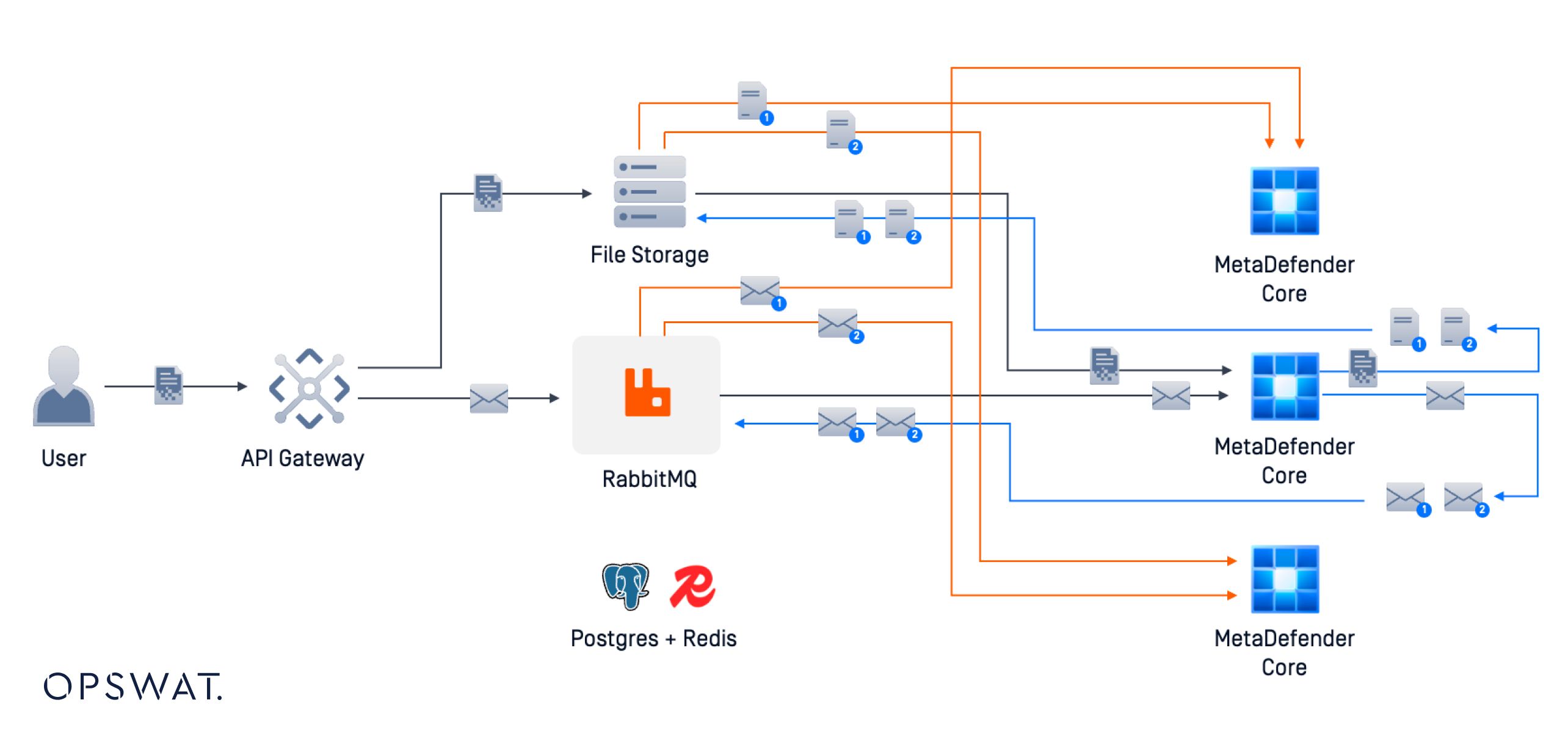
Challenge: A small, compressed file can expand into an enormous amount of data when extracted. If a scanner tries to unpack and analyze everything in one pass, the process can stall or fail under the weight of the archive. That means one file can consume far more resources than expected and slow down everything waiting behind it.
Solution: MetaDefender Cluster addresses this by extracting and processing large or nested archives in parallel across its distributed architecture. Parallel archive extraction significantly reduces scan times and enhances efficiency in distributed environments. By splitting the workload, no single file can monopolize a scanning instance, ensuring smoother operations.
2. Performance At Scale
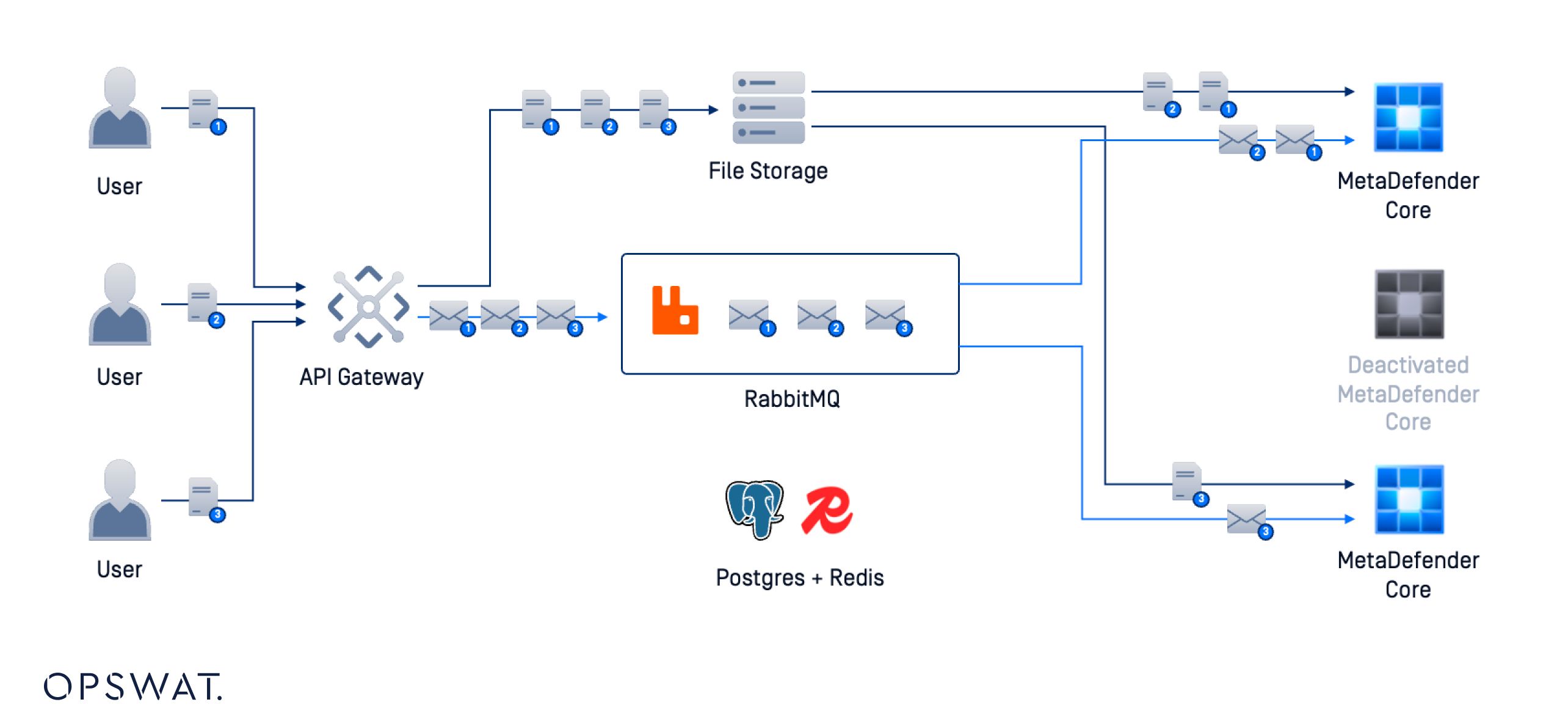
Challenge: File traffic doesn't follow a predictable pattern. Demand ramps up sharply during high-activity periods and falls just as quickly afterward. Static infrastructure has no way to follow that curve. When volume spikes beyond capacity, backlogs grow, scan times stretch, and in severe cases the system goes down entirely. When demand drops, that same infrastructure runs over-provisioned at unnecessary cost. The result is an inspection layer that is either overwhelmed or wasteful, with no reliable middle ground.
Solution: MetaDefender Cluster ensures scalability and continuous operation:
- If volume increases, admins can simply add more MetaDefender Core instances, and the same workflows are applied automatically across every instance.
- If a MetaDefender Core instance goes down while processing a file, the file is automatically resubmitted to another available node, ensuring uninterrupted scanning without manual resubmission.
3. High Availability
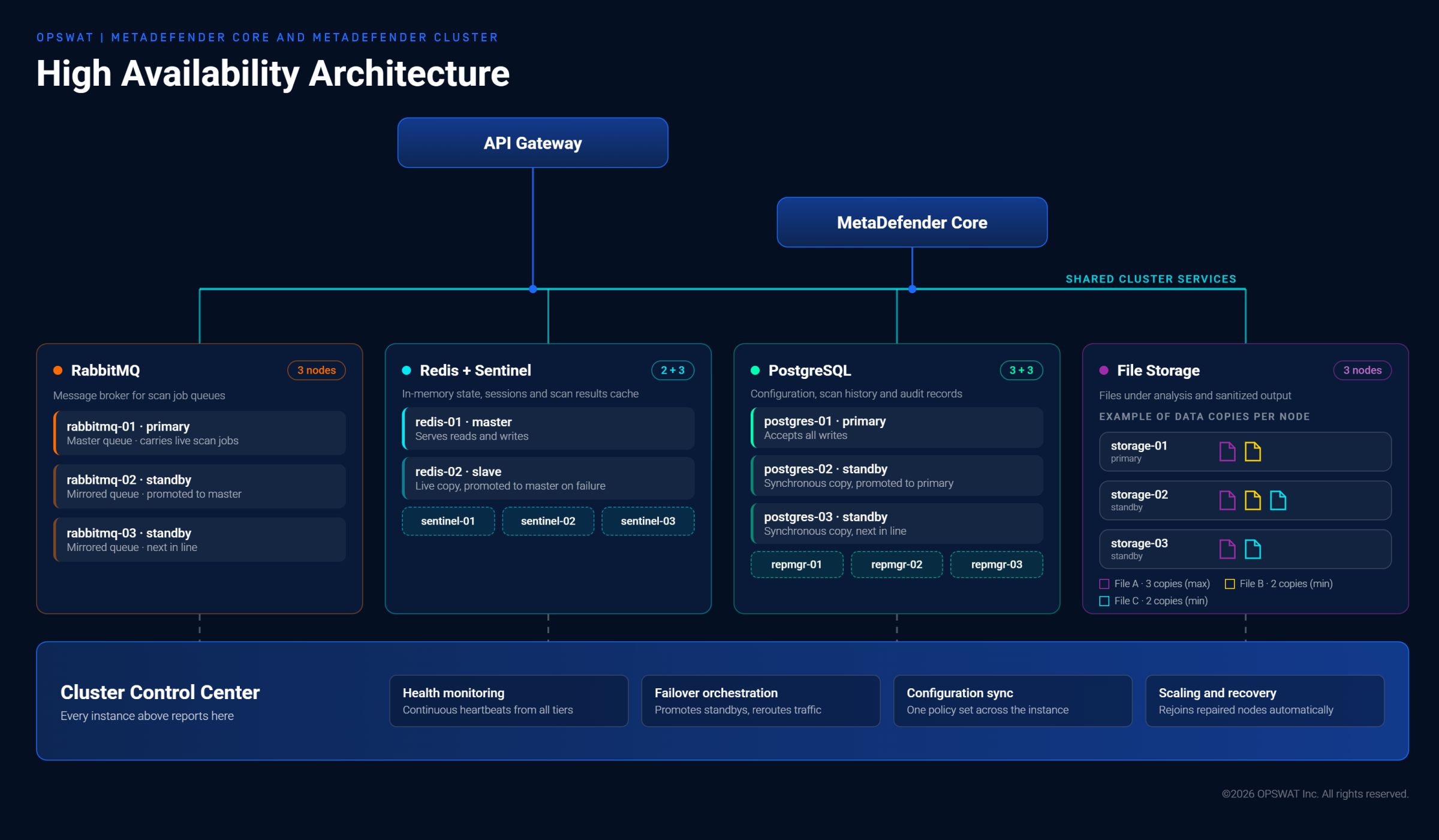
Challenge: Distributed scanning systems depend on several critical components to stay running behind the scenes. If any one of these components goes down, scanning can be interrupted, and files that are mid-process may come back with a failed verdict.
Solution: MetaDefender Cluster supports high availability solutions by adding replication and redundancy to its essential components. If a single component goes down, a redundant system takes over automatically, so scanning continues without interruption and without any impact on the files being processed.
4. Resource Exhaustion
Challenge: High volume traffic can be used to exhaust CPU, memory, or I/O during extraction and analysis. If the system is not built to isolate and recover from that pressure, a single problematic file can affect the performance of the scanning pipeline for every other file in the queue.
Solution: MetaDefender Cluster enables horizontal scaling and parallelized scanning across multiple MetaDefender Core instances. Organizations can add more instances as file volumes grow, helping maintain performance during peak workloads without over-provisioning a single system.
5. Operation Overheads
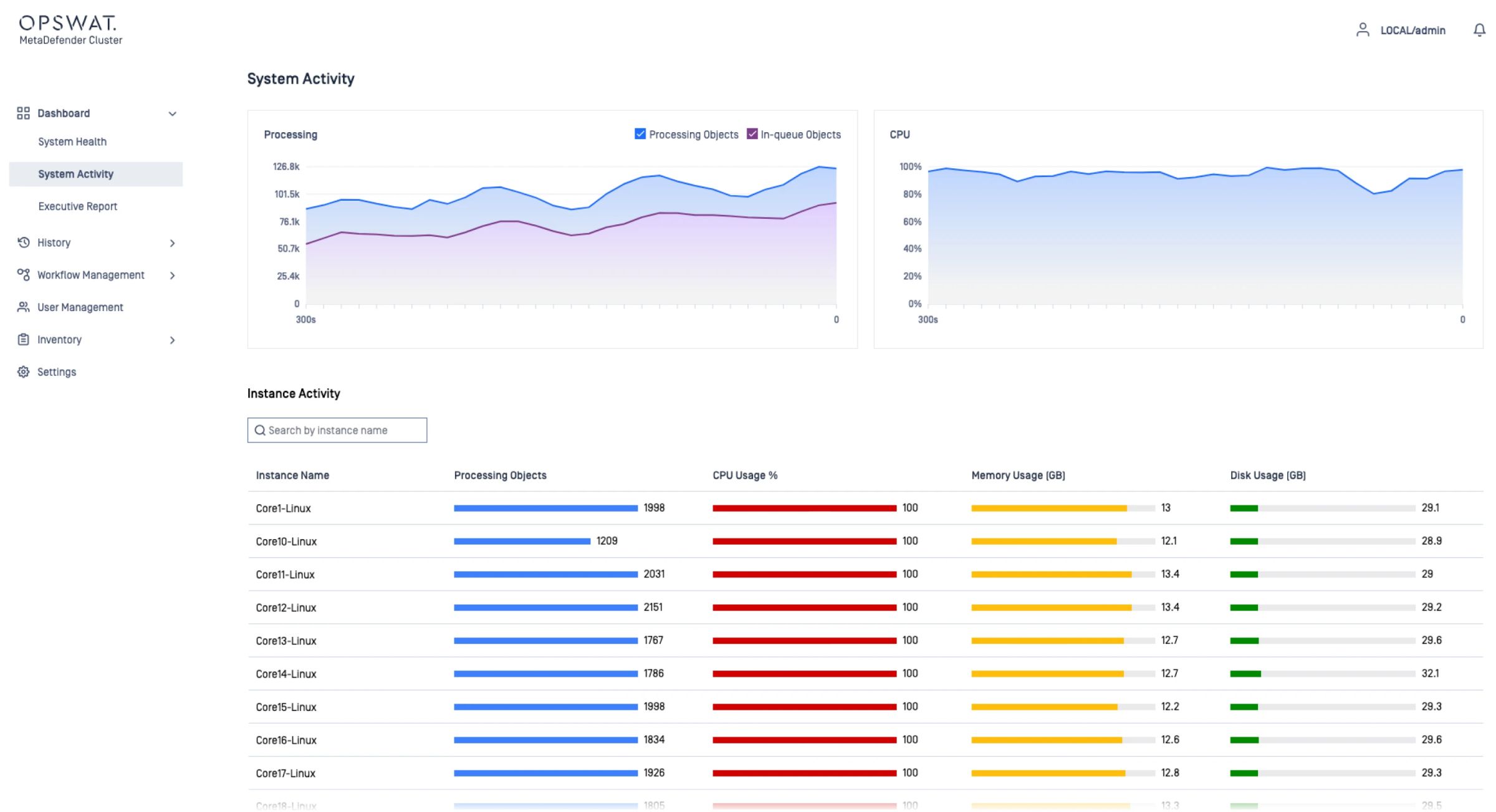
Challenge : Managing distributed scanning infrastructure across multiple instances adds complexity for security teams. Without a unified view, tracking deployments, licenses, and health status across every instance becomes a manual, time-consuming task.
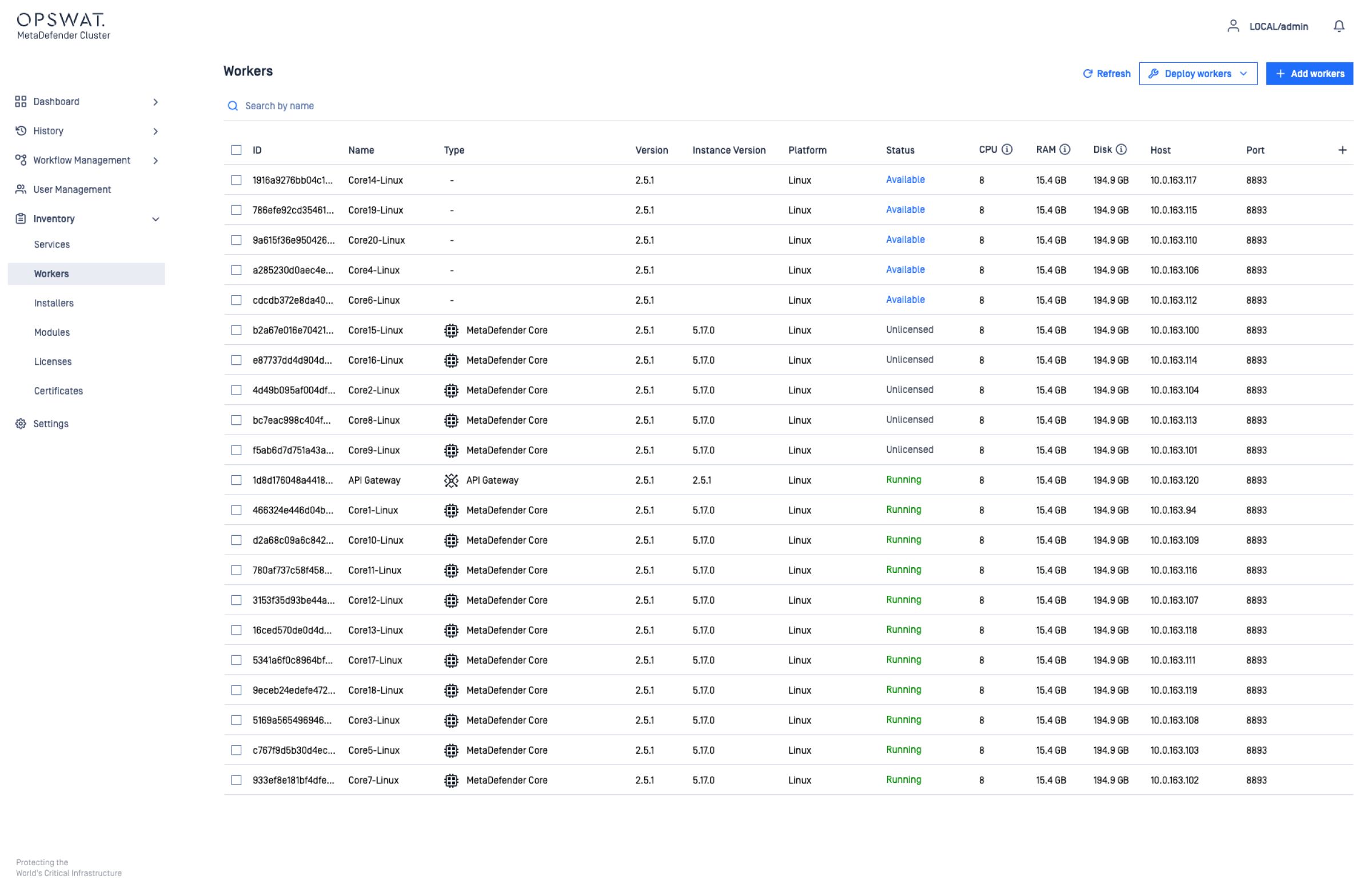
Solution: A centralized Control Center web console provides a unified way to manage deployments, upgrades, workflows, licensing with complete visibility across your distributed infrastructure. Teams can manage distributed infrastructure from a single location and perform upgrades through a streamlined, zero-downtime process.
What MetaDefender Cluster Does for File Security at Scale
MetaDefender Cluster delivers several critical benefits for organizations grappling with high-volume file traffic
Scalable File Security
Scale with confidence. Handle high-throughput file traffic without bottlenecks.
- Horizontal scaling of MetaDefender Core instances
- Parallel processing of archive file contents
- RabbitMQ-based task distribution
- Redis caching for in-memory result access
Resilient, Distributed Architecture
Built for resilience. Maintain uptime and availability even under failure or load.
- High availability across distributed components
- Fault-tolerant design with decoupled services
- Automated load sharing across nodes
- Health monitoring through Control Center
Centralized Control & Operational Visibility
Orchestrate with ease. Unified visibility and control across deployments.
- Centralized Control Center for deploying and upgrading Core and API Gateway
- License, workflow, and certificate management
- Executive dashboards, audit logs, and processing history
- HTTPS enablement for secure communication
Flexible Deployment and Integration
MetaDefender Cluster offers flexible integration options, including REST API, Virtual Machine and Containerization (Kubernetes). Each option provides industry-leading file security capabilities, with operational advantages tailored to specific architectural needs.
Furthermore, MetaDefender Cluster is natively integrated within OPSWAT’s comprehensive ecosystem, including
Scaling File Security Without Slowing Down Inspection
Effectively managing high-volume file traffic is paramount for maintaining both operational efficiency and robust security. OPSWAT’s MetaDefender Cluster provides a powerful, scalable, and resilient solution that addresses the complex challenges of modern file processing, ensuring that organizations can handle their digital workflows with confidence and continuity.
Ready to see MetaDefender Cluster handle your peak traffic?
FAQ
What is MetaDefender Cluster?
MetaDefender Cluster is a scalable, disruption-resistant deployment architecture for MetaDefender Core, architected specifically to support high-throughput file scanning in complex, distributed environments. It enables organizations to intelligently distribute workloads, ensure continuous operation, and centrally orchestrate security workflows across all MetaDefender Core instances.
Why do large or nested archive files cause scanning problems?
A small, compressed file can expand into far more data once extracted, enough to overwhelm a single scanning engine and stall or crash the process. MetaDefender Cluster solves this by extracting and processing archives in parallel across the MetaDefender Core instances.
What happens if a MetaDefender Core instance fails during a scan?
MetaDefender Cluster includes automated failovers. If an instance goes down mid-scan, the file is automatically resubmitted to another available MetaDefender Core instance, with no manual intervention needed.
How is MetaDefender Cluster managed across multiple instances?
A central Cluster Control Center console orchestrates deployments, upgrades, licenses, workflows and monitoring across the entire cluster, giving teams full visibility from a single place instead of managing each instance separately.