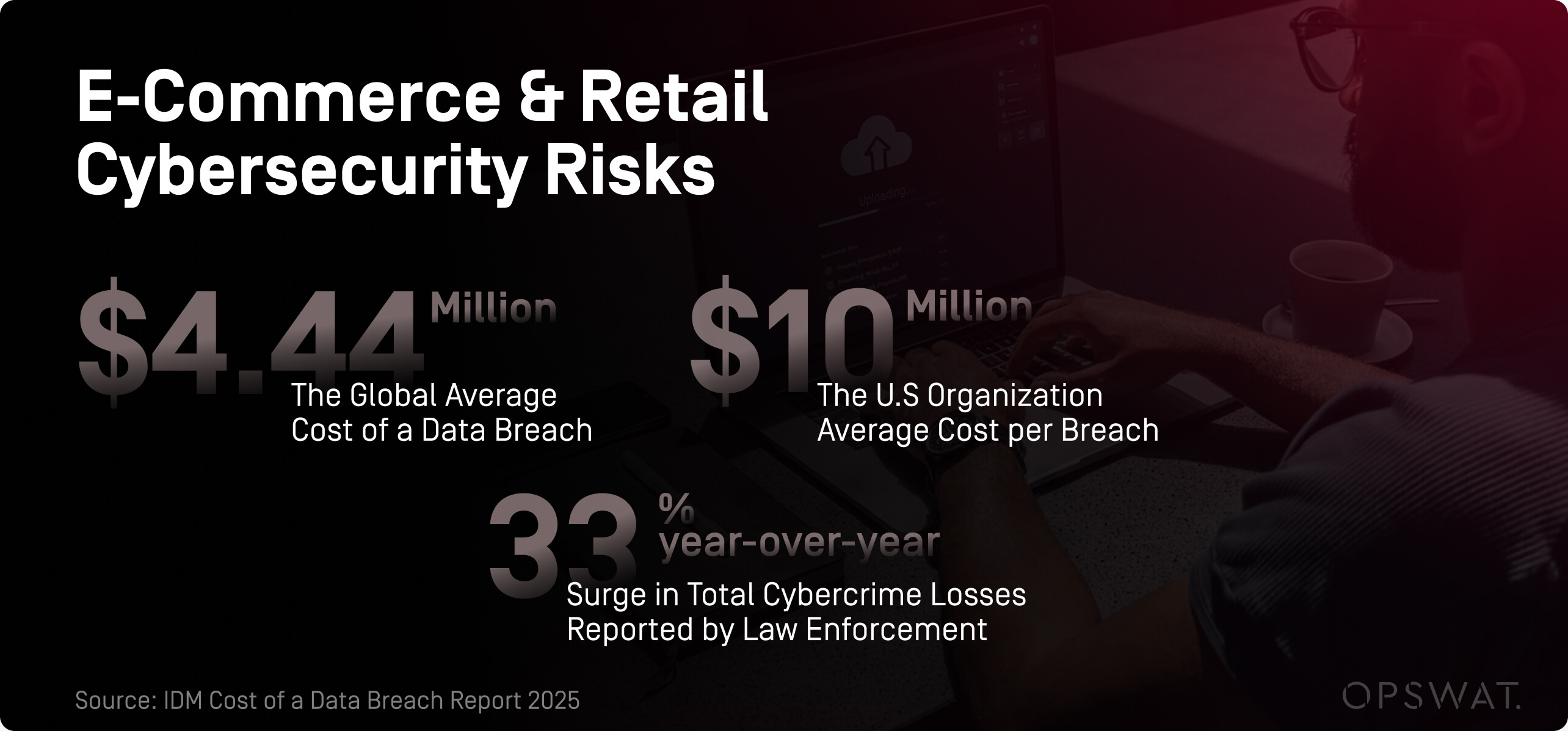
Every day, e-commerce platforms handle massive volumes of user-generated content, from product images to verification documents, each representing a potential entry point for attackers. Cybersecurity risks in retail and online commerce remain significant: in 2025, the global average cost of a data breach reached approximately $4.44 million, with U.S. organizations averaging over $10 million per breach, while total cybercrime losses reported by law enforcement surged by 33 percent year-over-year.
In a recently reported incident, a Japanese retail and logistics platform disclosed that more than 700,000 records related to customers, business partners, employees, and executives were compromised, leading to prolonged service disruptions and data exposure. In another incident, a major e-commerce platform disclosed that unauthorized access exposed the personal information of approximately 33.7 million customer accounts. Such incidents highlight the persistent threat landscape online marketplaces face as they scale digital engagement and transactions.
Pressure to Strengthen File Security Without Disrupting Performance
Core Operations
For a high-traffic e-commerce marketplace, file uploads are not a secondary function; they are central to daily operations. Sellers rely on images and documents to publish listings quickly, while buyers expect messaging and transactions to happen without delay. With millions of files uploaded every day, even a small gap in file security could expose internal systems to malware at a massive scale.
Hidden Threats
Malware was increasingly concealed inside common file types such as images, PDFs, and compressed archives, as well as in formats that users upload routinely, and that traditional single-engine antivirus tools often struggle to inspect reliably. At the same time, the security team could not afford to slow down listing approvals, messaging workflows, or other customer-facing processes.
No Margin of Error
These pressures left little margin for error. The security team needed to strengthen file inspection without slowing down user-facing workflows or introducing new operational bottlenecks. Embedding effective malware prevention into a highly distributed, containerized environment, while preserving performance and reliability at peak scale, presented a complex challenge that could not be addressed with traditional approaches.
Architectural Fit
Any solution also had to fit seamlessly into the company’s existing architecture. The platform relied on containerized microservices designed to scale dynamically during peak traffic, requiring file scanning to operate as a native part of this environment through API-based integration, without introducing operational complexity or manual review bottlenecks.
Malware Prevention Inside a High-Volume File Pipeline
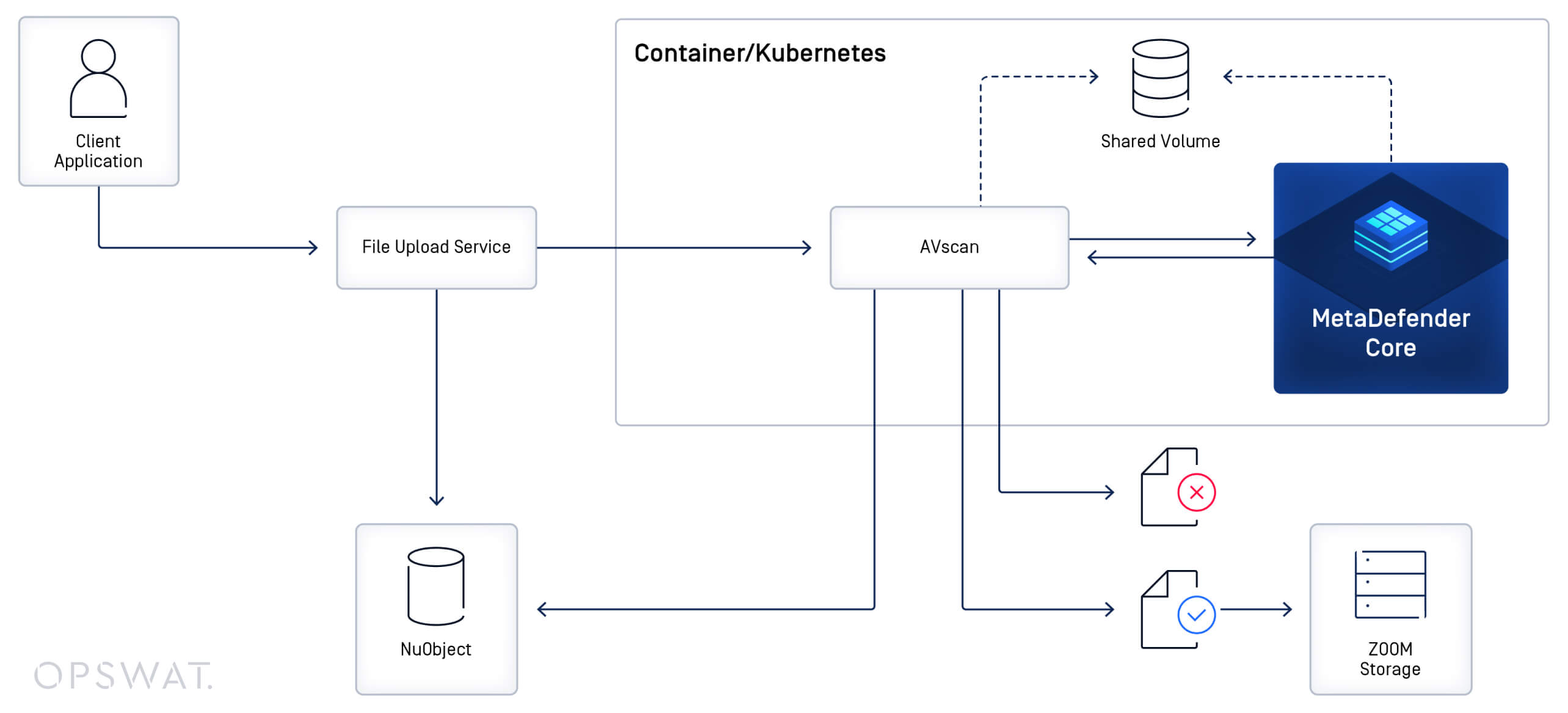
To secure its file upload workflows, the company deployed OPSWAT MetaDefender Core™ as a dedicated scanning service within its containerized environment. The solution was integrated directly into the file ingestion pipeline, allowing files to be inspected immediately upon upload, before they could reach internal storage systems or downstream services.
The 5-Step File Scanning Workflow
- File intake and routing: Files uploaded to the platform are routed to a centralized scanning service through API-based integration.
- Multi-engine malware scanning: Metascan™ Multiscanning inspects each file using multiple anti-malware engines to identify known malicious content and suspicious indicators, improving detection coverage compared to single-engine approaches.
- Policy-based file handling: Scan results are evaluated against predefined security policies to determine how each file should be handled, allowing the platform to automatically route files for storage, quarantine, or further review.
- Safe storage or quarantine: Clean files proceed to internal object storage, while suspicious files are quarantined for further review and investigation.
- Audit and visibility: All file movements are logged to support traceability, audits, and governance requirements.
The containerized deployment model allows the scanning service to scale horizontally in line with traffic demands. Automated health checks and failover mechanisms help maintain resilience during peak usage periods, ensuring consistent security enforcement without impacting performance or user experience.
Stronger File Security Without Disruption
By embedding MetaDefender Core into its file ingestion pipeline, the company strengthened security across one of its most critical workflows while preserving platform performance at scale. Every file uploaded to the marketplace is now inspected before entering internal systems, significantly reducing the risk of malware exposure through user-generated content.
Security and Performance Outcomes
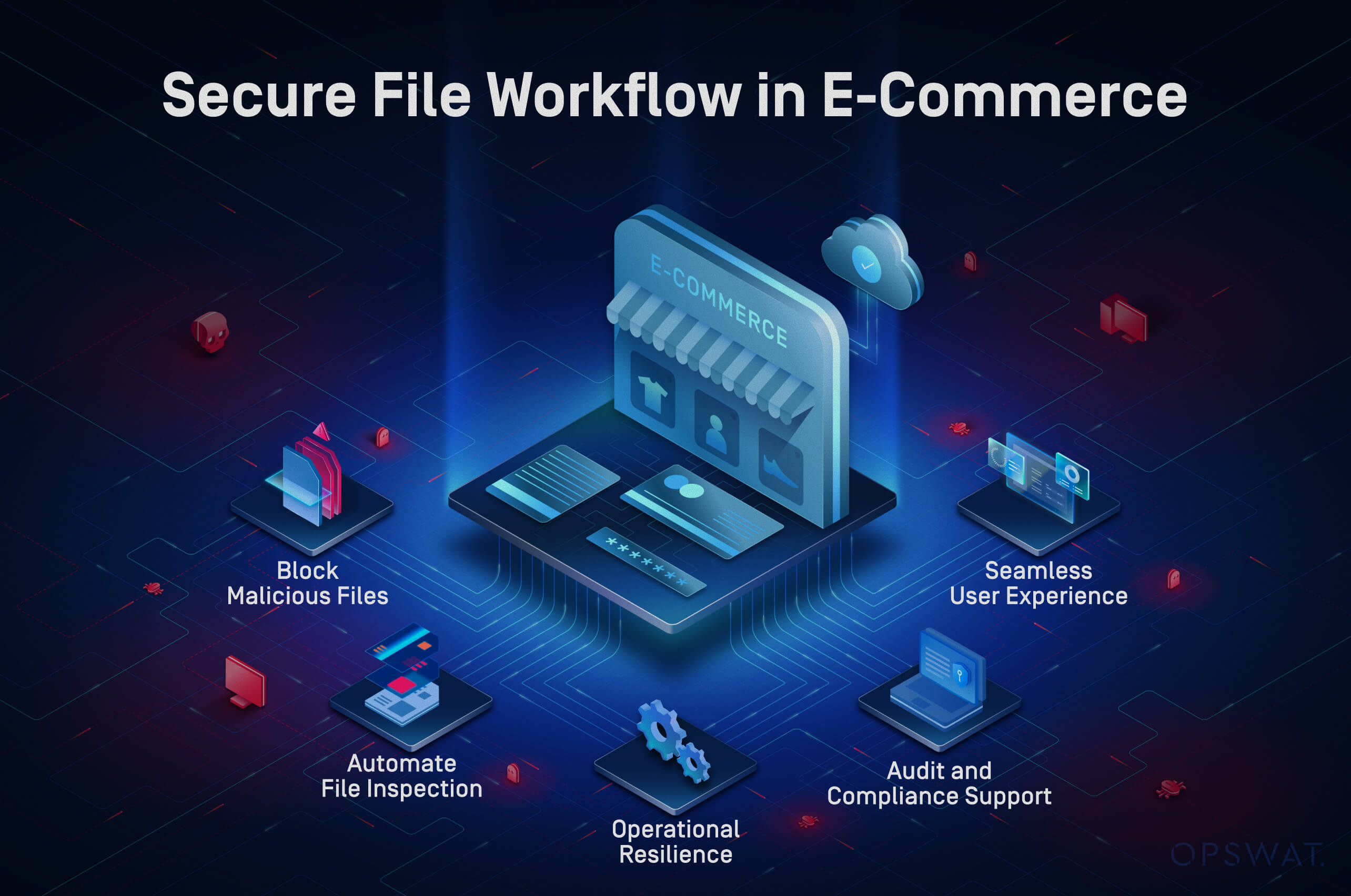
- Comprehensive file inspection: All uploaded files are scanned prior to storage or downstream processing, blocking thousands of malicious files each month.
- Reduced manual intervention: Automated quarantine and verdict-based handling minimized the need for manual review by security teams.
- Operational resilience at scale: The containerized architecture supported horizontal scaling and automated failover, ensuring reliability under fluctuating workloads.
- Audit and governance readiness: Detailed logs provided traceability and visibility to support audits, investigations, and internal governance requirements.
- Consistent user experience: Sub-second scanning for most uploads allowed the platform to maintain listing and messaging service levels, even during peak traffic periods.
From a user perspective, these improvements translate into a safer and more reliable marketplace experience. Sellers can upload images and documents with confidence, knowing their content will be processed quickly without delays, while buyers interact with listings and messages that are protected from hidden malware.
By securing files behind the scenes without adding friction, the platform reinforces trust, protects user devices, and maintains the seamless experience that users expect when buying and selling online.
Strengthening File Trust as the Platform Evolves
This e-commerce company has established a strong foundation for securing user-generated content at scale. By integrating MetaDefender Core into its file workflows, the marketplace has taken a proactive approach to preventing malware while maintaining the speed and reliability its users expect.
Looking ahead, the organization is considering expanding file security coverage across additional workflows and evaluating further enhancements to strengthen visibility, control, and resilience as the platform grows. With OPSWAT’s flexible architecture and trusted file security capabilities, the company is well positioned to adapt to emerging cyberthreats and protect its ecosystem over the long term.
Ready to protect your critical file workflows with MetaDefender Core?