Where Temperatures Matter Most
One of the most vulnerable assets to cyberattacks on campus can be the utilities that enable day to day operations. Boiler plants supplying steam and hot water can be taken offline. Building automation systems can be held for ransom. Backup generators at the university hospital can be disabled when they’re needed most.
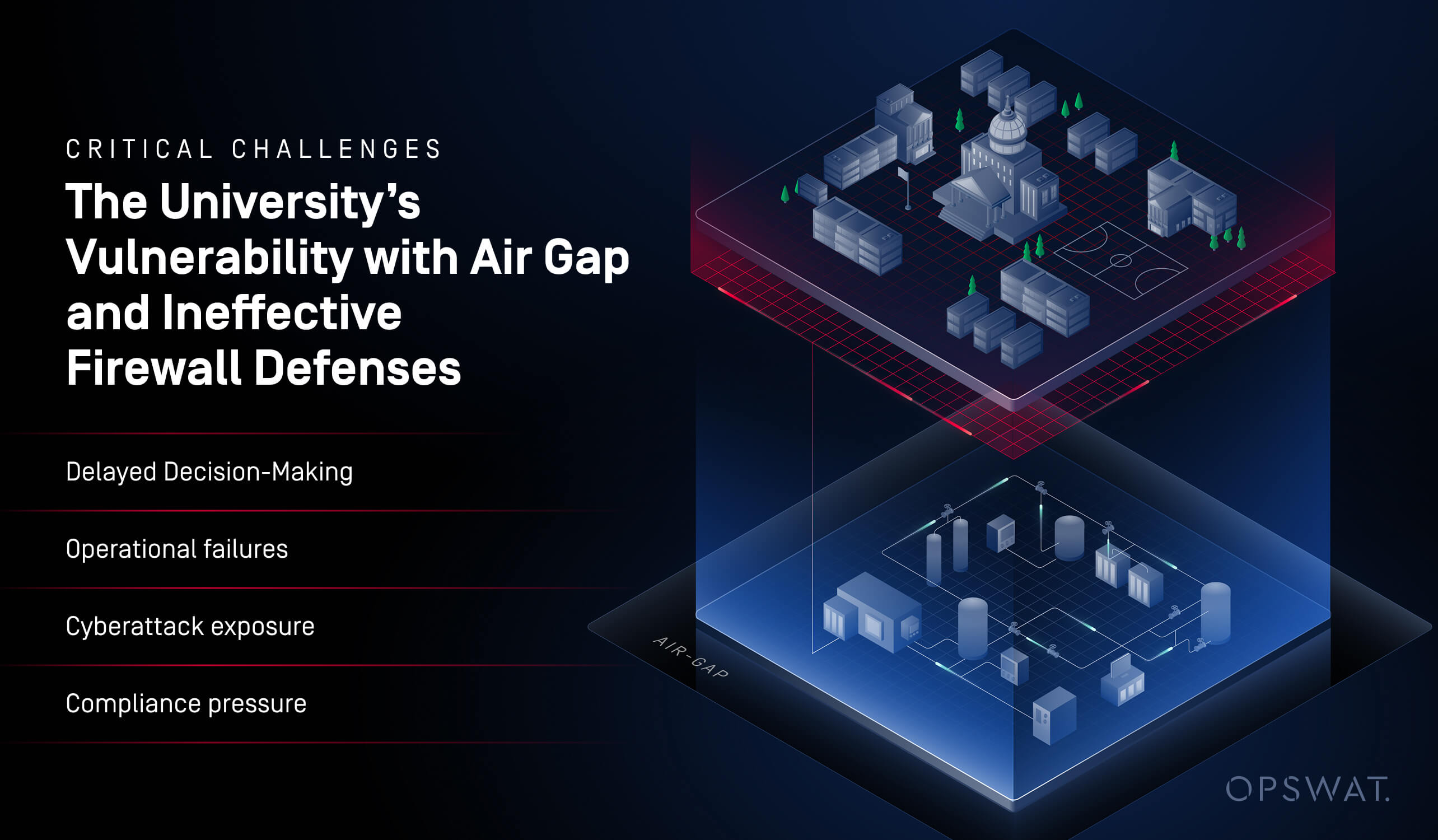
Operators of this critical resource, capable of heating some 10,000,000 square feet of classroom, research, and dormitory space, went without real-time monitoring. Systems were mostly “air gapped” or isolated from outside networks and critical performance data was extracted via physical media. Attempts to use firewalls provided an imperfect defense, and their maintenance cost thousands of dollars per device per year and ultimately left them vulnerable to substantial risks.
- Delayed decision-making: Without live telemetry, facility managers relied on manual data extraction via USB drives and CDs, often analyzing data weeks after collection. This created dangerous blind spots in system health.
- Operational failures: The inability to detect system anomalies in real-time risked equipment failure, downtime, or environmental safety issues—especially critical in dormitories and medical facilities.
- Cyberattack exposure: Attempts to use firewalls to network these systems proved costly and imperfect. Firewalls introduced maintenance overhead and potential vulnerabilities, failing to truly isolate OT systems from internet-based threats.
- Compliance pressure: With evolving federal guidelines such as NIST SP 800-82r3, universities are being pushed to modernize OT cybersecurity practices, particularly those protecting critical infrastructure.
The air gaps and firewalls we relied on to keep our utilities secure, were also keeping the information from the people that needed it.

Real-Time Monitoring and Automation with MetaDefender Optical Diode
The university turned to OPSWAT, deploying hardware-enforced, one-way data diodes from the company’s product line to extract performance data securely from critical OT systems like boilers and heat plant controllers.
- OPSWAT’s data diodes leverage a physics-based design to physically block any inbound network traffic, ensuring unidirectional data transfer only.
- The facilities team configured scheduled FTP transmissions of key performance log files, automating what was once a labor-intensive manual process.
- Data could now be sent from OT systems to IT networks and analysis platforms—including AI-based monitoring tools—without risking a reverse pathway for potential cyberattacks.
- The result preserved the security of an air gap while enabling real-time data availability.
Key Results
Real-Time Visibility
Facility operators gained access to live operational metrics, enabling predictive maintenance, reducing system strain, and improving response times.
Cost Savings
By eliminating manual data collection and replacing firewalls (which cost thousands per device annually), the university achieved significant ROI. OPSWAT’s devices quickly paid for themselves.
Increased Uptime and Efficiency
With continuous monitoring, equipment health could be assessed proactively, minimizing unexpected downtime and ensuring heating and cooling continuity across campus.
Stronger Cybersecurity Posture
Unlike software firewalls, OPSWAT’s diodes offer immutable hardware-enforced isolation, virtually eliminating the risk of ransomware or remote access malware infiltrating OT environments.
Future-Ready Architecture
The approach aligns with the latest federal guidance from NIST, which now recommends one-way data diodes as a best practice for OT cybersecurity.
[So in the end I think] we were successful in using these data diodes to significantly improve the cybersecurity at our heat plant.
Keeping the Future Cool
With secure, real-time monitoring now in place, the university is positioned to expand this architecture across additional infrastructure, including water systems, energy meters, and backup generators. By embracing a zero-trust, physically isolated approach to OT security, the university is setting a new standard for operational resilience in higher education—balancing modernization with uncompromising cyber defense.
Are you ready to put MetaDefender Optical Diode (OPSWAT's data diode) between your essential environments and the vulnerabilities that threaten them? Talk to an expert today to learn why OPSWAT is trusted globally to defend what’s critical.