User type: Organization user
Organization type: Partner Organization having assigned customer’s organizations.
Role: View Only/Full Access on License Management - Customer Organizations
In this article:
Some customers purchase OPSWAT product licenses through Distributors or Resellers. The Customer Organizations tab lets Partners (Distributors and Resellers) view and manage the licenses they’ve sold to customers.
To access this page, navigate to License Management > Customer Organizations. You can only access this tab if the following conditions are met:
You must belong to a Partner organization with assigned customers.
You must have View Only or Full Access permission on the License Management - Customer Organizations role object. (Refer to Roles for details)
Generating License Reports
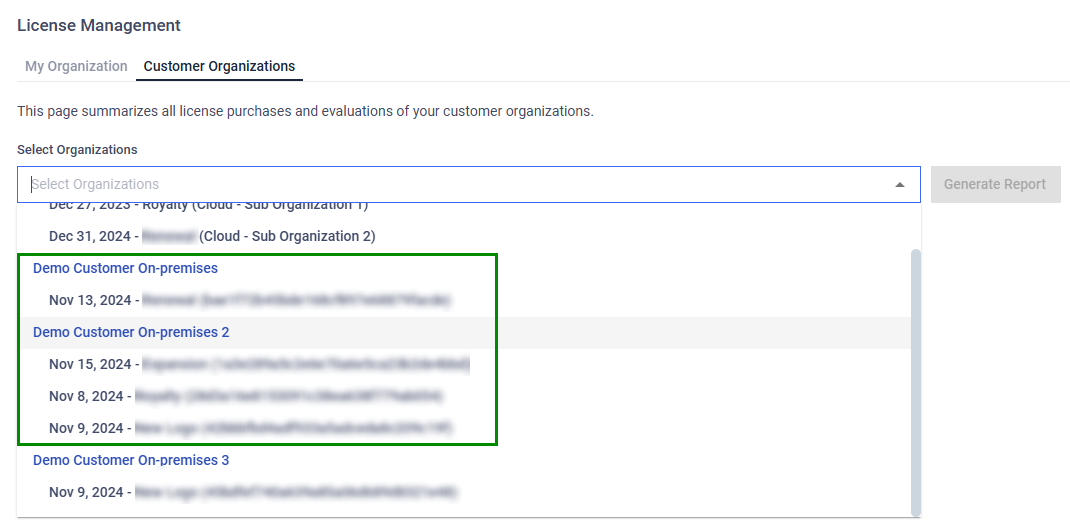
Select Organizations: Choose one or more customer organizations from the dropdown.
Generate Report: Click Generate Report.
The page is separated into 2 sections:
Statistical charts: Interactive charts and summary statistics.
Details (including Cloud Services and On-premises product): Detailed list of licenses on each customer organization satisfied the prior selection.
Statistical charts
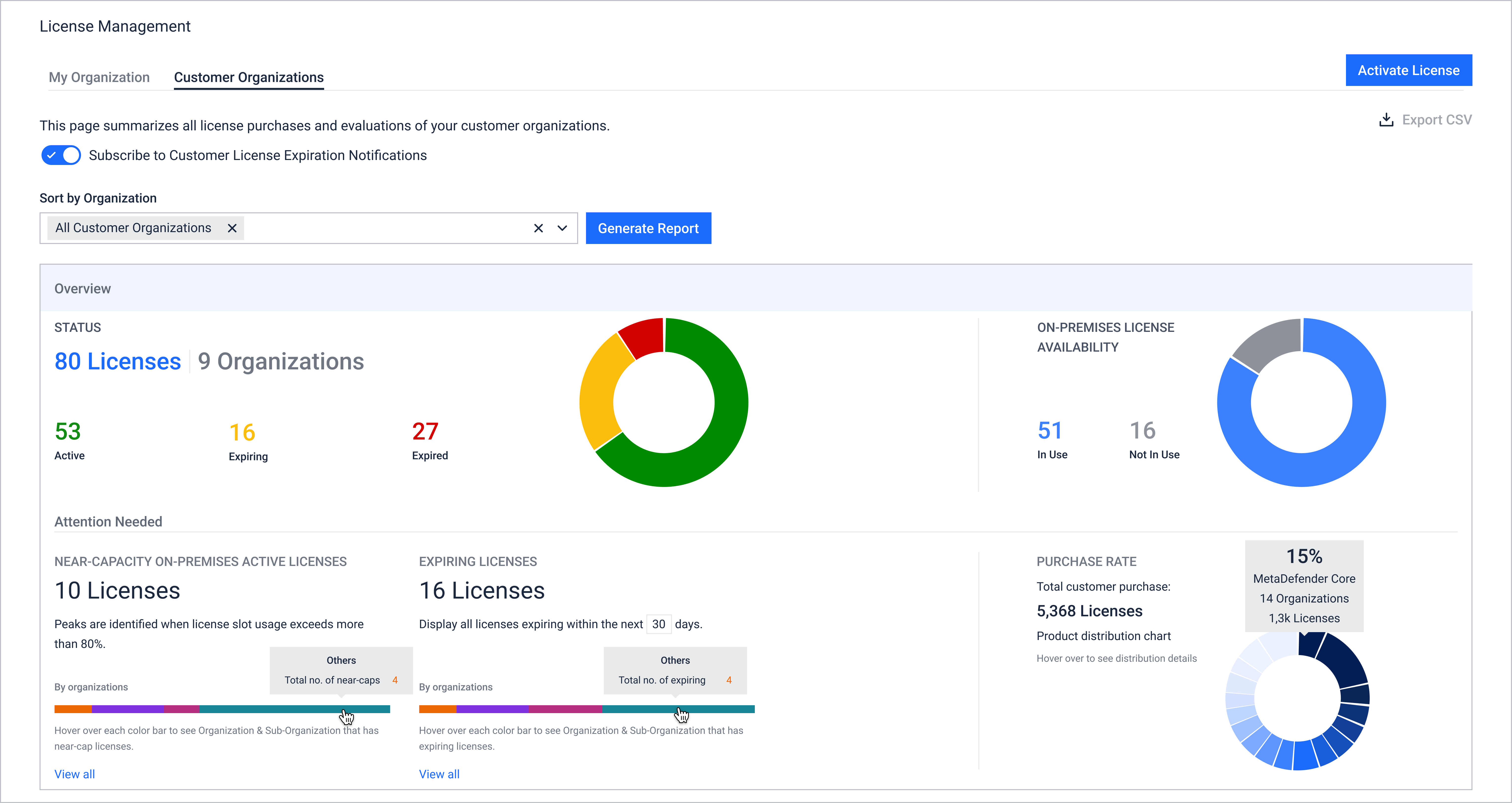
Hover over pie chart for details
Click dashboard numbers or pie sections to filter data
Page scrolls automatically to filtered results in the Details section
Detailed Lists of Product Licenses
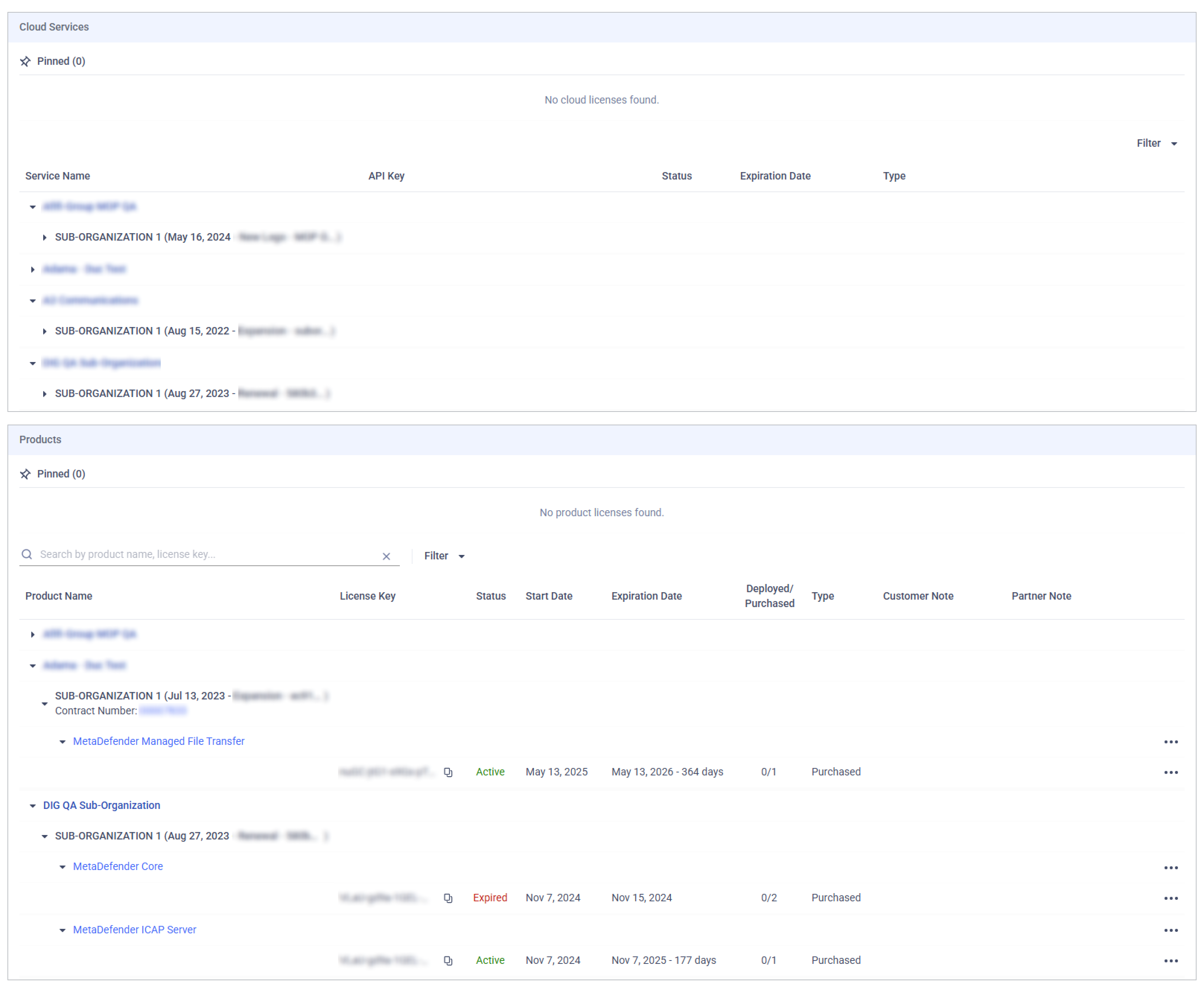
The list are separated into 2 sections: Cloud Services and On-Premises Products
Cloud Services
MetaDefender Cloud: Shows license expiration and scan limit info
MetaDefender IT Access: Not displayed on this page
On-Premises Products
Each license entry includes:
Field | Description |
|---|---|
Reseller Info | Name of the Reseller tied to that sub‑organization |
Contract number | Contract number(s) tied to sub-organization (Activated/Expired). Click to view details in Customer Contracts tab. |
Product Name | OPSWAT product name |
License Key | Associated license key(s) |
Status | Active, Expiring or Expired. |
Start Date (UTC) | License effective date |
Expiration Date (UTC) | License expiration date Please note License start and expiration dates are shown in UTC (UTC+0) for consistency across all environments and time zones. This may look different from other features of My OPSWAT Portal that use your local time zone. |
Deployed / Purchased | Number of deployed instances versus purchased limit. |
Type | Evaluation/Purchased
|
Customer Note | Notes from end customer (read-only) |
Partner Note | Editable field for partner remarks (e.g., contract ID, location) |
Licenses assigned to both main and sub-organizations appear only under the sub-organization (to avoid duplication)
Actions
Depending on your permission level on the License Management – Customer Organizations role object, you have access to different actions:
With View Only permission
Activate License – Activate a license for the selected product. Please refer to Activate License for details.
Pin – Move license to top for quick access
See Full License History – View full history (expired hidden by default)
Filter – By product name, status, type, availability, capacity
Search – By license key, product name, contract number, reseller name
With Full Access permission
Edit partner note: Add custom notes (e.g., location, identifiers, reseller references)
Download Active Deployment Report – Export Excel file with license key info and active deployments (not applicable for Expired licenses)
License Expiration Notifications
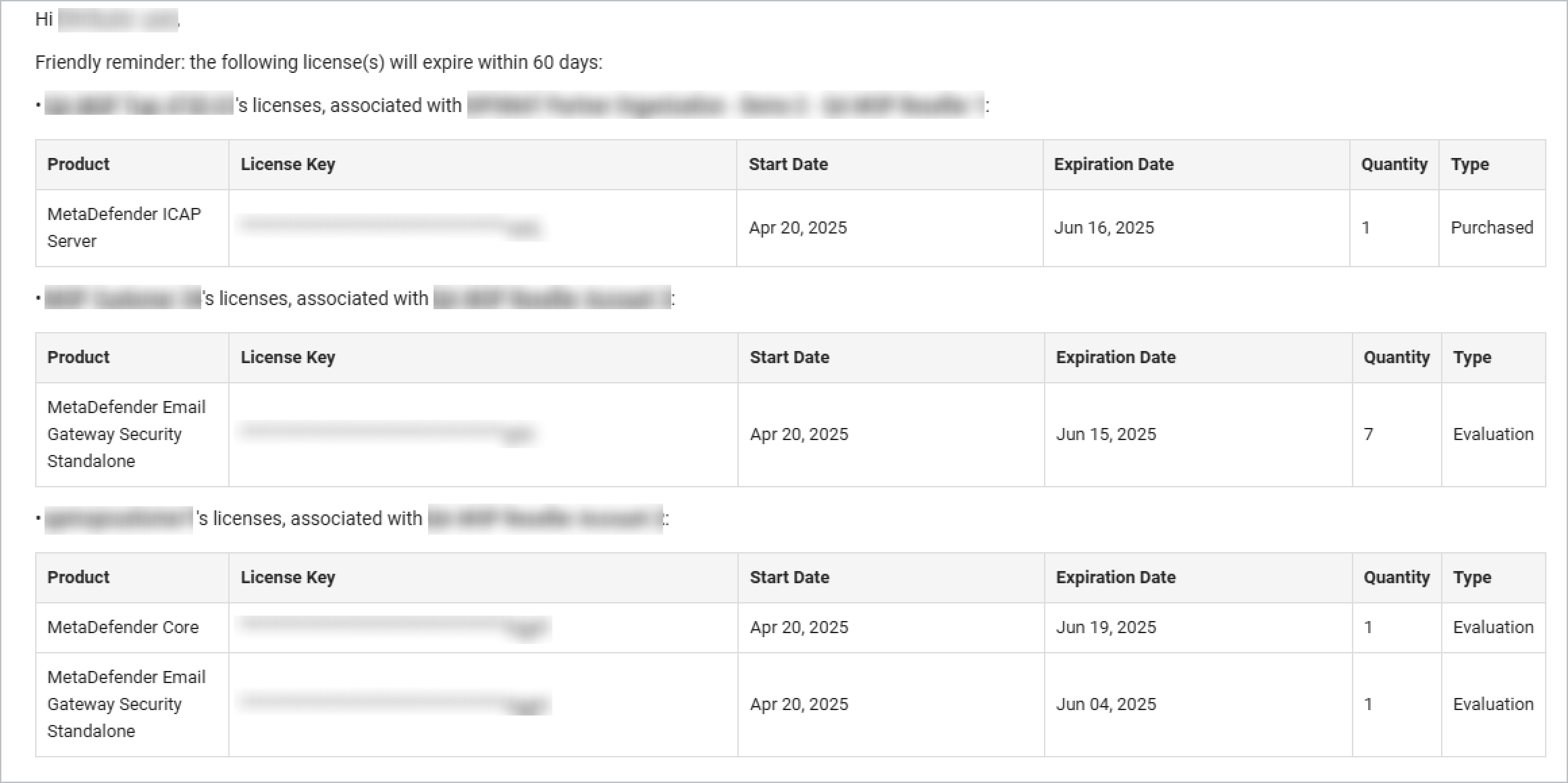
My OPSWAT Portal provides function which Partners can subscribe to receive automatic alerts for upcoming customer license expirations—60 and 30 days in advance, enabling better planning and prioritization.
Settings: Subscription settings available under License Management > Customer Organizations

In the email alert, Distributors will also see Resellers info associated with each customer.
License details are displayed in a clean table format, including product name, license key, start date, expiration date, quantity, and license type (Evaluation or Purchased). Each customer’s licenses are organized into separate tables for easy reference.