
Backup
Ensure that all systems are backed up on a synchronized schedule to keep them consistent with one another.
You can configure automatic backups or manually trigger a backup of your system data. These backups include system configuration and operational data.
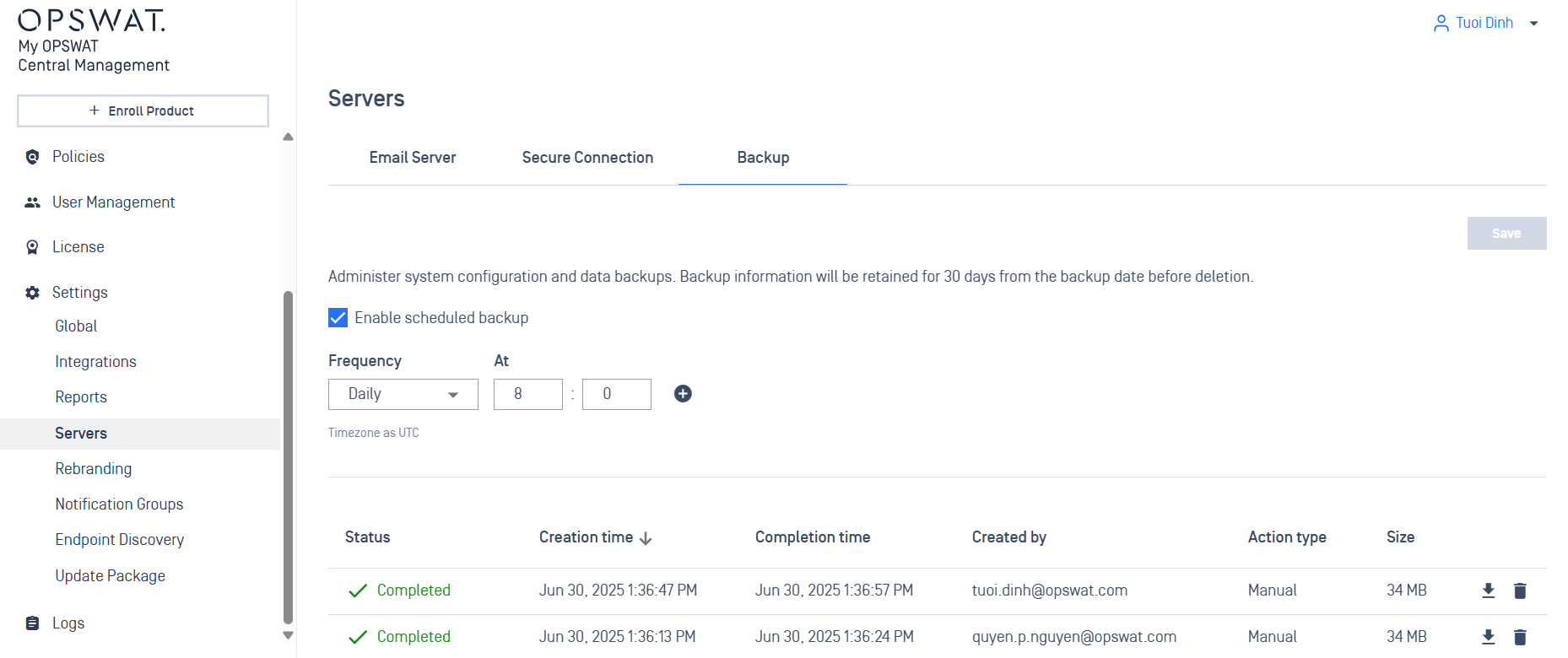
Configure Scheduled Backup
To configure a scheduled backup:
Go to Settings > Servers > Backup.
Check the option "Enable scheduled backup".
Set the Frequency (e.g., Daily).
Choose the time that My OPSWAT Central Management triggers a backup (e.g.,
08:00 UTC).Click Save.
When the backup schedule is triggered, My OPSWAT Central Management will backup its data and configuration and store inside its data folder.
Backups are automatically retained for 30 days before deletion.
Trigger a Manual Backup
Backups can also be triggered manually by administrators:
Click the backup icon on the backup management screen.
Confirm if prompted.
Backup Information
Each backup entry includes the following:
Status: Indicates if the backup was successful (e.g., "Completed").
Creation time and Completion time.
Created by: The user who triggers the backup.
Action type: "Manual" or "Scheduled".
Size: File size of the backup (e.g., 34 MB).
Actions: Download or delete the backup file.
Restore the system from a Backup
You can restore My OPSWAT Central Management from a backup file during the Setup Wizard. Please note that the process may take time and could result in downtime while data is restored and services are restarted.
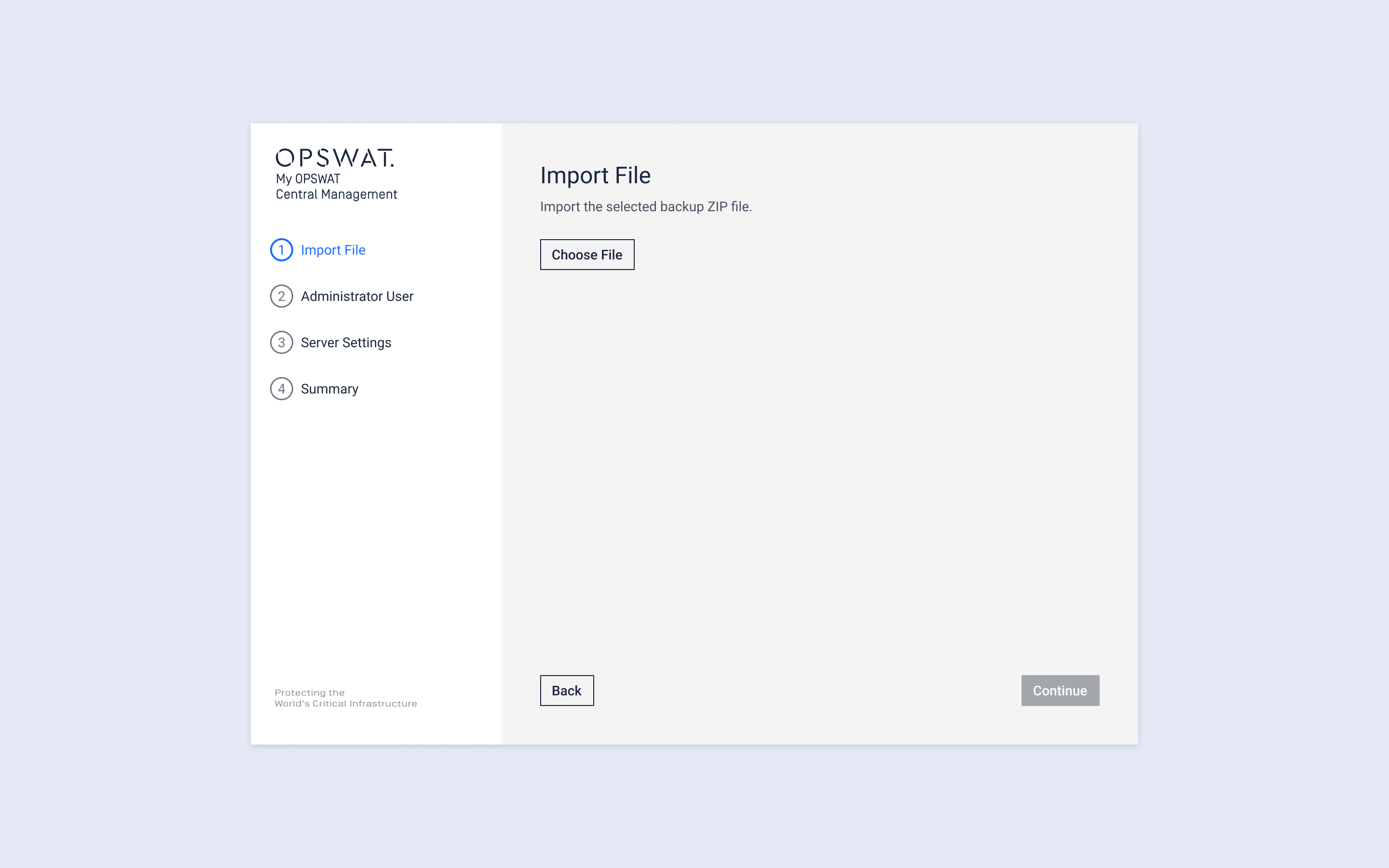
Step 1 - Select the Restore Option: On the Setup wizard screen after you install My OPSWAT Central Management successfully, select “Restore the Backup”.
Step 2 - Import a Backup File:
Click Choose File to upload a
.CMXbackup file that you would like to restore from.Click Continue.
Step 3 - Review Information through the Setup Wizard
Administrator User: Confirm or create a new admin user.
Server Settings: Review/update, if needed, server settings.
Summary: Review the configuration before initializing the server.
Restoring from a backup will overwrite current system settings. Ensure the backup file is from a trusted and valid source.
Best Practices
Schedule backups during low-traffic periods to reduce system load.
Regularly download and store backup files externally for disaster recovery.
Monitor backup status logs to ensure consistency and reliability.