Title
Page icon
Create new category
Edit page index title
Edit category
Edit link
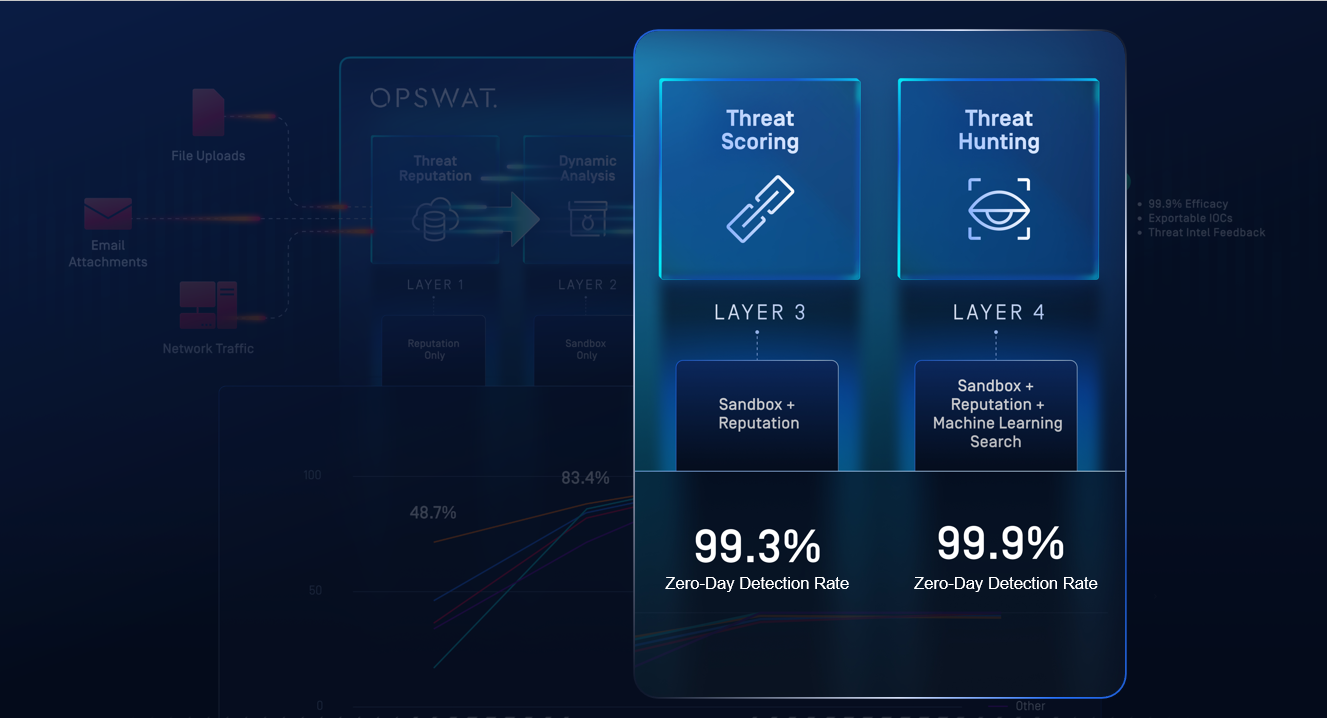
Layer 5 - Threat Hunting
Connect Threats to Campaigns
Layer 5 turns an individual file detection into broader threat intelligence.
Once Aether has identified and scored a suspicious file, Threat Hunting asks the next question:
What else is this threat connected to?
ML-powered similarity search and Threat Pattern Correlation compare the sample with known malware, behavioral patterns, infrastructure, and previously analyzed threats. This helps analysts identify related malware families, modified variants, shared attacker infrastructure, and campaign-level activity that may not be obvious from a single file alone.
Layer 5 moves Aether from file verdict to attacker context.
At a Glance
Purpose: Connect individual detections to related malware and campaigns
Core capabilities: ML-powered similarity search and Threat Pattern Correlation
Correlates: Code, behavior, infrastructure, IOCs, tactics, and related files
Helps identify: Malware families, variants, clusters, and attacker campaigns
Best for: Threat hunting, incident response, retroactive investigation, and campaign analysis
Pipeline role: Add campaign-level context after Aether has detected and prioritized the threat
Why Layer 5 Matters
Attackers rarely rely on a single file.
The same campaign may use multiple payloads, recompiled variants, different hashes, changing infrastructure, and slightly modified execution techniques.
Looking at each sample in isolation makes these changes effective. Layer 5 looks for the relationships that remain.
By correlating structural and behavioral similarities across samples, Aether can identify related threats even when attackers change obvious indicators such as hashes, filenames, or domains.
This helps analysts determine whether a new detection is:
An isolated malicious file
A modified version of known malware
Part of an existing malware family
Connected to shared attacker infrastructure
One stage of a broader campaign
ML-Powered Similarity Search
Similarity Search helps identify relationships between new and previously analyzed malware.
Instead of depending only on exact hashes or signatures, machine learning compares structural and behavioral characteristics to identify related samples.
This can reveal:
Recompiled malware variants
Polymorphic mutations
Shared code sections
Related payloads
Similar behavioral patterns
Previously unseen members of a known malware family
This is particularly useful when an attacker modifies a file enough to defeat hash-based detection but leaves core code or behavior intact.
Threat Pattern Correlation
Threat Pattern Correlation goes beyond file similarity by connecting evidence across multiple analyses.
It can correlate:
Malware families
Behavioral IOCs
Shared infrastructure
URLs, domains, and IP addresses
Loader and payload relationships
Common tactics and techniques
Infrastructure clusters
Campaign-level activity
By bringing these relationships together, Layer 5 helps analysts see the broader attack pattern instead of manually pivoting across isolated reports and indicators.
From Detection to Proactive Hunting
Layer 5 supports both proactive and retroactive threat hunting.
Proactive Hunting
When Aether identifies a new malicious sample, analysts can use its code, behavior, IOCs, and infrastructure relationships to search for related activity elsewhere.
This helps answer questions such as:
Have we seen a similar file before?
Are other variants of this malware already present?
Does this sample share infrastructure with known threats?
Is this part of an active campaign?
What other files should we investigate?
Retroactive Analysis
New intelligence can also be applied to previously analyzed samples.
As new malware relationships and threat patterns become known, analysts can revisit historical data to identify older files that may be connected to the same campaign or malware family.
This allows new discoveries to improve understanding of past activity, not just future detections.
How Layer 5 Fits Into the Aether Pipeline
Each Aether layer narrows uncertainty before Layer 5 expands the investigation outward.
Layer 1: Threat Reputation
Do we already know this threat?
Layer 2: Static Analysis
Does Predictive Alin AI identify malicious intent Pre-Execution?
Layer 3: Dynamic Analysis
What does the file actually do?
Layer 4: Threat Scoring
How risky is the combined evidence?
Layer 5: Threat Hunting
What other malware, infrastructure, and campaigns is this threat connected to?
Layer 5 takes everything learned in the earlier stages and uses it to uncover relationships beyond the individual sample.
Intelligence That Goes Beyond Indicators
Threat hunting becomes more valuable when reputation data, behavioral evidence, and similarity signals are analyzed together.
Layer 5 can use:
Sandbox-derived behavioral IOCs
Runtime behaviors
Threat scores
Malware configuration data
Structural similarity
Code relationships
Infrastructure indicators
MITRE ATT&CK context
Historical analysis results
This helps analysts move beyond simple IOC matching and investigate how threats are related by behavior and attacker tradecraft.
Reduce Manual Investigation
Traditional threat hunting often requires analysts to move between sandbox reports, reputation services, SIEM searches, threat intelligence platforms, and external tools.
Aether brings similarity and pattern correlation into the same zero-day detection workflow.
This helps teams:
Reduce manual pivoting between tools
Find related malware faster
Identify campaign relationships earlier
Enrich SIEM and SOAR investigations
Prioritize related samples for deeper investigation
Turn individual detections into reusable threat intelligence
How Layer 5 Raises the Cost for Attackers
Layer 5 targets the highest level of the Pyramid of Pain: tactics, techniques, and procedures.
Hashes, domains, and individual payloads are relatively easy for attackers to change. Their operating methods are much harder to replace.
By correlating malware families, shared behaviors, infrastructure, and repeated tradecraft, Layer 5:
Detects relationships even when hashes and payloads change
Exposes repeated attacker behavior across variants
Connects isolated files to broader operations
Makes minor payload modifications less effective
Forces attackers to change tools, infrastructure, behaviors, and operating methods
At this level, evasion becomes much more expensive. Attackers can no longer rely on simply changing one indicator or recompiling one file.
The Role of Layer 5
Layers 1 through 4 determine what the file is and how much risk it presents.
Layer 5 determines what the threat is connected to.
By combining ML-powered similarity search with Threat Pattern Correlation, Aether helps security teams move from isolated file detection to malware family identification, infrastructure correlation, and campaign-level threat intelligence.
Layer 5 turns a single detection into a map of the broader attack.
See the "Technical Datasheet" for a complete list of features: https://docs.opswat.com/filescan/datasheet/technical-datasheet