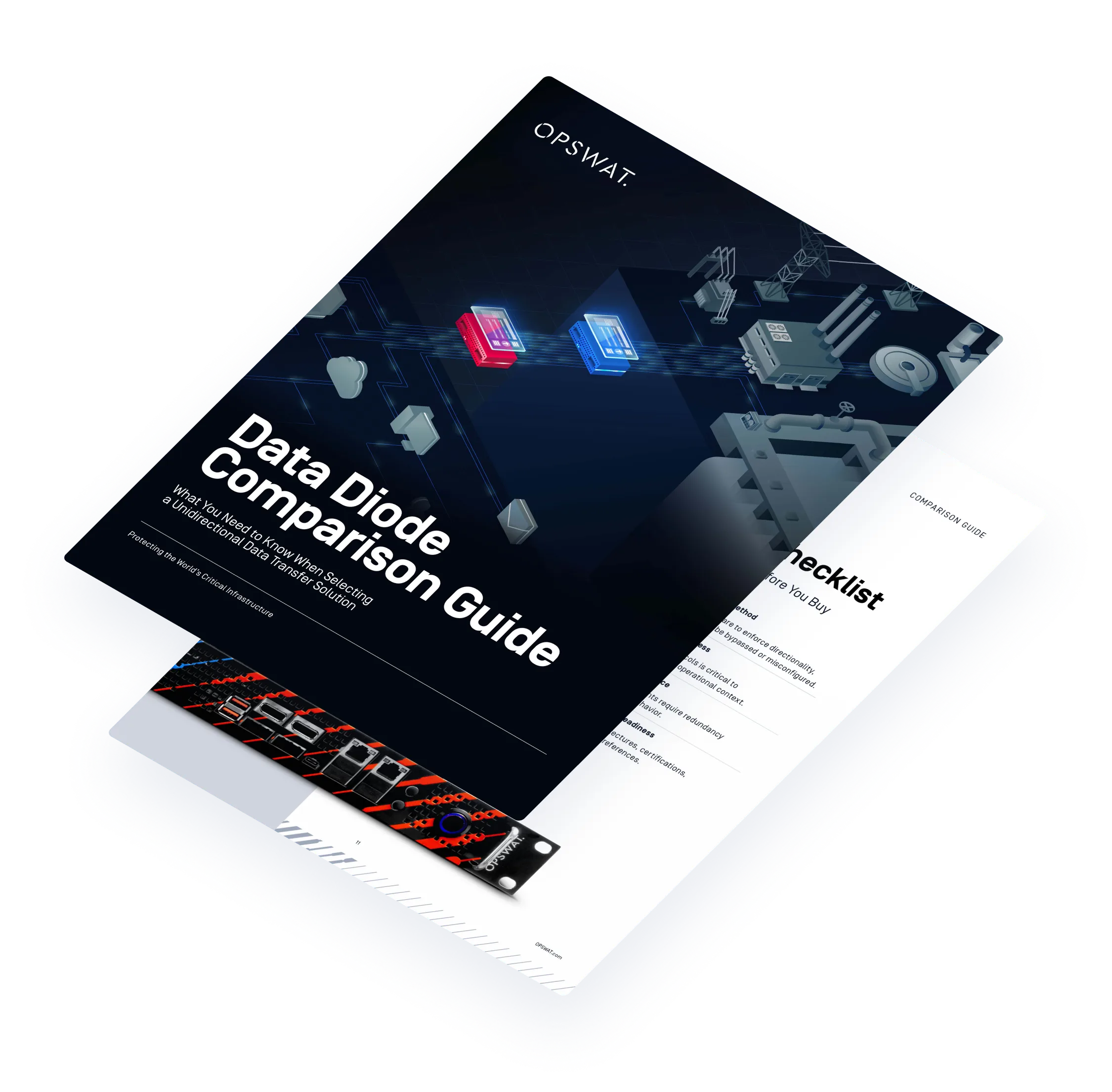
Data Diode Comparison Guide
Your organization needs secure access to operational data for monitoring, analytics, reporting, and compliance. This guide helps you explore how data diodes enable one-way data transfer, support visibility across protected environments, and give security, operations, and compliance teams a clear path to selecting the right solution.
Protect Critical Systems Without Losing Visibility
See how data diodes help teams share operational data for monitoring, analytics, and reporting while preventing inbound communication from reaching protected networks.

Evaluate Vendors with Confidence
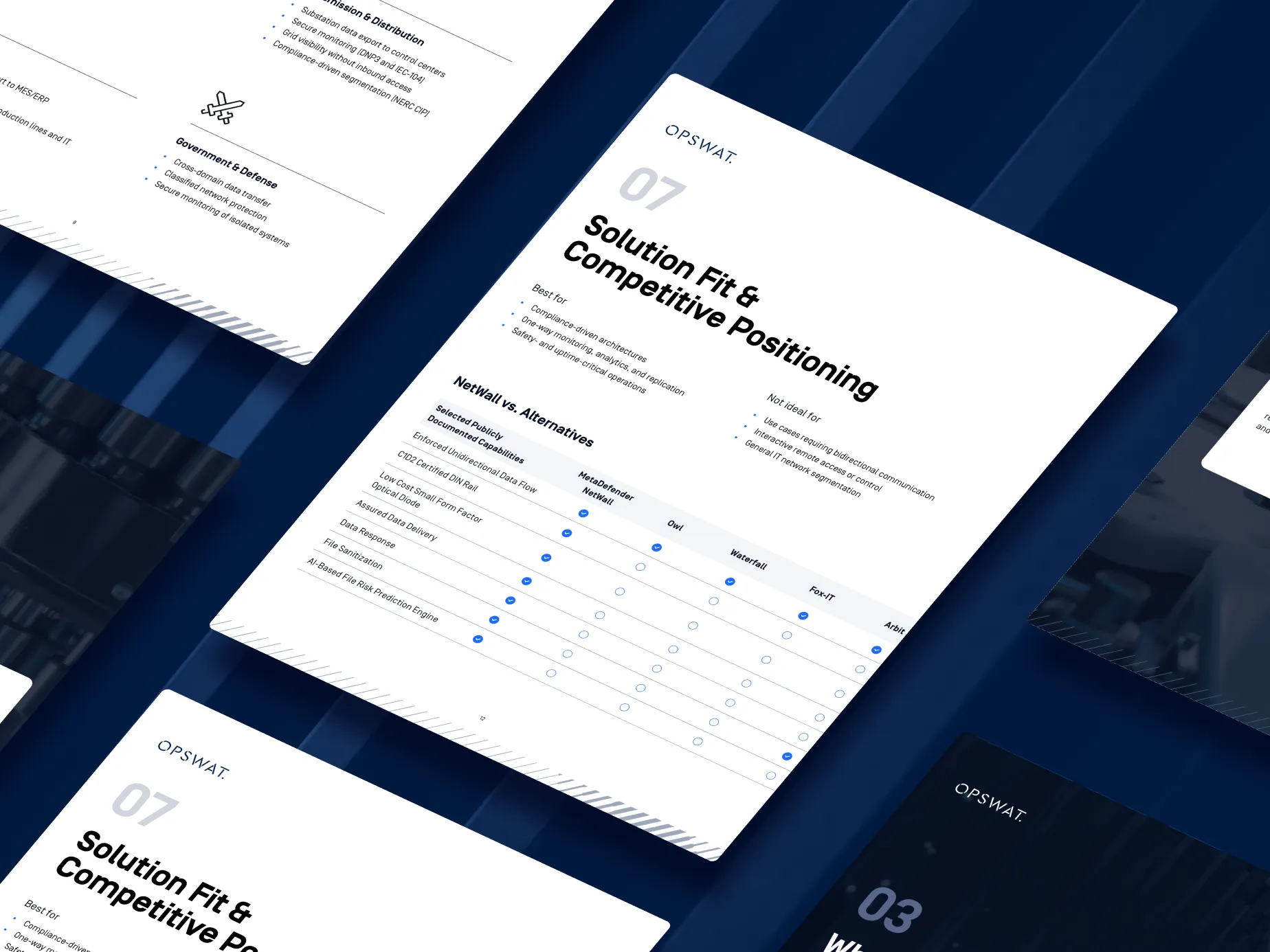
Get a buyer-focused view of the capabilities that matter most, including hardware-enforced directionality, protocol awareness, high availability, compliance support, and audit-ready documentation.
Match the Solution to Your Environment
Understand common use cases across Energy, Manufacturing, Government, Defense, Transportation, Data Centers, and other critical infrastructure sectors so you can identify the right approach for your operational and regulatory needs.

Make a Confident Decision
Selecting a data diode is not just a technical comparison. You need to know whether the solution fits your environment, supports your operational workflows, and can stand up to security, reliability, and compliance requirements. This guide gives you a practical framework for evaluating your options.
Understand the Fit
Learn when data diodes are ideal for one-way monitoring, analytics, replication, and secure data transfer, and when another approach may be better.
Compare What Matters
Evaluate solutions based on enforcement method, OT protocol support, resilience, audit readiness, and deployment requirements.
Align Your Stakeholders
Use practical guidance to align security, operations, and compliance teams around the right unidirectional transfer solution.
Download the Guide
Get the practical criteria you need to evaluate data diode solutions, compare key capabilities, and choose a secure data transfer approach that fits your critical environment.
