AI-Generated Text Detection

AI-Generated Text Detection identifies text passages produced or substantially rewritten by generative language models. The classifier evaluates stylometric features, statistical token patterns, and structural cues that distinguish model-generated prose from human-written content, then returns a verdict with a confidence score and the contributing signals.

This classifier is designed for high-volume text intake pipelines where authenticity matters incoming applications, support submissions, contract reviews, and any workflow where AI-generated content must be flagged, attributed, or routed for human review.

Text detectors

This section explains how each detector analyzes written content to distinguish AI-generated text from human written text. The detectors evaluate various linguistic, structural, and contextual patterns within the content to identify indicators commonly associated with AI generated writing while helping organizations assess the authenticity of textual data.

OPSWAT AI Content Inspector — Text Detectors
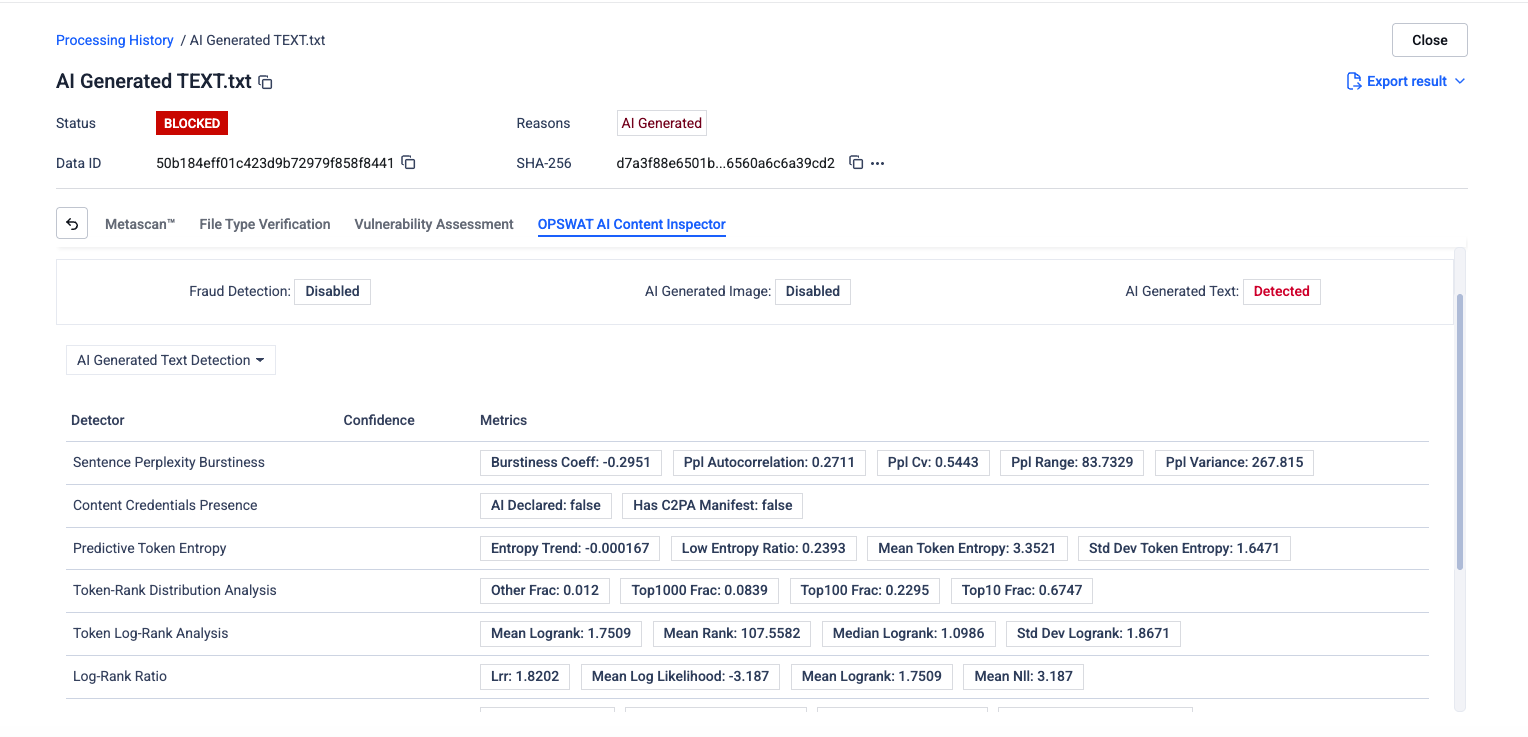
Token-Rank Distribution Analysis
Statistical

Checks how often a writer picks the most predictable next words. AI text tends to lean heavily on the safest choices, while humans mix in more variety.

Token Log-Rank Analysis
Statistical

Measures how typical each word choice is across the whole text. AI writing usually scores very consistently, where human writing has more ups and downs.

Log-Rank Ratio
Statistical

Cross-examines each word against two independent statistical measures, how rare it is by rank, and how unlikely it is by probability. When the two tell different stories, that tension is a reliable fingerprint of AI authorship.

Predictive Token Entropy
Statistical

Looks at how surprising each word is. Humans make unexpected choices more often, while AI writing tends to stay in safe, low-surprise territory.

Predictive Text Perplexity
Statistical

Tests how easily a language model could have written the same text. Very easy-to-predict writing often points to AI authorship.

Sentence Perplexity Burstiness
Statistical

Human writing tends to be bursty, mixing simple and complex sentences. AI text is often more even and predictable from sentence to sentence.

AI-Text Classifier
ML model

A trained language model that has read huge amounts of both human and AI writing and learned to tell them apart with a single confidence score.

Stylometric Analysis
Heuristic

Looks at writing style, including word variety, sentence length, punctuation rhythm, and readability. AI writing often has a recognisable, polished style.

Text Watermark Validator
Watermark

Checks for hidden watermarks that some AI tools embed in their output. If a watermark is present, it's strong evidence the text was machine-written.

Content Credentials Presence
Provenance

Looks for signed credentials attached to the content that declare how it was created and whether AI was involved in producing it.

Text Forensic Aggregator
ML model

Combines the results of all the other text checks into one overall AI score, giving a more confident final verdict than any single detector alone.

How to Configuration

Policies > Workflow rules > "Workflow name" > OPSWAT AI Content Inspector > Advanced Options
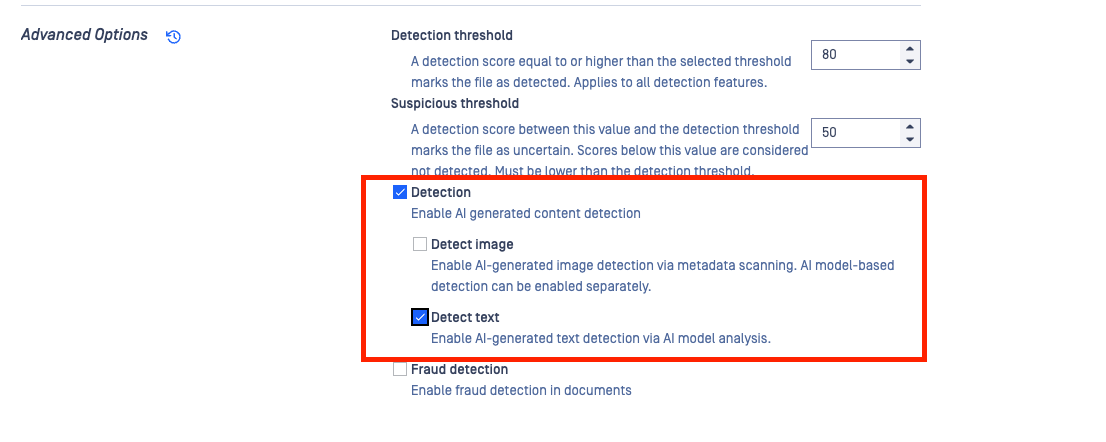
  • Detect text: When enabled, the text is analyzed using the full AI detection pipeline, including forensic analysis, linguistic pattern evaluation, contextual analysis, and machine learning models designed to identify indicators commonly associated with AI-generated content.
VariableType to search · ESC to discard
GlossaryType to search · ESC to discard
InsertType to search · ESC to discard
No matches